
















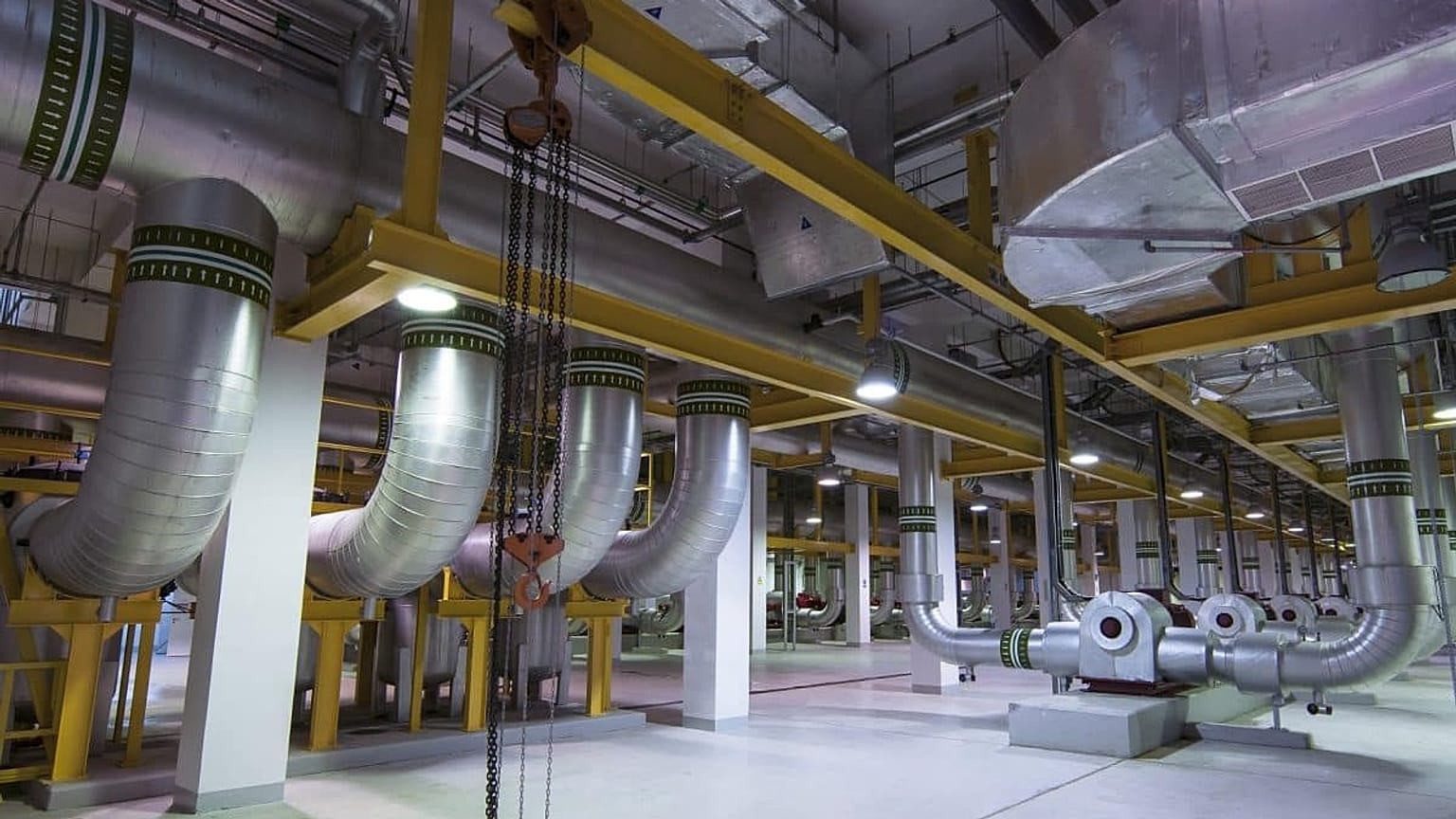













“District cooling offers clear benefits for cities aiming to safeguard public health and cut emissions.”
Europe’s next heatwave is already building over the Atlantic, as the World Health Organization (WHO) warns that more “deadly weeks may still lie ahead”.
 ADVERTISEMENT
ADVERTISEMENT
ADVERTISEMENT
Spain’s weather agency AMET has declared a top level red heat alert in three eastern regions, warning that temperatures could reach a sweltering 42C this week. The Aragon, Catalonia and Valencia regions are predicted to be among the worst hit as the mercury rises.
Portugal and France are also bracing for temperatures to exceed 40C – with forecasts predicting more ‘tropical nights’. This is where the temperature never drops below 20C in a 24-hour period, leading many to sleep badly.
The looming heatwave comes as wildfires ravage huge parts of Europe, forcing thousands of people to evacuate their homes and prompting officials to ban spectators from a stage of the Tour de France race.
Europe’s warming climate – which is conclusively caused by the persistent burning of fossil fuels – has resulted in calls for the continent to embrace air conditioning. Even the UK, which is known for its dreary weather, has been told by the independent Climate Change Committee that 22 per cent of the country’s buildings will need active cooling in a future with 2°C warming.
But an innovative solution is gaining ground: Europe’s waterways could help cool down cities and replace the need for individual air conditioning as part of the EU’s innovative ‘Cities Refresh’ campaign.
Can Europe cool itself down sustainably?
While air conditioning has been proven to save lives during periods of extreme heat, the EU says it is not a “long-term solution”.
This is because air con systems are energy-intensive, often straining Europe’s already stretched grid and increasing the risks of blackouts, and drive-up greenhouse gas emissions.
Air con also contributes to the urban heat island effect – which is where hot air that gets dumped outside gets trapped in a city’s infrastructure, such as concrete and asphalt, where it is later released and drives up temperatures.
A solution to this is district cooling: where a central facility produces chilled water which is then distributed to local networks through an underground system.
“District cooling offers clear benefits for cities aiming to safeguard public health and cut emissions,” the European Commission states.
“It provides efficient cooling for all building types, uses less energy than individual air conditioning, and can be powered by local, low-carbon sources such as seat or river water, geothermal energy or waste heat.”
Under the Energy Efficiency Directive (EED), cities with more than 45,000 inhabitants are now required to develop local heating and cooling plans. As a result, many urban regions are opting for district cooling infrastructure which increased by more than three per cent in 2023.
Marseille’s ‘sea-side detox’
Marseille is making the most of the Mediterranean by leveraging seawater to provide thermal energy for both cooling and heating.
There are already two networks (called Massileo and Thassalia) combining 4.4 km of pipes that connect seawater energy to heat pumps in urban districts, which then provide buildings with heat, cool air, and hot water.
These networks have resulted in an 80 per cent decrease in CO2 emissions in energy production compared to fossil fuels.
Following the boom in energy-intensive AI data centres, Marseille is now exploring how the waste produced from these sites could be recovered to heat residential homes and buildings in the colder months.
Cooling Paris with the Seine
The Fraîcheur de Paris network is one of Europe’s largest district cooling systems, and uses 120km of underground pipes to transport cold water from the Seine to provide low-carbon cooling for approximately 850 buildings, including the Louvre.
Instead of individual air conditioning units, buildings that benefit from the network use a heat exchanger. The building’s internal cooling system transfers its heat to the network’s cold water, which is then sent back to a specialised plant to be rechilled.
According to the bloc, it delivers over 100 per cent energy efficiency, reduces electricity consumption by 35 per cent, cuts refrigerant emissions by 90 per cent, lowers chemical use by 80 per cent, and decreases CO₂ emissions by 50 per cent.
Barcelona tackles the urban heat island effect
Spain already has one of the world’s biggest networks of climate shelters to help protect people from extreme heat. This is where public buildings like libraries and museums offer free water and collective cooling during heatwaves – reducing the need for individual air con and keeping vulnerable communities out of deadly temperatures.
Underground, Barcelona is also home to one of Southern Europe’s largest thermal energy distribution systems.
The network consists of four parallel pipes, two for hot water (supply at 90ºC and return at 60ºC) and two for cold water (supply at 5.5ºC and return at 14ºC), which transport energy from three production plants (one of which is cooled using seawater) to substations or energy exchange points in the customers' buildings.
This means it can be used to heat or cool buildings. So far, the network is connected to 192 buildings and has reduced fossil energy consumption by 96 per cent, according to Districlima, the network’s owner.
Vienna’s ‘efficient energy loop’
Over in Austria, a new district cooling centre at the MedUni campus uses chillers powered by electricity and district heating to produce cold water for cooling.
This system captures excess indoor heat using a heat pump, which is then repurposed for winter heating, creating what the bloc describes as a “seasonally efficient energy loop”.
Compared to conventional air conditioning systems, the district cooling centre at the MedUni Campus Mariannengasse in Vienna saves 1,000 tonnes of CO2 emissions annually.
"From here, we will connect the district cooling network around Vienna's city centre with the AKH and the Spittelau district cooling centre,” says Michael Strebl, CEO of Wien Energie, the firm behind the network.
“Summers are getting hotter and the demand for climate-friendly cooling is growing. That is why we have been continuously expanding district cooling since 2007. We will invest a total of €90 million here by 2030."