






























Combatting wildlife decline, eDNA technology is turning simple water and soil samples into a global biodiversity map.
More than half of global GDP depends on nature – yet wildlife is disappearing at an alarming rate. Freshwater species have fared worst of all, with populations down 85 per cent since 1970.
 ADVERTISEMENT
ADVERTISEMENT
ADVERTISEMENT
The consequences reach far beyond ecology: degraded soil threatens agricultural supply chains, and the loss of natural flood protection puts more communities at risk.
The problem is made worse by how difficult it is to measure what is being lost. Traditional biodiversity surveys rely on trained ecologists spending weeks or months in the field, identifying species by sight or sound. The results are slow, expensive, and often inconsistent.
"If you and I went to the same river, we would not produce the same species list," Dimple Patel, CEO of biodiversity monitoring company NatureMetrics, tells Euronews Earth. "This makes it very difficult to bring together data sets that people are actually able to reconcile as well as standardise on a global basis."

All species in one bottle of water
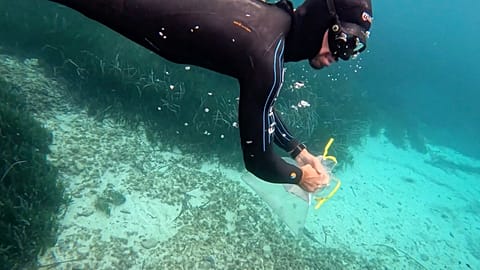
NatureMetrics has built its approach around environmental DNA, or eDNA – the genetic material shed by living organisms into their surroundings through skin cells, saliva, and other biological traces. That DNA persists in the environment for days to weeks, and a simple water or soil sample is enough to capture it.
"Every living organism will shed DNA into its environment," Patel tells Euronews Earth. "From that litre of river water, we will then be able to map back each of those traces of DNA back to the fish, the amphibians, the mammals, the insects that they started from."
The collection process has been deliberately simplified. NatureMetrics sends sampling kits anywhere in the world – no specialist knowledge required. "We wanted to make sure that the sample collection process was simple enough for a five-year-old to do, so we tested it on a five-year-old," Patel says. "She got excellent results."
Once a filter is returned to the lab, DNA sequencing technology – similar in principle to that used in forensic science – identifies every species present in the sample. The method is non-invasive: no trapping, no netting, no disturbance to the ecosystem. "It takes a fraction of the time, a fraction of the cost, but gives you an incredibly accurate and rich data set," Patel tells Euronews Earth.

Data that industries can use
The company processes samples through what it describes as the largest commercial eDNA laboratory network in the world, operating across 116 countries and serving more than 600 organisations. This year, NatureMetrics reached a milestone: 10 per cent of the planet's surface surveyed using environmental DNA.
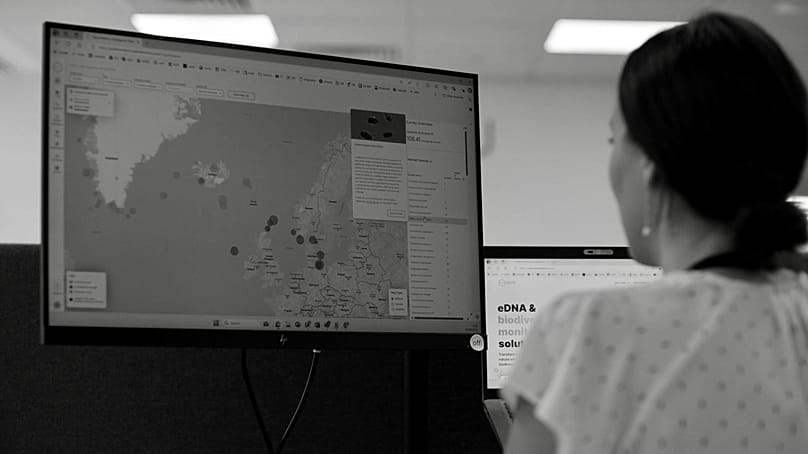
Results feed into a platform that maps species detections, tracks ecosystem health over time, and compares sites – showing, for instance, whether restoration work in a degraded woodland is producing measurable improvement.
"People are really able to understand the hidden secrets of that ecosystem and be really targeted in the way that they're then nurturing and supporting those," Patel says.
The company's client base spans conservation organisations including WWF, heavy-impact industries such as mining and energy, and – increasingly – agricultural supply chains.
Patel cites partnerships with major consumer goods companies working to protect the soil bacteria and fungi that underpin food production: "How can we on a biological level help nurture the soil that is going to continue to give us food for the next 50 years?" she asks.
The goal, Patel tells Euronews Earth, is to make biodiversity data "decision ready" – usable by companies and organisations to direct capital, manage operations, and account for their impact on nature. "It's the data layers to be a thousand miles away from a site and be able to know, at a granular level of detail, what is happening there and what you can do to help it."
'We want nature to be on balance sheets'
NatureMetrics' work has been recognised by the Earthshot Prize finals selection, the environmental award founded by the Prince of Wales. For Patel, the recognition has been mostly about credibility in industries slow to adopt new technology.
"Having someone like the Earthshot Prize, where you know they have done due diligence – being able to say we're supported by them, they trust our technology – it really opens a lot of doors," she tells Euronews Earth.
The prize nomination shifted conversations with potential partners away from scepticism and towards ambition: "What can we achieve together? What does the data inform? How might the data change the way that we are operating?"
Looking ahead, Patel's ambition is to move biodiversity from the field into the financial mainstream.
"We want nature to be on balance sheets," she tells Euronews Earth. "We want organisations and companies to be actually valuing the impact they're having on nature and accounting for that in the way that they operate their businesses and make their decisions."
The data, she argues, already exists to make that possible. The next challenge is persuading the people who run companies to act on it. "We're looking to give nature a spot in the boardroom."