




























Be a responsible consumer by following expert advice on what to do with your glasses now the eclipse is over.
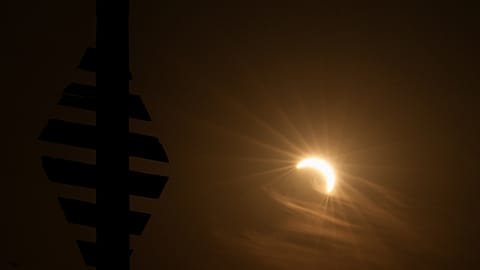
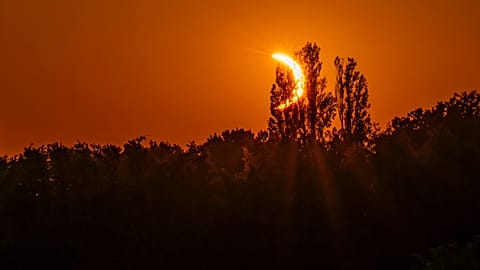
On Wednesday evening, millions of Europeans gazed at the sky as a solar eclipse plunged them into early darkness.
 ADVERTISEMENT
ADVERTISEMENT
ADVERTISEMENT
The display was the most dramatic since 1999, with large parts of Spain and smaller areas of Portugal, Greenland and Iceland witnessing the full effect of a total eclipse.
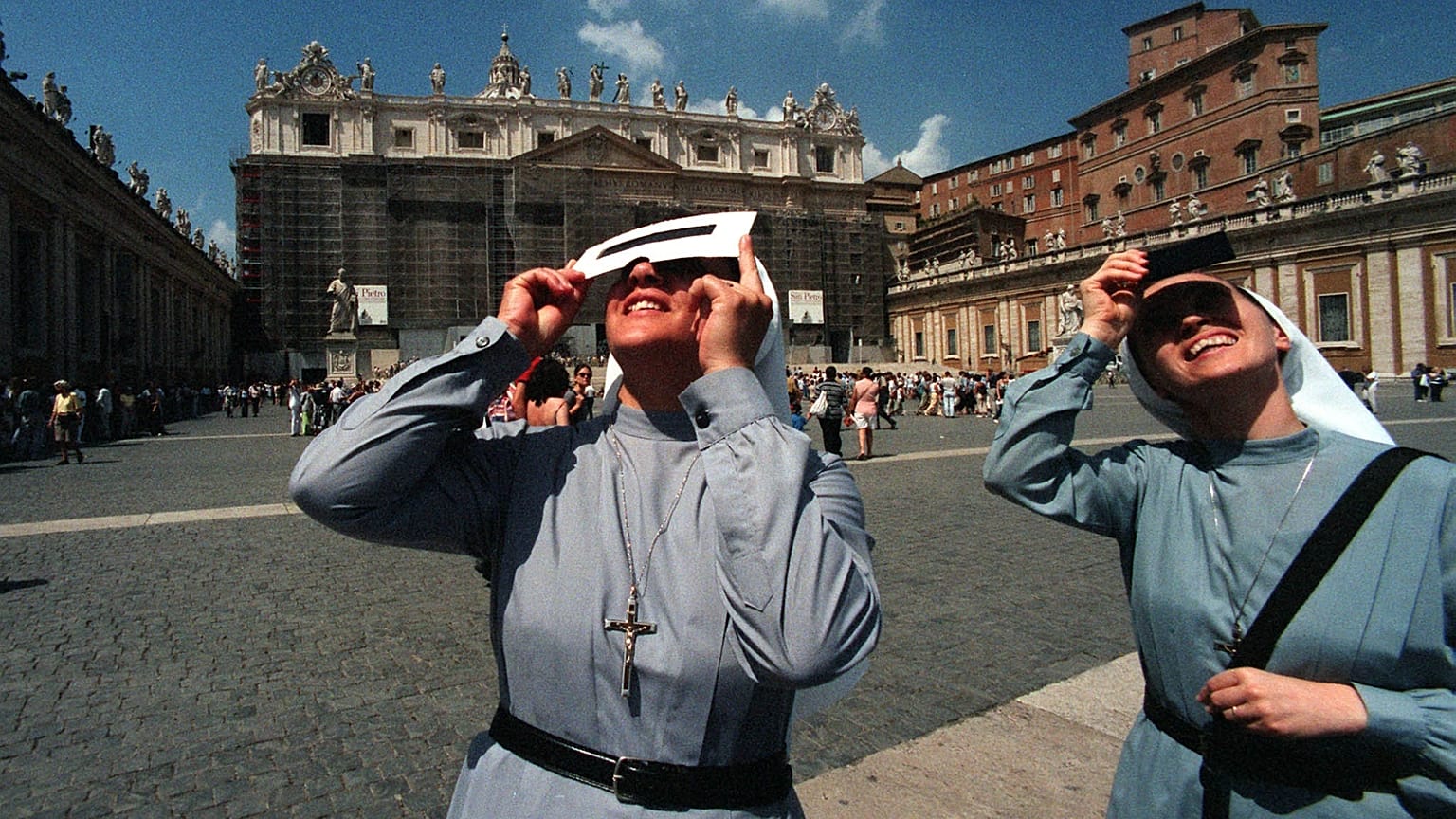
But looking directly at the phenomenon – even for a split second – carried the risk of permanent retinal damage called ‘solar burn’.
In the lead up to the event, a rush to buy protective eyewear left shop shelves empty of eclipse glasses and last-minute viewers scrambling for homemade alternatives.
But what happens to the mountains of cardboard and plastic framed spectacles when the eclipse is over?
Here’s what to do with your solar eclipse glasses.
Can I recycle my eclipse glasses?
Eclipse glasses can generally be recycled – but only partially.
The lenses feature specialised solar filters made from black polymer – a resin mixed with carbon particles that absorb light – or a thin polyester film coated with a microscopic layer of metal to reflect intense sunlight.
These generally can’t be processed by municipal recycling facilities, meaning you must remove the lenses from the frames beforehand.
Clean cardboard and paper frames can then be placed in your standard cardboard recycling collection. Most plastic frames, however, cannot be recycled.
Can I reuse my eclipse glasses?
For the 2026 solar eclipse, viewers who held onto their 1999 eyewear were advised not to reuse the vintage specs. This is because glasses manufactured before 2015 were made of materials that degrade more quickly than modern alternatives, meaning the 27-year-old glasses may no longer be safe.
Modern eclipse glasses that meet the ISO 12312-2 safety standard do not expire and can last indefinitely. However, they should not be used if there is any sign of wear such as scratches, punctures or loose filters, and experts generally advise that they can be reused for up to 10 years.
You can check for pinholes by looking at a big light through your glasses. If you see total darkness, they remain safe to use. So pack them away somewhere safe where they won’t get damaged.
The next two years have been dubbed the ‘Golden Age of Eclipses’ for a reason: a further two total solar eclipses are in the pipeline – albeit only partially visible on the continent.
On 2 August 2027, a spectacular ‘eclipse of the century’ is expected to last more than six minutes over Luxor, Egypt. On 22 July 2028, Australia and New Zealand will be treated to the phenomenon, which will be the first seen in Sydney since 1857.
Where to donate your eclipse glasses
If you’re unlikely to travel for these upcoming astrological events, don’t deconstruct your eyewear just yet.
Some organisations partner with libraries, museums and schools to collect lightly used eyewear and distribute them to communities in-need around the world. So check on local social media for collection points.
Check out which countries will have eclipses in the coming years. If you have a friend or family member in one of those places, post your glasses off to them so they can be reused.