

















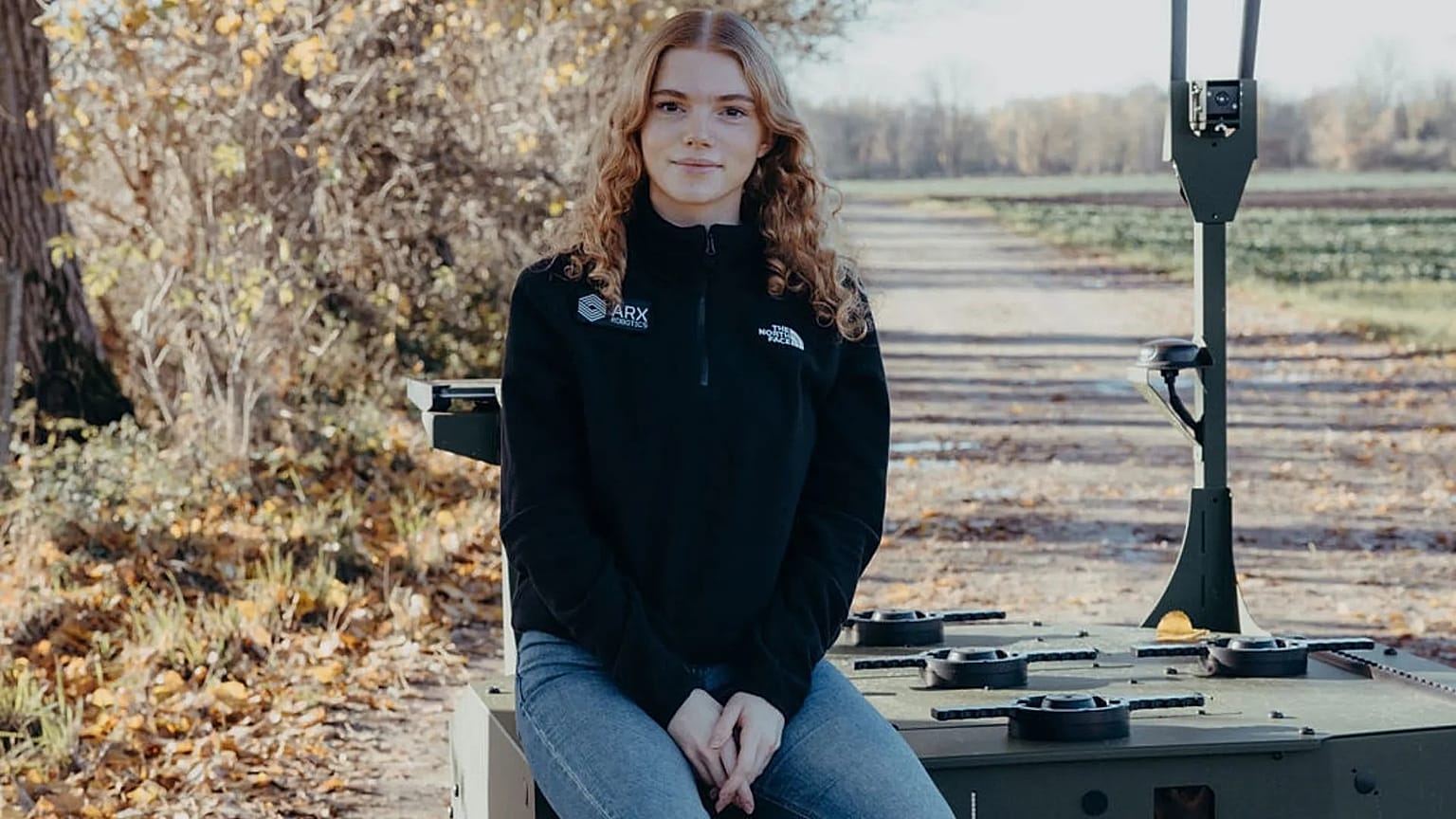













Léocadie Reimers represents a generation rethinking security, combining her experiences from military service with her work in private sector defence.
Leaving home, taking a year out, travelling the world: that's a path many young people choose after finishing school. But Léocadie Reimers went a different route. Rather than taking a gap year, she opted for military service in the German armed forces.
 ADVERTISEMENT
ADVERTISEMENT
ADVERTISEMENT
At 24, she saw the decision as an opportunity to try something new and see a different side of life.
Before her military service, Reimers had been involved in volunteer work and saw her time as an extension of that, her "contribution to society" as she calls it.
At the same time, she was drawn by the prospect of gaining something for her personal future and meeting people from across Germany from a range of different backgrounds.
But alongside discipline, camaraderie and new challenges, the Bundeswehr also means learning to handle weapons. Even during basic training, recruits are trained with weapons, first in theory, then in practice.
In an interview with Euronews, Reimers explained that she did not join the Bundeswehr only for the military training, and described handling a weapon as "unusual."
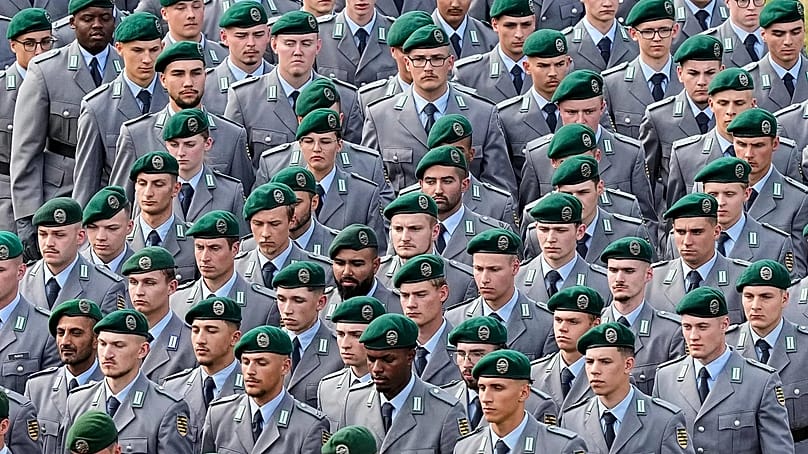
Firearms training
Her time in the Bundeswehr predated Russia's full-scale invasion of Ukraine in 2022, which is why serving in the armed forces felt more "theoretical" to her.
"Of course it's part of it, and it's not something you can ignore, but it was less present. Back then, it was easier to say: I'm doing voluntary military service without having to think too much about what it actually means," Reimers explained.
You still have a weapon in your hand, she added, but emphasised that handling it is "something very professional."
"You don't play around with it – it really is a tool, one you are introduced to very gradually. It's not like one day you're handed a weapon and told: shoot. You really have time to prepare for it."
That preparation begins with understanding the system and how it is used, before moving on to dry drills, blanks and simulator training.
"It takes time to get to the point where you can actually fire a live weapon. For me, it was also a process of slowly getting used to it, because it was unusual."
From military service to the defence industry
The 24-year-old did not, however, want to pursue a traditional full-time career in the Bundeswehr. She remains active as a reservist and continues to build her military career, but values the combination of service in the forces and work in the civilian sector.
After leaving the Bundeswehr, Reimers became involved in Ukraine, where she volunteered with the "Mission Siret" relief effort, helping to deliver aid.
It was an experience that contributed to her decision to work in the defence sector, guided by a central question: "How can we defend European security and democracy?"
For Reimers, the answer lay not in choosing between the military and the defence industry, but in combining the two. She believes many people still hold an outdated view of both. Today, she said, the focus is on "strengthening democracy, defending Europe."
"People get involved on a voluntary basis, serve in the Bundeswehr, and at the same time work in the defence industry – where innovation happens and decisions are made. I think that’s the crucial point at the moment," she told Euronews.
More women stepping up
The Bundeswehr and the defence industry are still widely seen as majority male domains. According to the Bundeswehr, more than 25,000 of its roughly 180,000 soldiers are women, representing just under 14%.
But that perception does not tell the full story. Women have long been part of both, as soldiers, engineers and entrepreneurs.
"I know an incredible number of exciting and successful women in this industry, both in the Bundeswehr and in the private sector. The problem is often that they are less visible," Reimers explained.
According to her, it's less a question of opportunity than of perception. Greater visibility could help change that and encourage more women to consider this path in the first place.
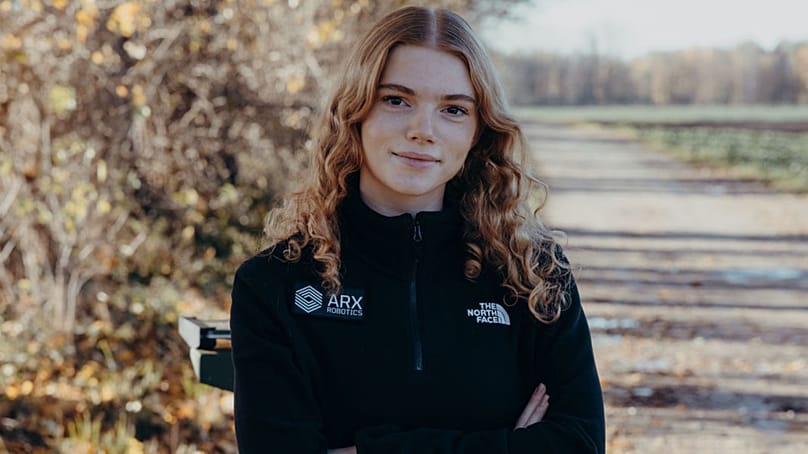
Since November last year, Reimers has been working at ARX Robotics, a Bavaria-based defence company involved in the modernisation of European defence.
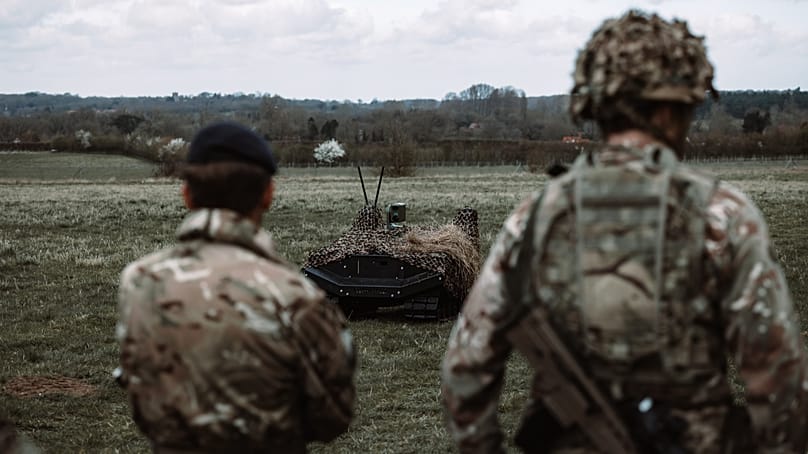
The company aims to make existing military systems more efficient and operational using autonomous, AI-supported technologies. It is developing unmanned ground systems and software designed to detect and counter drones.
The company says its focus is on European sovereignty, working with NATO partners and expanding its presence in countries such as Ukraine and the UK. Although its core business is military, ARX Robotics says its technologies can increasingly be used in civilian settings, including disaster response and infrastructure monitoring.
Like many defence companies, ARX Robotics employs a number of former members of the German armed forces. For Reimers, this is a crucial part of how the company operates.
"The most important thing is not to develop without the troops, but to develop for the troops with the troops," she said.
That, she explained, is not just about employing people with military experience. "It also means constantly bringing the product to the troops, whether on training grounds, at demonstrations or in discussions with senior military figures."
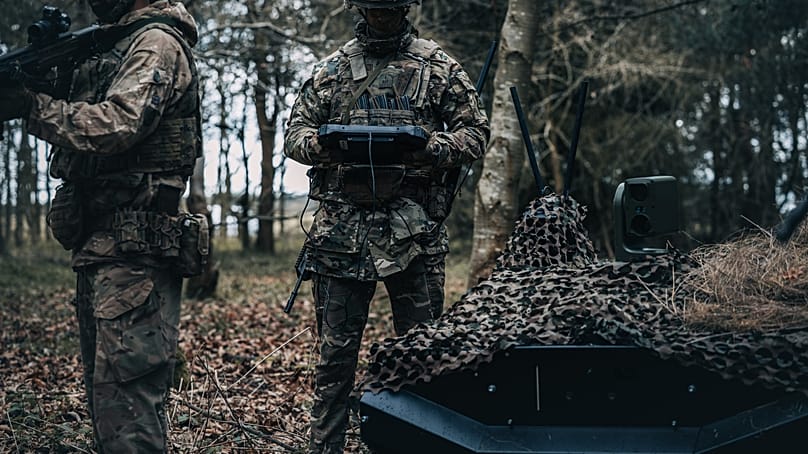
This kind of exchange is "more important than anything else in this industry," she added. "There's no point in developing something nobody needs or wants. We need to understand what the end user actually requires. We’re also deploying our system in Ukraine and getting a lot of feedback. That’s incredibly valuable."
For Reimers, who sees herself as sitting between two worlds – "one leg in uniform, the other in a suit" – it is "great to work in a company that brings both together."
Drones and AI will not replace soldiers
Both Russia's war against Ukraine and the conflict between Israel, the US and Iran underline the growing importance of drones in modern warfare. Relatively inexpensive systems are being deployed at scale and are constantly evolving.
For Reimers, this reflects just how quickly the defence industry is shifting. "The speed at which this industry is changing is incredible. So much is happening – and that’s exactly what makes it so interesting to be part of. Ultimately, the way we think, plan and act is changing. You have to keep up, because the situation evolves almost week by week."
At the same time, the use of drones and AI has drawn criticism, particularly when it comes to autonomous systems.
Reimers believes many of these concerns are misplaced. "Autonomous systems do change how armed forces think, plan and act. But it's not about replacing people, it's about supporting them, reducing risk and enabling faster decisions based on better information."
She argued that the way these technologies are used is often misunderstood. "It's not the case that soldiers are removed from decision-making. In defence tech in particular, innovation has to be about protecting people – not putting them at risk."
In the European context, she said, the boundaries are clear. "In a company with strong EU and NATO ties, and many former members of the Bundeswehr, it's very clear where the moral limits lie. First and foremost, it's about protecting people."