















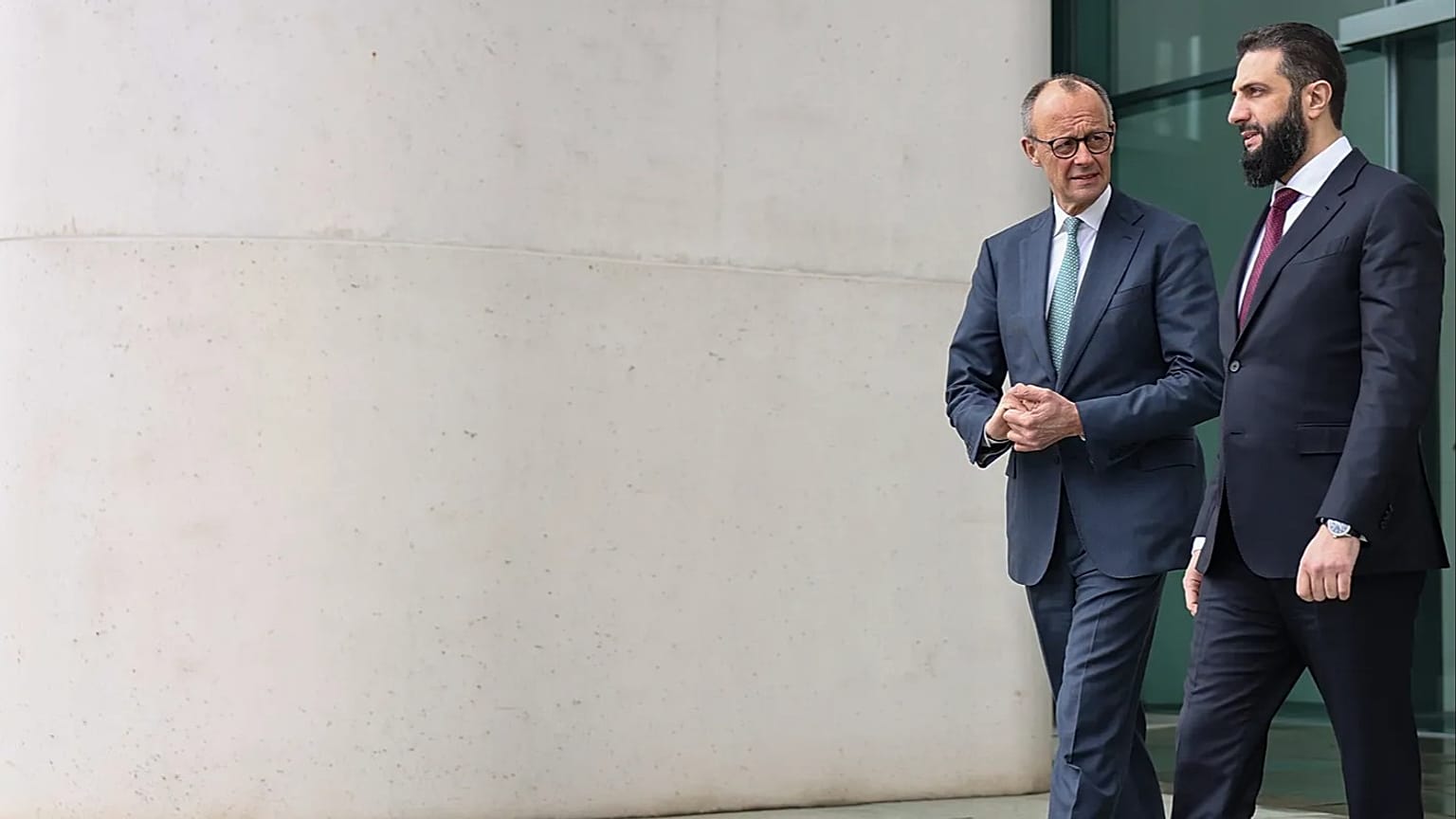













On his first trip to Germany since ousting his country's longtime strongman Bashar al-Assad in late 2024, Syria's interim leader pledged to work with Germany to enable more Syrians to return.
Chancellor Friedrich Merz said on Monday that he and Syrian President Ahmed al-Sharaa want 80% of Syrians in Germany to return to their homeland, as the former Islamist rebel leader visited Berlin.
 ADVERTISEMENT
ADVERTISEMENT
ADVERTISEMENT
Europe's top economy is home to the largest Syrian diaspora in the European Union at more than a million, many of whom arrived during the peak of the migrant influx in 2015-2016.
After meeting al-Sharaa in Berlin, Merz said the two leaders were "working jointly towards more Syrians being able to return."
The German chancellor, who has made a tougher immigration policy a priority since taking office last year, said he and al-Sharaa had agreed that eight out of 10 Syrians in Germany should go back "over the next three years."
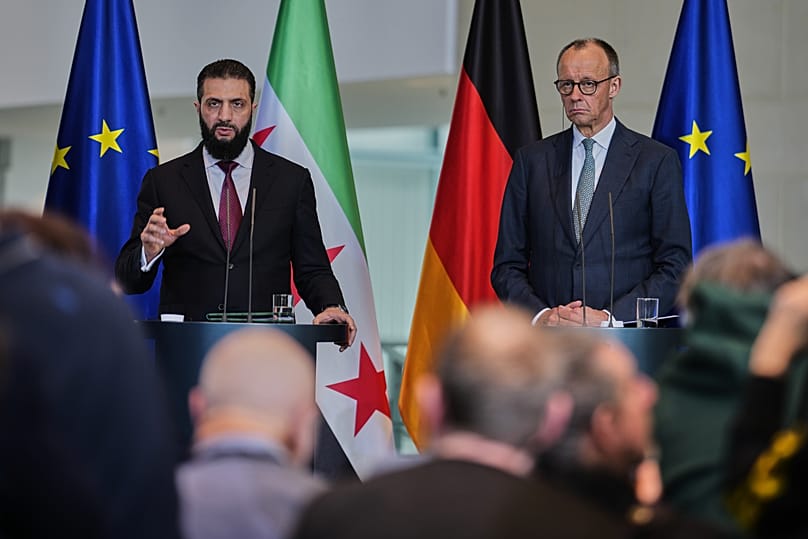
On his first trip to Germany since ousting his country's longtime strongman Bashar al-Assad in late 2024, al-Sharaa also pledged to work with Germany to enable more Syrians to return.
Syria is "working with our friends in the German government to establish a 'circular' migration model," al-Sharaa said.
This would "enable Syrians to contribute to the reconstruction of their homeland without giving up the stability and lives they have built here, for those who wish to stay," he said.
Al-Sharaa, 43, has managed to build relations with Western governments and made several overseas trips, including to the United States, France and Russia.
As a result, many international sanctions on Syria have been lifted to help the country rebuild after a bloody 14-year civil war.
'Premature normalisation'
Earlier, al-Sharaa told a foreign ministry forum in Berlin that Syria had experienced a "huge amount of destruction" during its long civil war, saying that Syrians "want to catch up with the rest of the world" as Germany did after World War II.
He pointed to investment opportunities in Syria's energy, transport and tourism sectors, describing his homeland as very diverse and with "a great wealth of human resources."
Merz said Germany wanted to "support" reconstruction in Syria as it struggles to rebuild, adding that a German government delegation would travel to the country in the next few days.
However, Merz also said that he had stressed to al-Sharaa in their meeting "that many joint projects in the future will depend on our finding a state governed by the rule of law."
Rights campaigners have criticised al-Sharaa's Germany visit, pointing to his Islamist past and ongoing violence and instability in Syria.
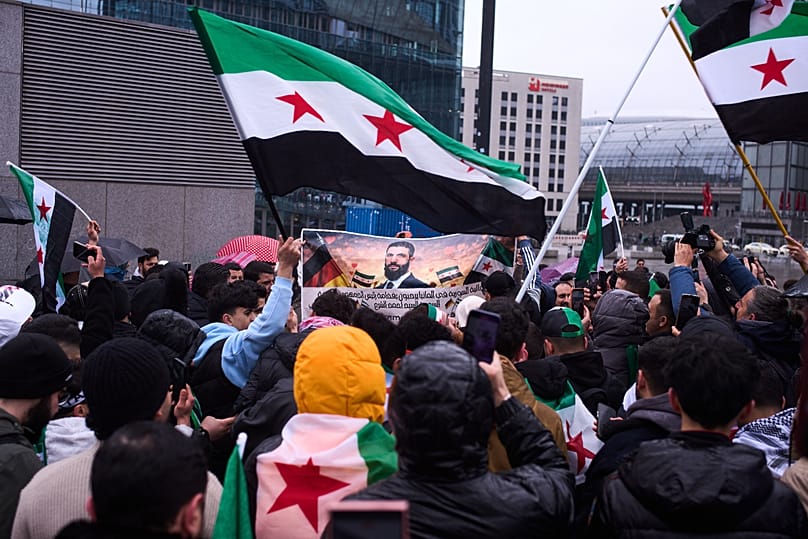
Protesters gathered in front of the foreign ministry on Monday waving Kurdish flags and placards, highlighting al-Sharaa's time as an Islamist militant.
Near the chancellery, dozens of Syrians also turned out to welcome al-Sharaa, waving Syria's new revolutionary flag and a banner showing the president surrounded by hearts.
The German Green party's foreign affairs spokesperson Luise Amtsberg told the AFP news agency that Germany should not engage in a "premature normalisation" of al-Sharaa's government.
Merz had reduced Syria policy to the question of returns "and is ignoring the situation on the ground," she said.
Authoritarian tendencies
Since al-Sharaa has been in power, sectarian tensions have continued to cause repeated bloodshed in Syria, while the Islamic State group remains at large.
After al-Assad's overthrow, Israel moved its forces into the UN-patrolled demilitarised zone in the Israeli-annexed Golan Heights and has carried out hundreds of strikes in Syria as well as regular incursions.
While on Friday, a United Nations inquiry urged the Syrian government to investigate senior security officials involved in violations committed during sectarian clashes last summer in which at least 1,700 people died, the vast majority from the Druze religious minority.
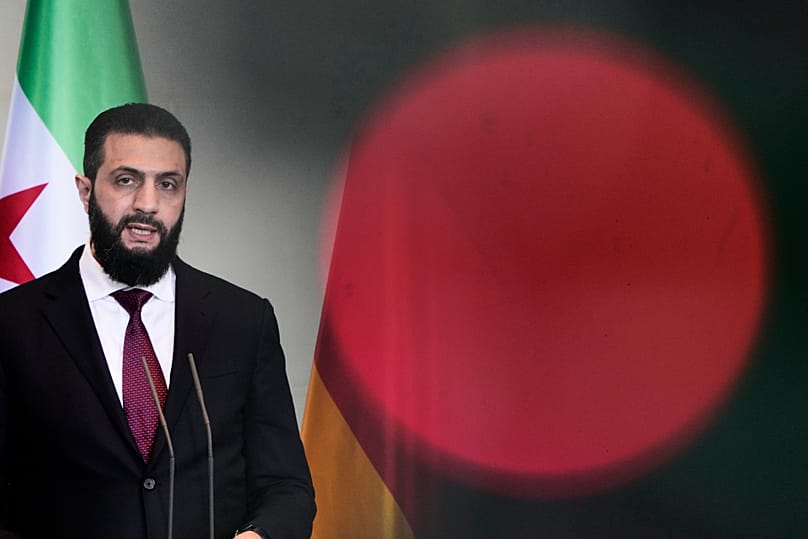
Al-Sharaa was initially planning to visit Germany in January, but the trip was postponed as he sought to end fighting between government troops and the Kurdish-led Syrian Democratic Forces in his country's north.
KGD, a group that represents the Kurdish community in Germany, has said that al-Sharaa "bears responsibility for numerous human rights violations, war crimes and crimes against humanity."
Sophie Bischoff, president of the German-Syrian NGO Adopt A Revolution, told reporters that any support from the German government "must be linked to clear conditions" and warned that "authoritarian tendencies are on the rise again in Syria."