
















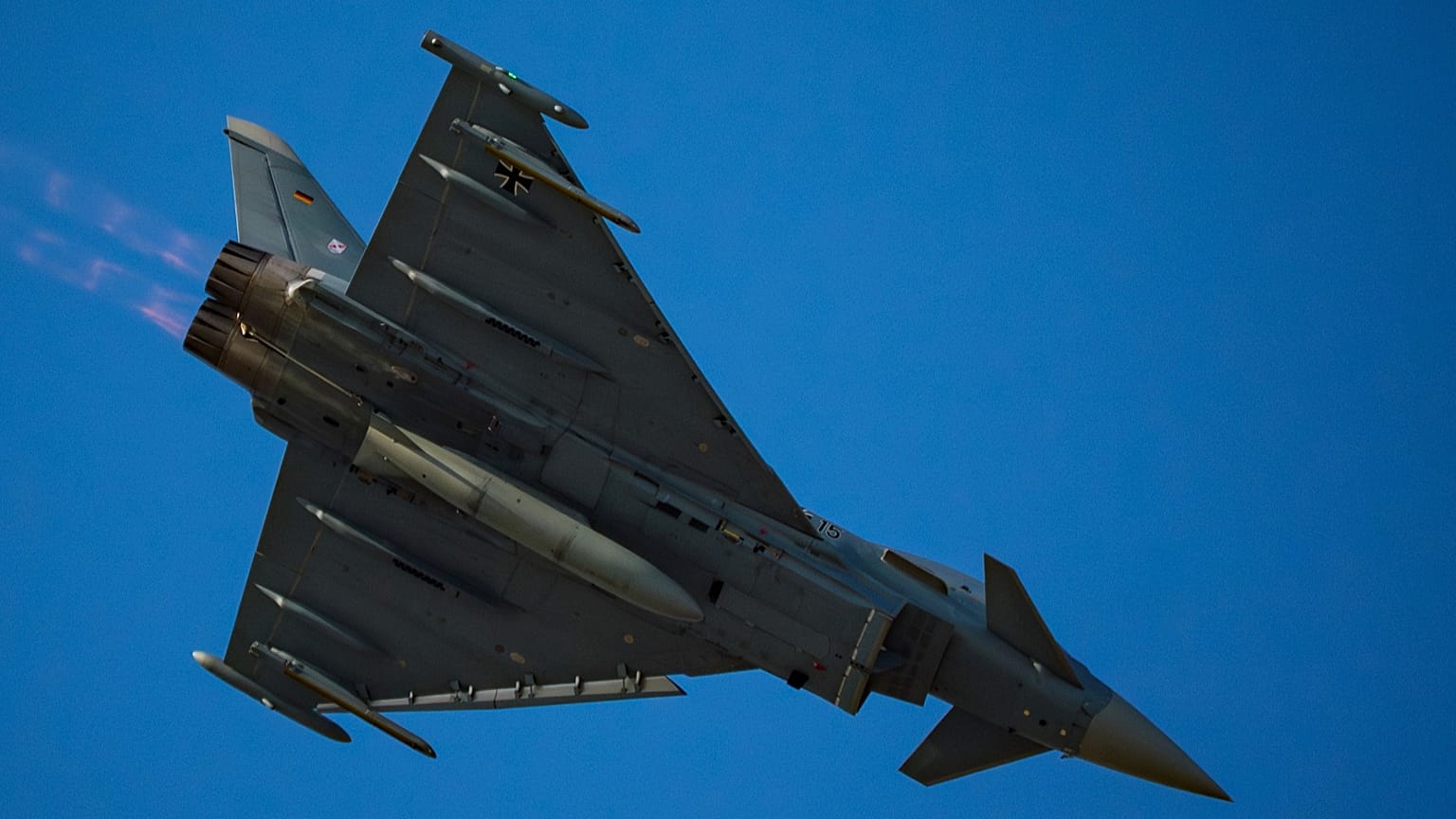













Germany is withdrawing its Eurofighters from Poland, bringing an important NATO mission to an end. Around 150 soldiers are returning from Malbork.
The German Air Force is withdrawing its Eurofighters from Poland, bringing its mission there to an end. Around 150 Bundeswehr personnel - including pilots, technicians, logistics specialists, security forces and military police - have left the Malbork base in the north of the country and are returning to Germany.
 ADVERTISEMENT
ADVERTISEMENT
ADVERTISEMENT
In a post on X, the high command of the Polish armed forces thanked the Bundeswehr for its support, describing it as an "extremely important gesture of cooperation within the framework of collective defence". The mission had been scheduled from the outset to run until March 2026. It remains unclear who will replace the German troops in Malbork.
The deployment began in December last year as part of the so-called "NATO Enhanced Air Policing" mission. Its aim was to bolster the alliance's eastern flank in the face of Russian threats - such as repeated airspace violations and risky close passes by Russian fighter jets.
This repeatedly led to dangerous situations requiring intervention by NATO jets. In such cases, the mission is designed to monitor the airspace, demonstrate a visible presence and enable a rapid response in an emergency.
Over the course of last year, such incidents became more frequent over the Baltic Sea, Poland and the Baltic states. Military observers see these flights as a deliberate show of force by Moscow. By repeatedly flying Russian aircraft close to the borders of the alliance, NATO's ability to react is apparently being deliberately tested.
According to NATO, there were already more than 300 scramble launches in 2023 in which alliance jets intercepted Russian military aircraft.
Tense situation in the Baltic Sea region
The airspace of the Baltic states is being violated a lot more often. As recently as March 18, less than a week ago, a Russian combat aircraft entered Estonian airspace. According to Estonian Foreign Minister Margus Tsahkna, it was a Russian Su-30 fighter that remained in Estonian airspace for around a minute. In this case too, NATO's Baltic air policing mission was activated, and Italian Air Force aircraft took off to intercept it.
The Su-30SM is a twin-seat multirole fighter jet operated by the Russian Air Force and is part of the Su-30 family. The aircraft is considered highly manoeuvrable and is designed for both air-to-air combat and strikes against ground targets.
Thanks to modern radar systems, guided missiles and precision weapons, the aircraft can carry out both reconnaissance and combat missions. This type therefore appears regularly in NATO interception operations over the Baltic Sea region - for example during risky approaches to alliance airspace or as a wingman for Russian reconnaissance aircraft.