































Polish ambassador Jan Tombiński reports a new trend of refugees arriving from western Europe as Warsaw reviews its asylum regulations and border controls with Germany.
Poland is experiencing a new influx of refugees arriving from western Europe rather than from the east, the country's ambassador to Germany Jan Tombiński said on Friday.
 ADVERTISEMENT
ADVERTISEMENT
ADVERTISEMENT
Tombiński told a press conference at the Polish Embassy in Berlin that border police had reported witnessing "a new phenomenon" in recent days.
"Refugees are coming to Poland from the West," Tombiński said. These are people who have tried to obtain asylum in other parts of Europe and now want to apply in Poland.
Until now, reports had focused on refugee flows from Belarus, which some have described as a Russian and Belarusian sabotage operation.
The EU accused Belarusian leader Aliaksandr Lukashenka of bringing migrants from crisis regions to the EU's external border to pressure the West.
But "this border is tighter than any other border in Europe," Tombiński said.
Numbers still limited
The westward arrivals are not coming in their thousands, Tombiński said. Nevertheless, Poland must now address the situation and review its asylum regulations, he added. The country must consider how to reduce Poland's "attractiveness" for these migrants.
Polish border guards are working with German police to identify people and prevent illegal border crossings, Tombiński said. "Daily operational cooperation is progressing very well, based on what I know from both sides," the ambassador said.
In October, Poland announced it would extend border controls with Germany until 4 April 2026 to monitor the migration route running from the Baltic states through Poland to western Europe, Interior Minister Marcin Kierwiński said.

Warsaw introduced border checks in early July in response to German controls. Polish Prime Minister Donald Tusk has made clear that ending the border checks depends on decisions by the German government.
"We want to return to Schengen as quickly as possible," Tombiński confirmed. But German ministers would have to be asked about this. "We certainly had no interest in introducing border supervision," he added.
Following Tusk's visit to the German Chancellery on Monday, many observers criticised the cool atmosphere between the Polish delegation and Chancellor Friedrich Merz.
Beyond the unresolved issue of war reparations, border controls were also on the table.
Tombiński stressed the reparations issue concerns "lasting support" for survivors of World War II. Poland does not want an "accounting operation," he said. A one-off payment would not help people in the long term.
Every day of hesitation costs more than the payments themselves, Tombiński argued. "The cost of doing nothing is higher." The issue, he emphasised, is about trust.
Ukraine remains common priority
Despite their differences, the neighbouring countries remain united by Russia's war in Ukraine and the need to rebuild the country.
"Everything that is done for Ukraine also has meaning and consequences for us," Tombiński said.
This will be the focus of a meeting between Merz and Belgian Prime Minister Bart De Wever, which European Commission President Ursula von der Leyen is also expected to attend. Merz postponed his trip to Oslo for this meeting.
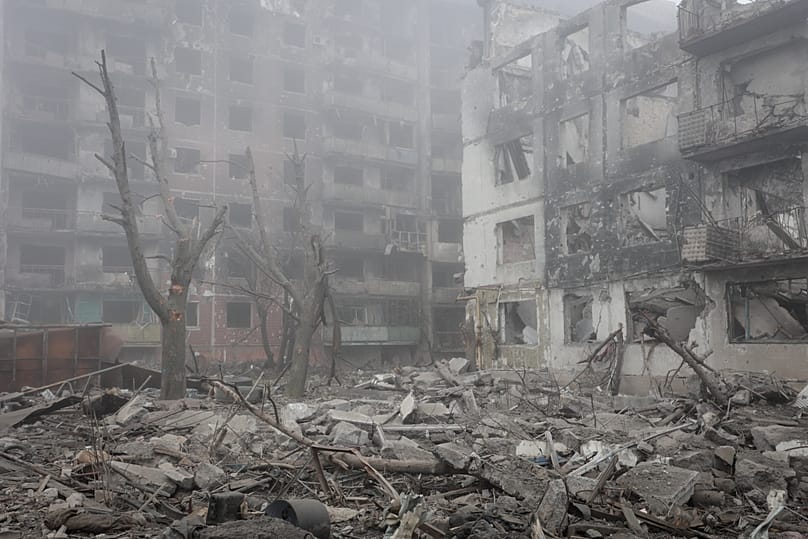
The talks will focus on the use of frozen Russian assets. Tombiński said he hoped progress would be made, as Russia must pay for the costs of its war in Ukraine, he stressed.
For Poland, it is crucial that Germany strongly supports Ukraine, Tombiński said. The ambassador expressed satisfaction with the ongoing cooperation between the German and Polish armed forces.
Germany is significantly more engaged in Poland than other NATO partners, Tombiński noted.