




























For the Russian president, Victory Day is arguably the most important public holiday of the year. But this time, even Russia’s former allies are staying away, leaving the Kremlin alone in its much scaled-down celebration.
Moscow’s Victory Day parade is slowly but surely turning into a small, intimate party instead of a grand demonstration of Russia’s military power it used to be.
 ADVERTISEMENT
ADVERTISEMENT
ADVERTISEMENT
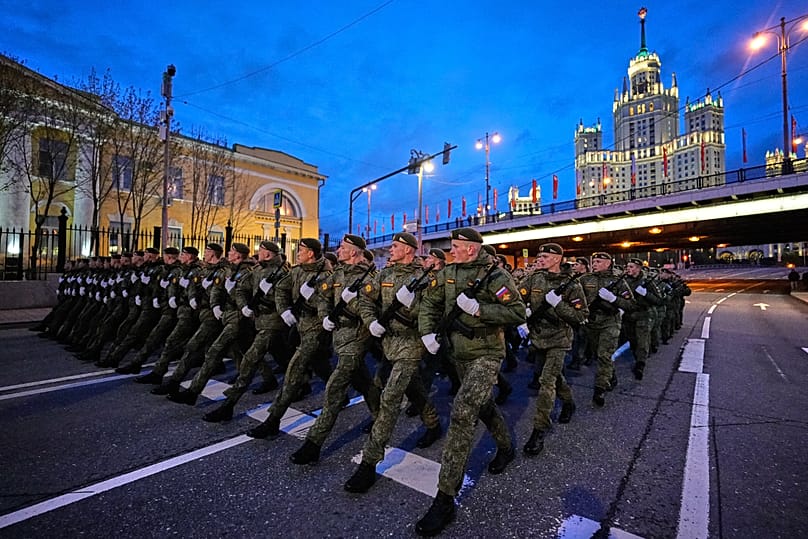
Not only will the Victory Day parade on Saturday not feature military vehicles or cadets due to what the Kremlin described as "current operational situation,” but there will also be hardly any guests in Moscow.
So who are those few who will make an appearance at the parade on 9 May, despite security risks from Ukraine and reputational damage with or without Kyiv’s possible attacks?
From US presidents to Moscow-installed occupation authorities
When Russia’s ties with the West blossomed after the 1991 collapse of the Soviet Union, many Western leaders attended Victory Day celebrations.
In 1995 US President Bill Clinton, UK Prime Minister John Major and Canadian Prime Minister Jean Chretien were among the guests.
US President George W Bush attended the 2005 Victory Day parade alongside leaders of France, Germany, and other heads of state, and German Chancellor Angela Merkel was in the Red Square for the 2010 parade.
But the Kremlin's ties with the West have been strained after Russia’s illegal annexation of Ukraine’s Crimean Peninsula in 2014 and Moscow’s initial invasion of Ukraine, when Western leaders stopped showing up to the event.
With Moscow's all-out war in early 2022, the guest list got even shorter, and over the past few years, the list of those actually coming to the parade was much shorter than those who were not.
The Russian foreign ministry-issued list of 2026 attendees is the shortest in Moscow’s modern history.
Among those expected at the Red Square on Saturday are just two international leaders: Laos President Thongloun Sisoulith and Malaysian Supreme Ruler Sultan Ibrahim.
The Kremlin is insisting that Slovak Premier Robert Fico will also be present, even after Fico himself confirmed he plans to skip the parade during his visit to Moscow.
Slovakia's Deputy Foreign Minister Rastislav Chovanec confirmed that Fico would not attend the parade and said he might take the opportunity to pass along messages from Volodymyr Zelenskyy to Vladimir Putin.
For the Kremlin, this represents a scenario that is probably even worse: seeing the European leader it believed it could rely on bring a message from Ukraine’s president.
Among those who do not really have a choice of skipping the parade are Russia’s occupation authorities, appointed by Moscow to run the territories Russia had occupied.
These guests can hardly be considered “foreign” or even “leaders”.
Badra Gunba of the Republic of Abkhazia and Alan Gagloyev of South Ossetia confirmed their presence.
Moscow gained full control over Abkhazia and South Ossetia following its 2008 invasion of Georgia and has since maintained a military presence in both regions.
Both are officially recognised as integral parts of Georgia and together represent 20% of Georgia's internationally recognised territory.
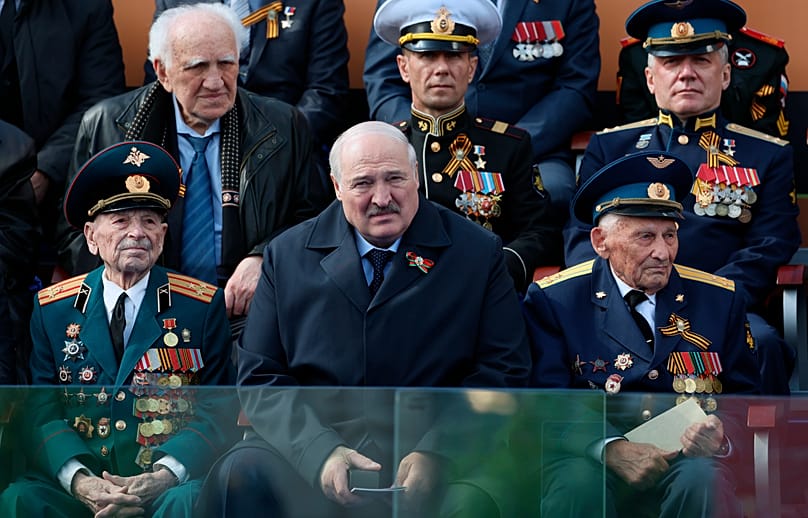
Belarus’ strongman Aliaksandr Lukashenka will also be there, as every year.
Lukashenka has never missed a Victory Day parade, or in fact any other occasion to meet with Putin. His status as a “foreign leader” is also rather questionable.
Neither the EU nor the US recognise Lukashenka as Belarus’ legitimate president, but that never stopped Putin’s most reliable ally from sitting in the stands on 9 May.
A delegation from the Bosnian entity of the Republika Srpska is set to attend, with former entity President Milorad Dodik in tow.
Dodik, a Bosnian Serb nationalist firebrand who was one of a handful of European politicians to visit Moscow for talks with Putin since the full-scale invasion of Ukraine, has been banned at home from holding office for six years, meaning he is now squarely in the category of "former leaders" at the parade.
Dodik, who became notorious for his fondness for driving tractors and other large vehicles, has been dubbed “Laktašenko” by Balkan pundits — a tongue-in-cheek portmanteau of his hometown Laktaši and the name of another tractor-loving leader, Lukashenka.
Those who will be missed the most
What do you do when no one shows up to your party? You say no one was invited in the first place.
The Kremlin insists that the few guests who are coming decided to attend the parade “on their own initiative,” claiming that no invitations have been sent.
Putin’s aide Yuri Ushakov said no foreign leaders have been invited: ”We deliberately did not invite foreign guests to the celebrations, unlike last year.”
But some no-shows hurt more than others.
Armenian Prime Minister Nikol Pashinyan said he will not attend the Victory Day parade in Moscow.
Having just hosted a massive event himself, with the European Political Community meeting and the EU-Armenia summits taking place in Yerevan earlier this week, Pashinyan managed to do what Putin cannot — rally an outstanding demonstration of international support for Armenia, with dozens of foreign leaders in the Armenian capital.
But it was not even about Pashinyan’s impromptu jam session with French President Emmanuel Macron when the two were signing Charles Aznavour's La Boheme that made Moscow angry.
It was about the leader who dared to show up in Armenia, a country long regarded as Russia's closest ally in the South Caucasus: Ukraine's Volodymyr Zelenskyy.
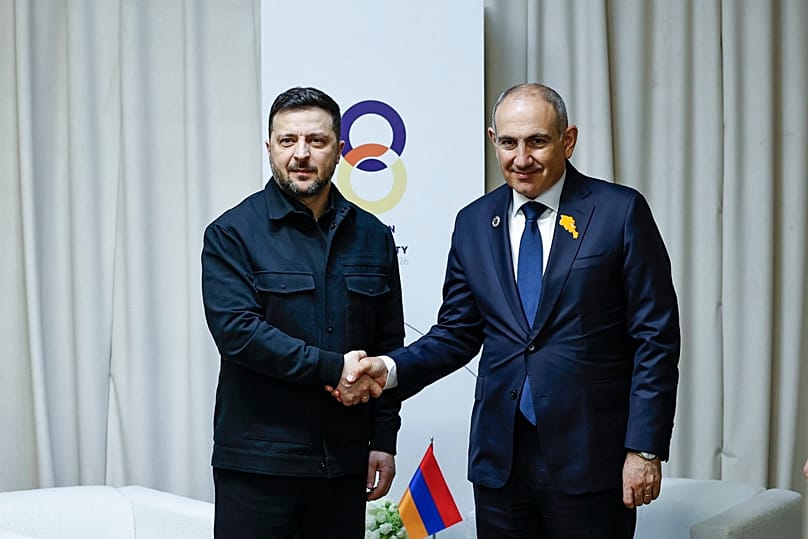
Moscow even summoned Armenia’s ambassador over Zelenskyy’s visit with Russia’s foreign ministry raging over what it considers “categorical unacceptability” of providing Zelenskyy a platform.
Russia’s Foreign Ministry spokesperson Maria Zakharova went further, accusing what she described as a “friendly, brotherly country” of Armenia of hosting a “terrorist”.
“Whose side of history are you on?” Zakharova said at a ministry briefing.
Pashinyan responded by saying Armenia was “not an ally” of Russia in its war against Ukraine, adding that he would not attend the parade due to the campaign for the parliamentary elections scheduled for 7 June.
Off-the-record festivities
With no foreign leaders in attendance and no heavy military equipment to showcase, Moscow decided not to let the world see what is left of its grand demonstration of military power.
The Kremlin now refused to let foreign media outlets anywhere near it, despite previously granted accreditations.
International outlets that still maintain a presence in Russia were informed that their accreditations have been revoked, citing what Moscow described as “a change in the format of the event due to the situation.”
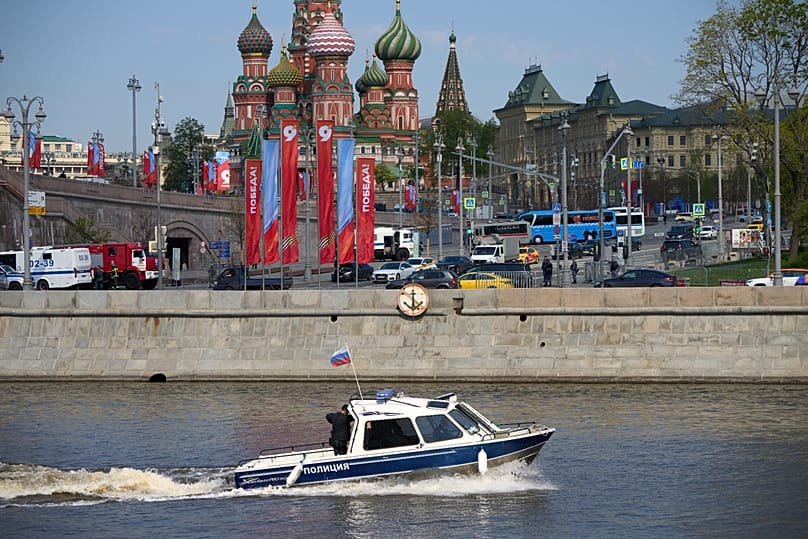
This does not apply to Russia's state-controlled media, which will have exclusive access to “cover the parade” — with a caveat.
According to chatter on Russian Telegram channels on Friday, the usual live broadcast of the parade will be delayed — a common practice for events under security threats, allowing broadcasters to avoid showing carnage.
To prevent unauthorised coverage from leaking beyond the official line, severe internet restrictions were introduced days before the celebrations.
Ukraine factor: Fear of the unknown
After Russia rejected Ukraine’s truce proposal on Wednesday, Kyiv warned Moscow that it would “respond in kind” to the Kremlin attacks.
Gripped by uncertainty over what exactly Kyiv may have in store for 9 May, Moscow has lashed out with a series of threats not just to Ukraine, but also to the European countries.
Russia's Foreign Ministry urged diplomatic missions to evacuate staff from Kyiv ahead of Moscow's Victory Day celebrations because of what Moscow described as an "inevitable retaliatory strike" by Russian forces.
Despite threats, foreign governments signalled that they had no plans to scale back their diplomatic presence in Ukraine.
On Thursday Zelenskyy said some Moscow-friendly countries reached out to Ukraine about their officials' plans to attend the 9 May parade in the Russian capital.
"An odd desire … these days. We don't recommend it," he said, offering no further clarity on what may or may not unfold on Saturday.