













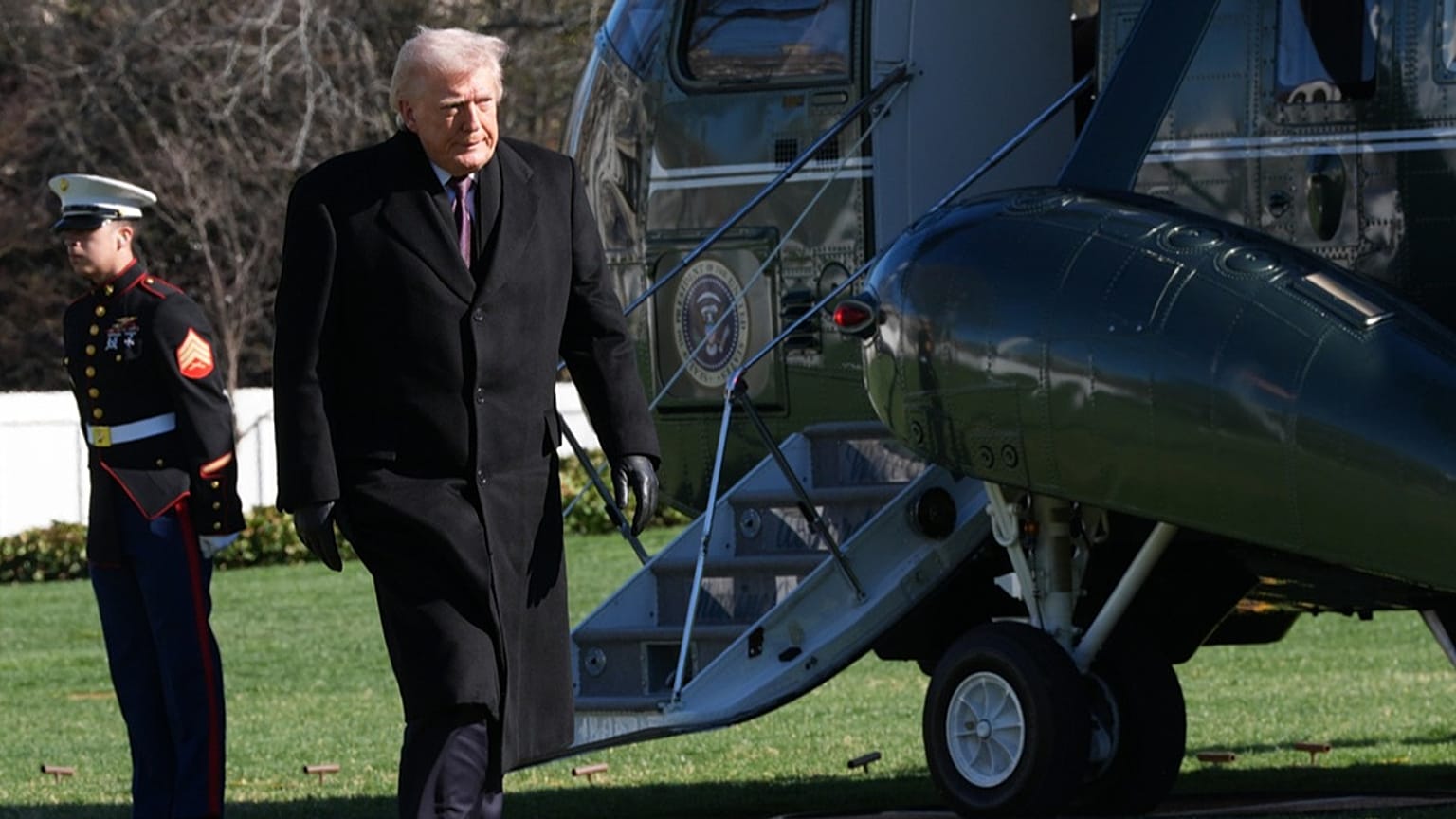














Trump has vowed to “blow up the entirety” of Iran’s South Pars gas field if Tehran moves to attack Qatari gas fields again. The warning comes after Iran, in response to an Israeli attack on its gas field, struck Qatar’s largest Ras Laffan facility, sparking global outrage.
Iran broadened its strikes on major energy facilities in the Middle East, eliciting strong warnings on Thursday from Gulf Arab states that called it a dangerous escalation that threatened to draw them into direct combat with Tehran.
 ADVERTISEMENT
ADVERTISEMENT
ADVERTISEMENT
On Wednesday, in response to an attack on its South Pars gas field, Tehran launched retaliatory strikes on neighbouring Qatar’s largest gas field, Ras Laffan, causing according to Doha “significant damage”, and causing a diplomatic rift between the two countries.
Qatar declared the Iranian embassy’s military and security attaches as persona non grata after the attack, and in early reactions, said the damage was still being assessed.
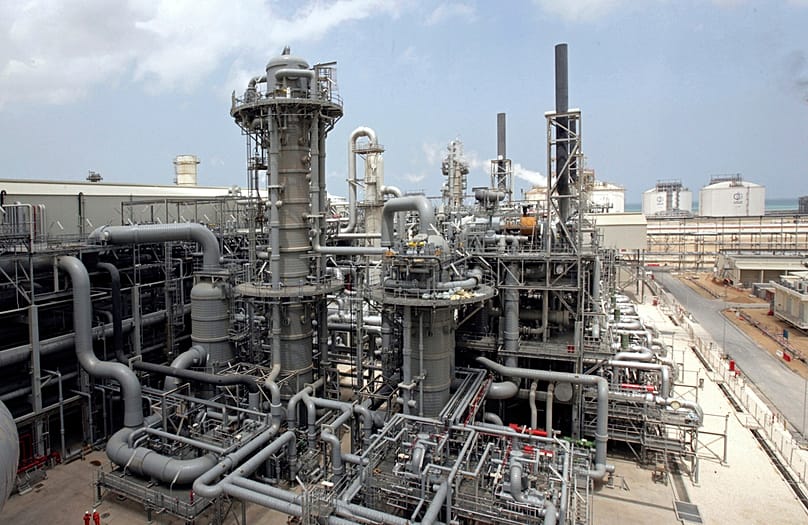
The strikes come after Israel killed Iran’s intelligence minister and attacked the world’s largest natural gas field in Iran as the war heightened pressure on the region’s economic backbone, energy.
Qatar, Saudi Arabia and the United Arab Emirates all denounced the Iranian attacks targeting their natural gas fields, with Saudi Arabia’s Foreign Minister Faisal bin Farhan Al Saud saying assaults on the kingdom meant “what little trust there was before has completely been shattered.”
It remains unclear what steps the Gulf Arab states might take militarily as they’ve sought not to enter combat alongside the United States and Israel in the war, now in its third week.
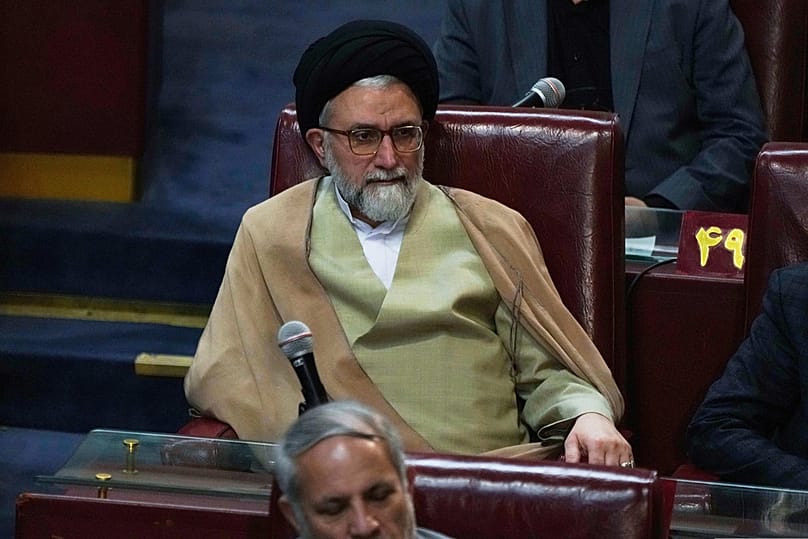
While Israel did not claim the South Pars gas field attack, Defence Minister Israel Katz promised more “surprises” after announcing the killing of Iran’s intelligence minister, Esmail Khatib, in an earlier airstrike as it works to decapitate the leadership in Tehran.
Iran condemned the strike on South Pars, with Iranian President Masoud Pezeshkian warning of “uncontrollable consequences" that "could engulf the entire world.”
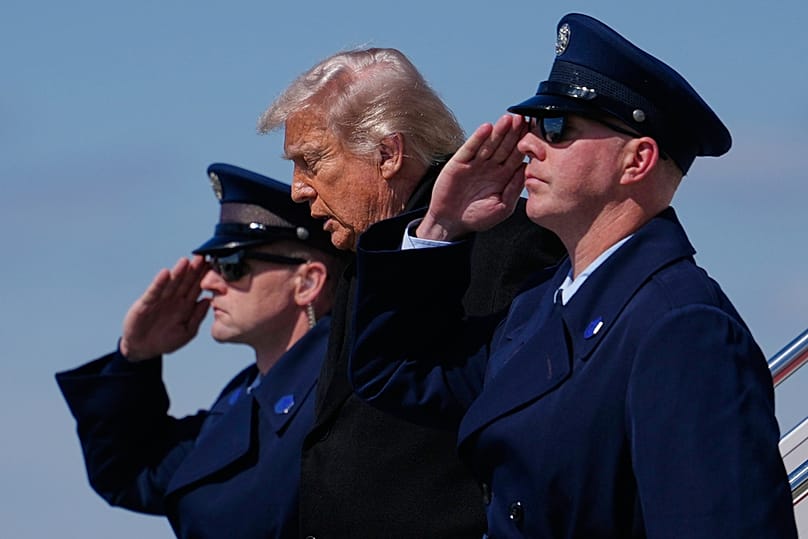
US President Donald Trump, in an apparent confirmation, indicated that Israel was indeed behind the attack, which he says stemmed from “anger for what has taken place in the Middle East,” struck a “relatively small section” of the field.
Trump, in a post on Truth Social, quickly denied any involvement or prior knowledge of the attack on the US’ part.
“The United States knew nothing about this particular attack, and the country of Qatar was in no way, shape, or form, involved with it, nor did it have any idea that it was going to happen,” wrote the US president.
Trump noted that Iran had no knowledge of the facts pertaining to the attack prior to its retaliatory strikes on Qatar, a US ally in the region. He’s also condemned the strikes on Doha’s energy infrastructure, calling them “unjustifiable” and “unfair”.
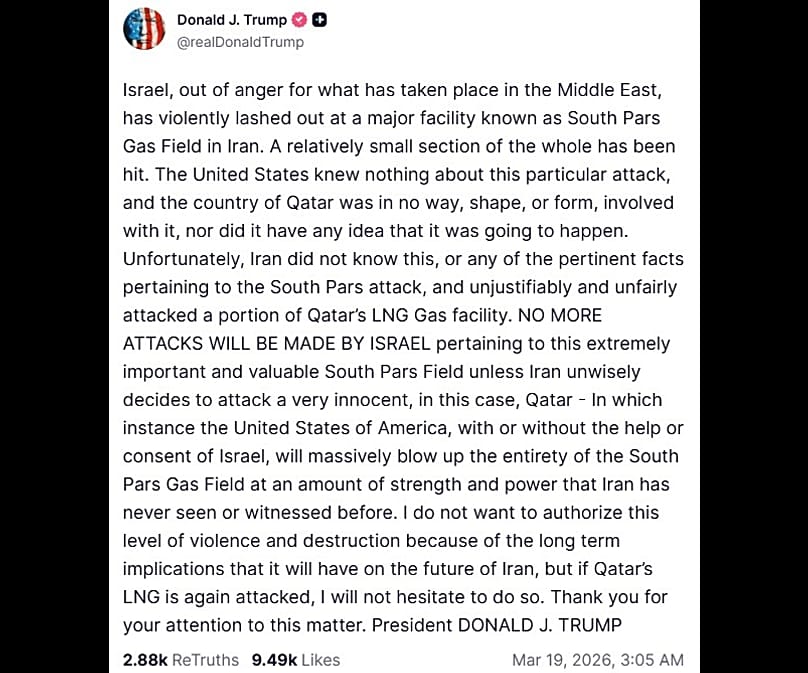
He’s also vowed that “NO MORE ATTACKS WILL BE MADE BY ISRAEL pertaining to this extremely important and valuable South Pars Field”.
His diplomatic tone didn’t linger too long, as the US president threatened Iran to halt its attacks on regional energy facilities or face the wrath of the US military, in what he promised would cause damage with “long term implications”.
“The United States of America, with or without the help or consent of Israel, will massively blow up the entirety of the South Pars Gas Field at an amount of strength and power that Iran has never seen or witnessed before,” Trump wrote.
“I do not want to authorise this level of violence and destruction because of the long term implications that it will have on the future of Iran, but if Qatar’s LNG is again attacked, I will not hesitate to do so.”
The attacks further exacerbate an unfolding global oil price crisis as energy exports continue to be blocked with Tehran keeping the invaluable Strait of Hormuz, through which roughly 20 per cent of the world’s energy flows, effectively closed.
Leading up to the attack, the price of Brent crude hovered around the $100 per barrel mark, which is already a 40 per cent increase in comparison to pre-war figures. Following the attacks on Iran and Qatar’s energy fields, the price shot up to $108 a barrel.
The fighting situation remains as dire as previous days, as the United States and Israel continue to pummel Tehran with heavy strikes on a daily basis, prompting Iranian retaliation against Israel and the wider region, namely Gulf Arab states.
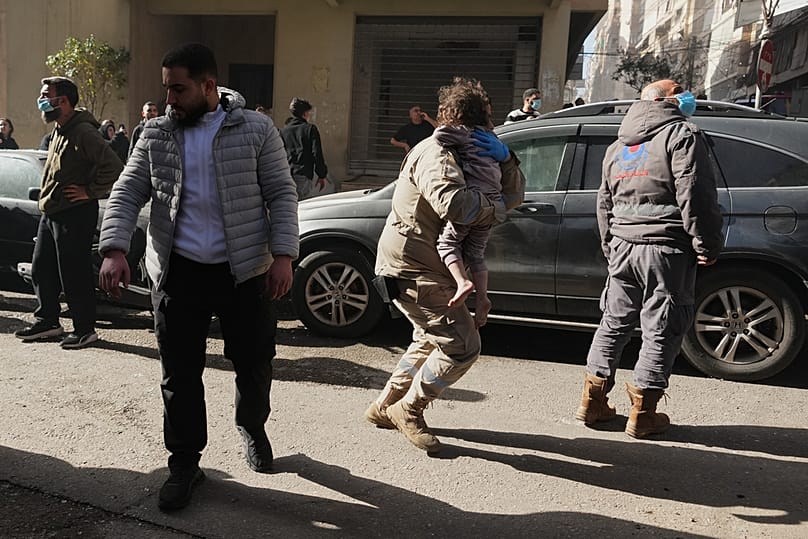
Israeli attacks are also intensifying in neighbouring Lebanon where the IDF carries out daily strikes against what it says are targets affiliated with the Iran-backed Hezbollah group.
The death tolls have risen in all areas engulfed in heavy combat, with Iranian authorities indicating that close to 1,450 people were killed so far, with over 18,500 others injured.
In Israel, 17 people were killed since the war erupted on 28 February and almost 4,000 people were injured.
Lebanon’s health ministry in its latest figures announced that Israeli strikes have killed 912 people and attacks on the Gulf states have led to a combined death toll of 21. The US death toll has remained the same, currently sitting at 13, all of whom were service members.