




























Escalating conflict in the Middle East has emboldened calls for the UK to open up North Sea drilling licences.
Calls to bring Donald Trump’s ‘drill baby drill’ attitude to the North Sea have gotten louder, as the war on Iran sends Europe’s oil and gas prices skyrocketing.
 ADVERTISEMENT
ADVERTISEMENT
ADVERTISEMENT
Energy infrastructure has rapidly become a key target of missile strikes, signalling a major escalation of the conflict. Yesterday (18 March) Iran reported that gas tanks and parts of a refinery were struck at South Pars, the world’s largest gas field and the biggest source of domestic energy in Iran.
Iran retaliated by firing missiles at Qatar’s largest gas field Ras Laffan, sparking global outrage and receiving condemnation from nearby nations. Saudi Arabia says the attacks on Gulf Cooperation Council (GCC) energy facilities have shattered any hopes for normality after the war comes to an end.
Now, Trump has vowed to “entirely blow up” the South Pars complex if Tehran continues to target Qatari gas facilities – resulting in fears of a catastrophic humanitarian crisis.
Iran continues to strategically target ships in the Strait of Hormuz, a 38km passage that carries around one-fifth of global oil supplies.
How much will European bills increase?
Following attacks on energy infrastructure, global oil and natural gas prices soared on Wednesday, with the European TTF benchmark for natural gas prices trading 24 per cent higher this morning. Brent crude – the worldwide benchmark for oil prices – rose to near $114 (around €99.48) per barrel, up from under $73 (€63.70) per barrel on the eve of the war.
Research from Transport & Environment found that Europeans are set to pay a “geopolitical premium” of an extra €150 million a day as oil prices exceed $100 per barrel.
In 2022, which is the last time oil prices exceeded this threshold following Russia’s full-scale invasion of Ukraine, Europeans spent an additional €55 billion at the pumps. Across the EU, by mid-2022, diesel prices were up by 45 per cent while petrol increased by 36 per cent.
Towards the end of June 2022, petrol and diesel prices were above €2 per litre. This means that drivers were spending up to €31 more to fill up a 50-litre tank than they were before the crisis.
The EU is scrambling to draft emergency measures to soften the surge in energy bills across the continent, as its heavy reliance on imported oil and gas leaves it exposed to global price swings.
In the UK, money expert Martin Lewis warned that families could see their energy bills rise by as much as 30 per cent if high oil and gas prices persisted for several months.
Is drilling the North Sea the solution?
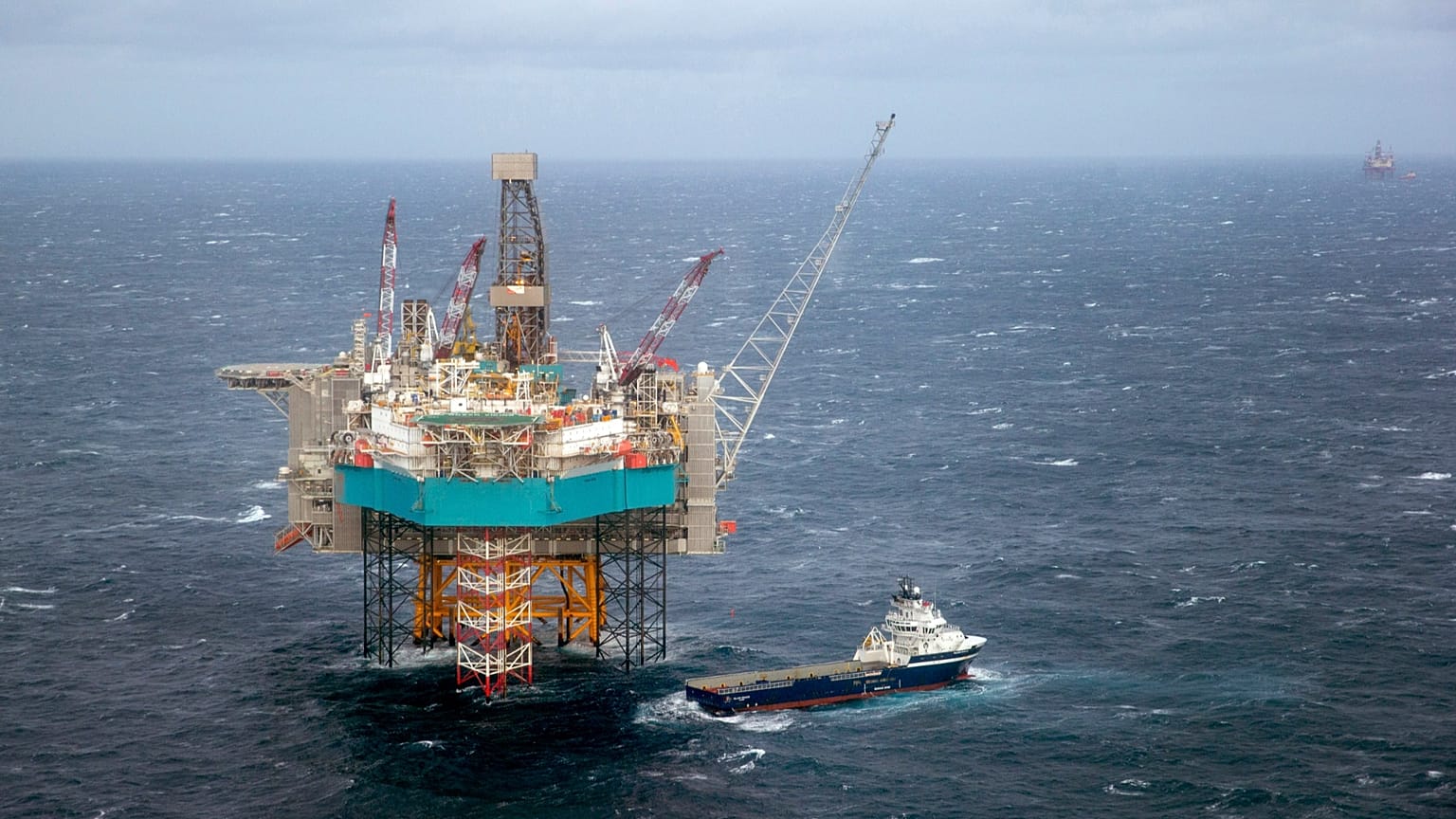
Concern around energy bills spiralling amid a cost-of-living crisis has emboldened calls for the UK to double down on drilling in the North Sea.
Last year, the UK government ended exploration licenses meaning companies can no longer get permission to search for new oil and gas reserves in previously untapped areas. This doesn’t mean that current drilling projects have stopped.
On Saturday 14 March, UK tabloid Daily Express printed a front page story headlined ‘Get Drilling To Stop Soaring Bills’. The sentiment was echoed on social media, with several right-wing figures promoting the idea.
Nigel Farage, leader of the Reform UK party, is one of the most prominent figures urging the government to U-turn on its historic ban.
“Given that our critical reserve of natural gas is down to two days and how vulnerable we are – and with talk potentially of energy rationing coming later this year – isn’t it time we changed course?” Farage asked MPs on 18 March.
The politician urged Prime Minister Sir Keir Starmer to remove “excessive taxation” on exploration companies, open up licences to drill in the North Sea, and become “self-sufficient” in natural gas.
Starmer replied that oil and gas will remain part of the UK’s energy mix for “years to come”.
Energy Secretary Ed Miliband had previously shut down calls to drill in the North Sea, arguing such a move would not “take a penny off people’s bills”.
Renewables vs North Sea oil: Which is more likely to lower energy bills?
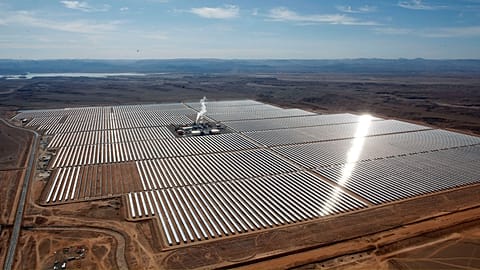
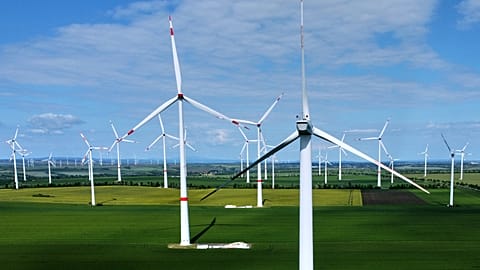
A new analysis from the University of Oxford has found that a UK fully powered by renewable energy could save households up to £441 (€510) a year on their energy bills.
In comparison, maximising oil and gas extraction from the North Sea would only save households £16 (€19) to £82 (€95) per year – and this would rely on tax revenues collected being distributed to households to offset their energy bills.
Dr Anupam Sen, co-author of the analysis, said the idea that “draining” the North Sea would make the UK more energy secure and significantly cut household bills is “sheer fantasy”.
“We show that regardless of the remaining lifetime of North Sea oil and gas, a ‘drill baby drill’ approach to extraction would actually cost households more money versus continuing on our path to clean energy.”
Savings gained from renewable energy does however depend on the extent of electrification within a household.
“Achieving this requires upfront investment – especially for heat pumps and insulation – and therefore depends on effective subsidy and financing mechanisms, particularly for low-income households,” explains co-author Cassandra Etter-Wenzel.
The analysis uses oil and gas prices as of January 2026, prior to fluctuations caused by the Iran war. Researchers say these are representative of realistic medium-to-long-term prices.
“Our analysis represents a conservative scenario, in which renewable energy competes against cheap fossil fuels,” says co-author Nadia Schroeder.
“Even in this ‘worst case’ scenario, renewables are shown to be significantly more cost competitive.”
The authors stress that savings gained from the clean energy transition are recurring annual reductions in bills which would continue indefinitely, whereas North Sea oil and gas are finite resources that would run out around 2040.
Multiple experts have also pointed out that oil and gas prices are set by global markets, not discounted for British consumers – and gas extracted from UK waters can be exported to the highest bidder – meaning increasing domestic production won’t significantly lower costs.