


























Also in this newsletter: The EU mediates amid Hungary and Slovakia’s energy standoff with Ukraine, and the French far right asks the European Parliament to mark death of activist Quentin Deranque.
Good morning. I’m Mared Gwyn with the last dispatch from Brussels this week, brought to you with my colleague Marta Pacheco.
 ADVERTISEMENT
ADVERTISEMENT
ADVERTISEMENT
Just in: UN Special Rapporteur for the Palestinian territories Francesca Albanese has just responded to recent calls for her resignation on our flagship morning show Europe Today, saying she will not step down as she has the full support of the UN Human Rights Council. Albanese said it's 'ludicrous' that the French Foreign Affairs Minister Jean-Noël Barrot is "accusing me of what I never said" and added that the attacks are a 'gimmick' to divert attention from her findings.
"Let's not make it about me, let's talk about the seven damning reports where I documented 62 States, among whom France, who have provided political, strategic and military support to Israel," Albanese told Euronews. "This is what France and other governments need to respond to."
Berlin and Paris demanded Albanese step down over comments she made on Israel, suggesting she called the nation a “common enemy”. Germany, France and the Czech Republic reacted to a video, allegedly manipulated, and verified byEuronews’ The Cube. A different video footage shows Albanese saying financial and political support to Israel, algorithms amplifying the pro-apartheid narrative and weapons are humanity’s common enemy. Albanese’s supporters argue she is being a target of a smear campaign and describe her as “the last barrier of Israel’s impunity”. Watch Albanese's interview.
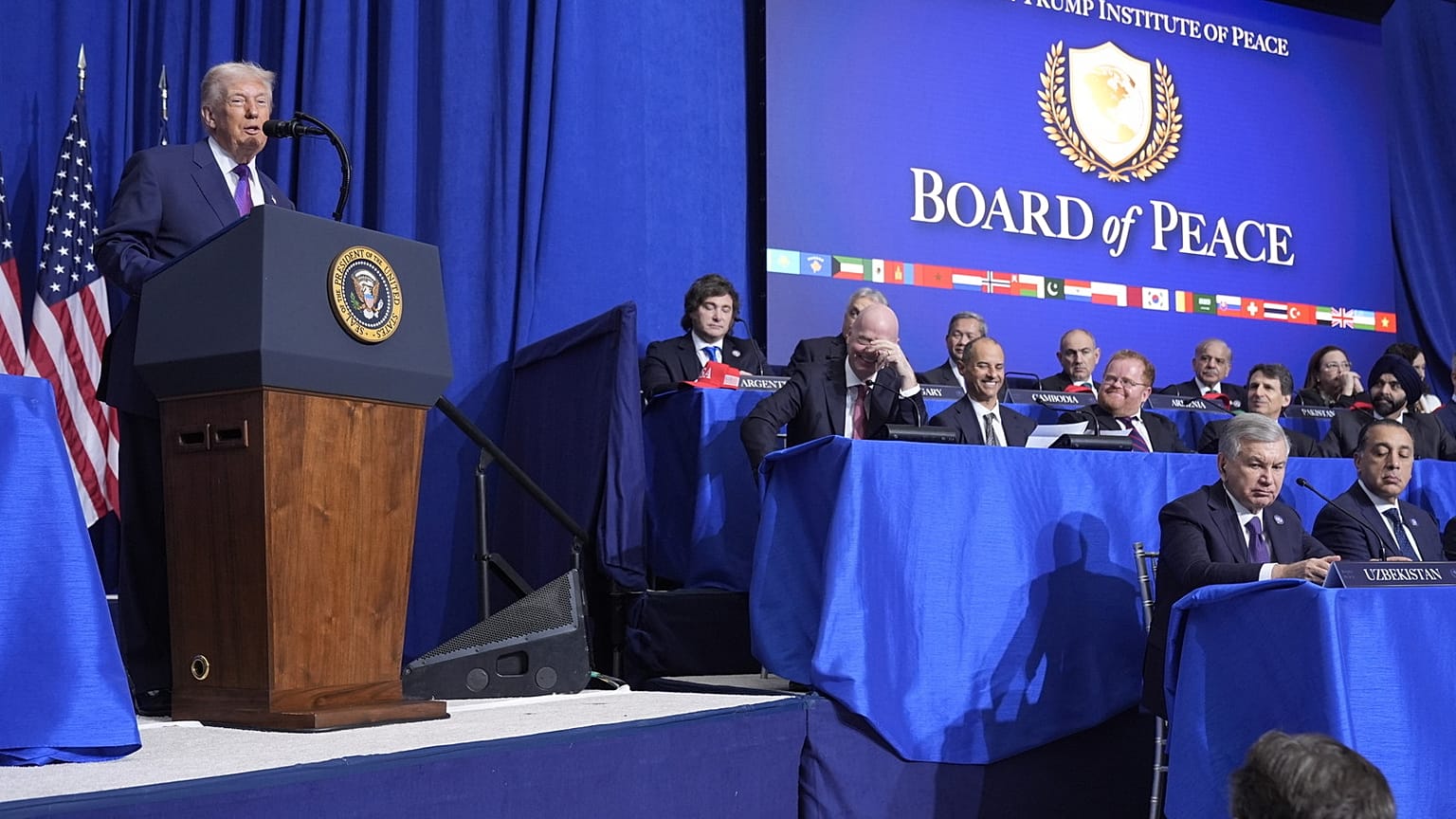
But we lead this morning with the fallout from the European Commission’s decision to send its Mediterranean chief Dubravka Šuica to attend the first meeting of US President Donald Trump’s Board of Peace in Washington yesterday – with Paris publicly denouncing the move.
French Foreign Minister Jean-Noël Barrot wrote on X last night that “the European Commission never should have attended the meeting” as it had “not received a mandate from the Council of the EU.”
"Beyond the legitimate political questions posed by the "Board of Peace", the Commission should meticulously respect European law and institutional balance under all circumstances," he added.
Slovenia’s Foreign Minister Tanja Fajon also publicly criticised the move on Thursday, saying the Commissioner lacks authority over EU foreign policy.
Reminder: France had led criticism of Šuica’s trip at an ambassadors’ meeting in Brussels on Wednesday, citing doubts over the political and institutional legitimacy of the decision and concerns that it could be interpreted as an EU endorsement of the controversial Board, whose sweeping mandate overlaps with the UN’s.
The Commission continues to maintain that it won’t join the board as a member.
But: As spotted by our sharp-eyed reporter Jorge Liboreiro, the EU flag appeared nestled in between the flags of the board’s sitting members in the backdrop of the meeting. Official photographs show that 14 EU member states’ flags were also displayed in and among those of Board members, , corresponding to those who sent a representative.
Earlier on Thursday, Brussels defied criticism and defended the move, with a Commission spokesperson saying that "we do believe that we need to be at the table, otherwise we will simply be a payer and not a player" in Gaza's future recovery.
But it’s clear that both member states and the EU institutions in Brussels are deeply divided on the issue.
A non-paper drafted by the EU's diplomatic arm and seen by Euronews raises a series of legal concerns surrounding the Board’s charter including the way the "autonomy of the EU legal order militates against a concentration of powers in the hands of the Chairman.”
Meanwhile, later today in Brussels, ambassadors will meet again to discuss the 20th round of sanctions against Russia, Jorge Liboreiro writes in to report. The clock is ticking fast: Brussels wants the package approved by the time the war turns four years old next Tuesday.
As we’ve told you, the main sticking point is the full ban on maritime services for Russian oil tankers, which, if enacted, will terminate the price cap. On the one hand, Greece and Malta, two countries with powerful shipping industries, have warned that the ban could backfire and empower the “shadow fleet” to the detriment of European companies. On the other hand, G7 allies have remained mute about their willingness to adopt a similar measure.
“We’re prepared to start doing this already without the US,” said a senior diplomat. “The overwhelming majority (of member states) is in favour because we all see the need. We’re not there completely yet, but I hope we will get there in the end in some shape or form.”
In other news this morning, yesterday’s arrest of former prince Andrew Mountbatten-Windsor has sent shockwaves throughout the UK and the rest of the world. Andrew was detained on suspicion of misconduct in public office and has since been released from police custody.
King Charles has issued a statement saying "the law must take its course" but refused to answer journalists’ questions when he appeared in central London later on Thursday.
The BBC reports, based on their sources, that information contained in the January Epstein files – in which the proximity of Andrew and the late sex offender Jeffrey Epstein was laid bare – particularly in relation to his activities when he was a trade envoy for the UK government led to his arrest. Euronews’ Tokunbo Salako has more.
EU calls emergency meeting over Hungary and Slovakia's energy standoff with Ukraine
The European Commission has called an extraordinary meeting of its Oil Coordination Group to address a growing dispute between Hungary, Slovakia, and Ukraine over the Druzhba oil pipeline, our correspondent Sandor Zsiros reports.
On Wednesday, Hungary and Slovakia halted diesel supplies to Ukraine after a Russian attack on the pipeline in Ukrainian territory knocked it out of service. Budapest and Bratislava, who both rely heavily on Russian crude oil transported through the pipeline, have accused Kyiv of deliberately delaying repairs for political reasons.
The Commission announced on Thursday that the emergency meeting would take place the following Wednesday, with the participation of Hungary, Slovakia, and Croatia.
"We have called an ad hoc Oil Coordination Group meeting to discuss the impact of the supply disruption and possible alternatives to fuel supply," Commission spokesperson Anna-Kaisa Itkonen said.
Hungary has requested that the Commission facilitate the transfer of seaborne Russian oil through Croatia's Adriatic pipeline as an alternative route. Croatia has already rejected the request.
Sandor has more.
'Made in Europe' plan sparks intense Brussels lobbying
Our trade reporter Peggy Corlin reports this morning that the European Commission’s push to embed a so-called European preference in public procurement is triggering heavy lobbying from EU capitals and foreign partners.
The proposal, designed to counter Chinese and US competition, would see products made in Europe officially favoured in public contracts and support schemes. Critics have branded it protectionist, and several member states have sought to water down the definition of "made in Europe" to ensure access for like-minded countries.
According to EU officials, the Industrial Accelerator Act (IAA), which is set to define what made in Europe means, is likely to face another delay despite appearing on the Commission’s agenda for presentation on 26 February. The strategy was first delayed in November 2025.
A leaked draft of the IAA text seen by Euronews lists strategic sectors targeted for a European preference, including chemicals, automotive, AI and space. It also proposes EU-origin thresholds of 70% for EVs, 25% for aluminium and 30% for plastics used in windows and doors.
The draft has drawn intense pushback. Nordic and Baltic states warn that a strict made in Europe regime could deter investment and limit EU companies’ access to cutting-edge technologies from non-EU countries.
In a separate leak reported by Euronews last week, the Commission appeared to lean toward the German position: a European preference open to like-minded partners with reciprocal procurement commitments and those contributing to “the Union’s competitiveness, resilience and economic security objectives”.
Peggy has the details.
French far right asks European Parliament to mark death of activist Quentin Deranque
The death of French far-right activist Quentin Deranque has reached the European Parliament, with the Patriots for Europe group calling for a minute of silence at next week's plenary session, sources and MEPs from the group confirmed to Euronews.
A demonstration organised by far-right groups is also planned in Brussels on Thursday evening.
Deranque, 23, died on Saturday in a hospital after being beaten during an altercation between far-left and right-wing activists in Lyon, following an event featuring far-left MEP Rima Hassan.
Witnesses said Deranque was providing security at a protest against Hassan's appearance at Sciences Po university when he was assaulted by rival activists. His death has sparked protests and political debate across France.
The delegation of the far-right French party Rassemblement National (RN) at the European Parliament has moved to bring the case before the assembly, with delegation head Jean-Paul Garraud submitting a request for a minute of silence ahead of next week's plenary session.
The extraordinary session was planned solely to mark the fourth anniversary of Russia's full-scale invasion of Ukraine.
Our correspondent Sandor Zsiros has the story.
More from our newsrooms
US military ready for Iran strike from Saturday, reports claim. US officials said the military will be ready to strike Iran within days as Donald Trump weighs action, even as Geneva nuclear talks expose wide gaps, according to reports by multiple US media outlets. Farhad Mirmohammadsadeghi has the details.
Sexual violence in the Ukraine war: Seven women break their silence at the Berlinale. They survived Russian imprisonment, torture and sexual violence. In "Traces", seven Ukrainian women tell their story - and transform pain into strength. A documentary about war crimes, dignity and the fight for justice. Franziska Müller, Sonja Issel and Emma De Ruiter have more.
We're also keeping an eye on
- Kaja Kallas meets E5 defence ministers in Krakow. Press conference at 12.00 CEST.
- European Commissioner for humanitarian aid Hadja Lahbib in the Great Lakes region, visiting the Democratic Republic of Congo (DRC) and Rwanda.
That’s it for today. Jorge Liboreiro, Maia de la Baume, Marta Pacheco and Sandor Zsiros contributed to this newsletter. We'll be back on Monday.