




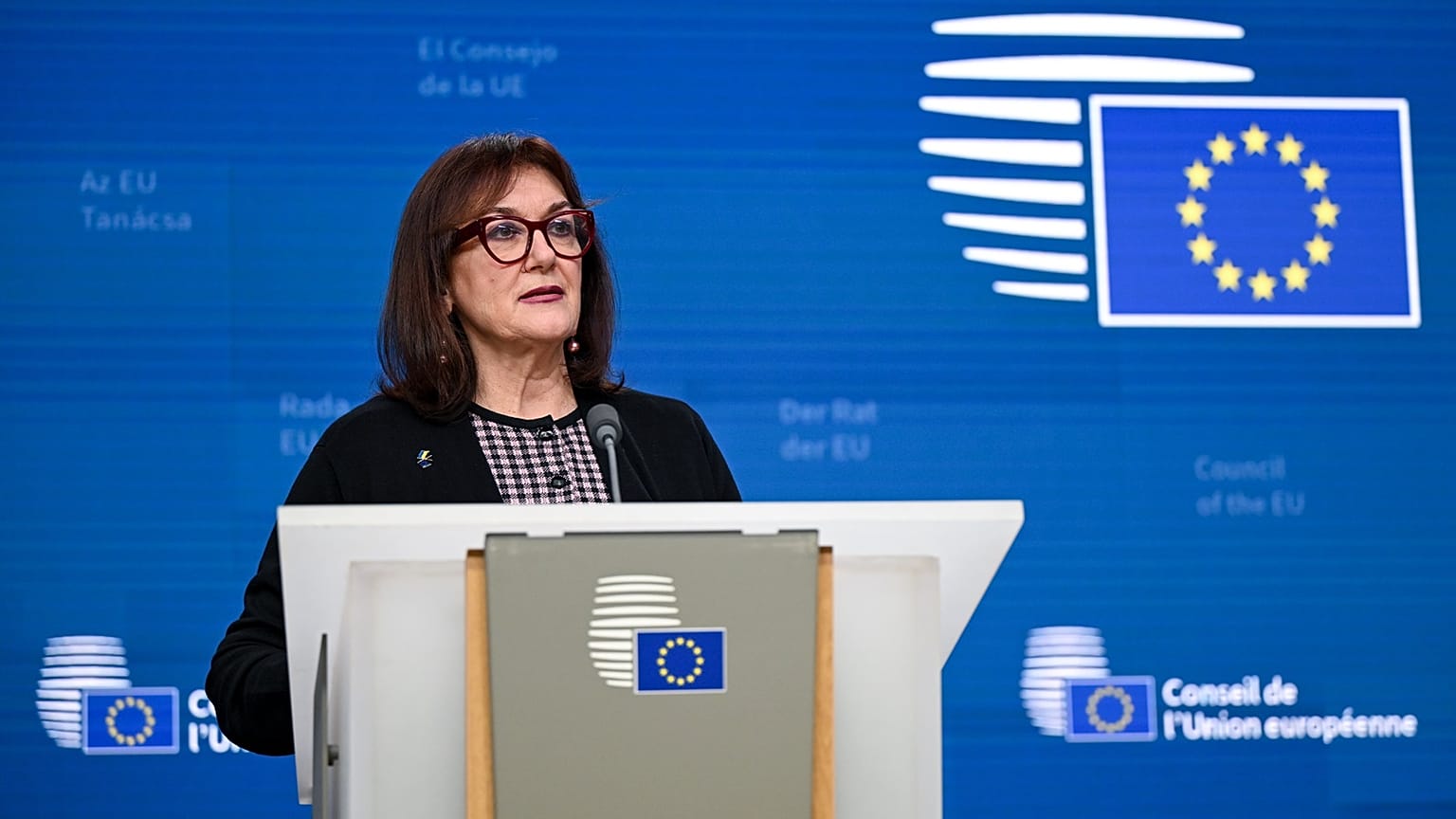













European Commissioner Dubravka Šuica is under fire for attending the first formal gathering of Donald Trump's Board of Peace, whose expansive mandate has raised serious concerns among member states.
The European Commission's surprise decision to dispatch Commissioner for the Mediterranean Dubravka Šuica to the first formal gathering of the Board of Peace in Washington has sparked outrage among several member states, with France leading the charge in voicing both institutional and political objections.
 ADVERTISEMENT
ADVERTISEMENT
ADVERTISEMENT
During a meeting of EU ambassadors on Wednesday, critics argued that Šuica's participation, which was not communicated to capitals beforehand, lacks the necessary mandate and risks being interpreted as a collective endorsement of the contentious initiative, several diplomats told Euronews, speaking on condition of anonymity.
"Member states were up in arms" in the meeting, a diplomat said.
Šuica's trip is taking place despite persistent concerns over the Board of Peace inaugurated by US President Donald Trump in January. Initially conceived to guide Gaza's post-war recovery, the board has since vastly expanded its mandate and is now designed as a shadow structure to the United Nations, with Trump as lifelong chairman.
France, Spain, Belgium, Ireland, Slovenia and Portugal were among those who raised strong objections on Wednesday. Germany, Sweden and Lithuania also spoke up.
According to diplomats, France set the tone by arguing that Šuica's attendance was in breach of the EU treaties because the Commission is not entitled to set foreign policy, which is conducted based on unanimous positions agreed by member states.
This view was shared by a large majority of ambassadors.
The harshest critics then pointed out that Šuica, as Commissioner for the Mediterranean, is a political representative and therefore her presence in Washington carries substantial weight. A civil servant would have been a more appropriate pick, they said.
The fact that the EU, as an organisation, is not a member of the Board of Peace was also mentioned to discourage Šuica from travelling.
In a statement, a Commission spokesperson defended the decision as a way to remain "closely engaged on all aspects relating to the peace process and the reconstruction in Gaza". The spokesperson insisted the Commission would not join the board.
The backlash was intense but not equally shared inside the room, exposing the stark divisions caused by Trump's bold attempt to challenge the multilateral system.
Hungary and Bulgaria are the only two member states that have expressed their intention to sit on the board permanently. But seven other capitals have signalled their intention to participate as observers in recent days.
Among those attending the formal gathering on Thursday are Hungarian Prime Minister Viktor Orbán, Romanian President Nicușor Dan, as well as senior diplomats from Bulgaria, Cyprus, the Czech Republic, Italy, Greece, Poland and Slovakia.
The Commission has repeatedly raised questions about the board's "scope, governance and compatibility with the UN Charter," of which all 27 member states are signatories, and asked the United States to amend the wording, to no avail.
Still, as the biggest donor of humanitarian aid to the Palestinian people, with a total contribution of €1.65 billion to the territories since the outbreak of the war between Israel and Hamas on 7 October 2023, Brussels does not want to be sidelined in the process.
The debate will continue next week when foreign affairs ministers gather in Brussels. Ministers will be joined by Bulgarian diplomat Nickolay Mladenov, appointed by Trump as High Representative for Gaza and tasked with linking up the Board of Peace with a technocratic Palestinian committee responsible for running its day-to-day business.
This article has been updated with more information.