
















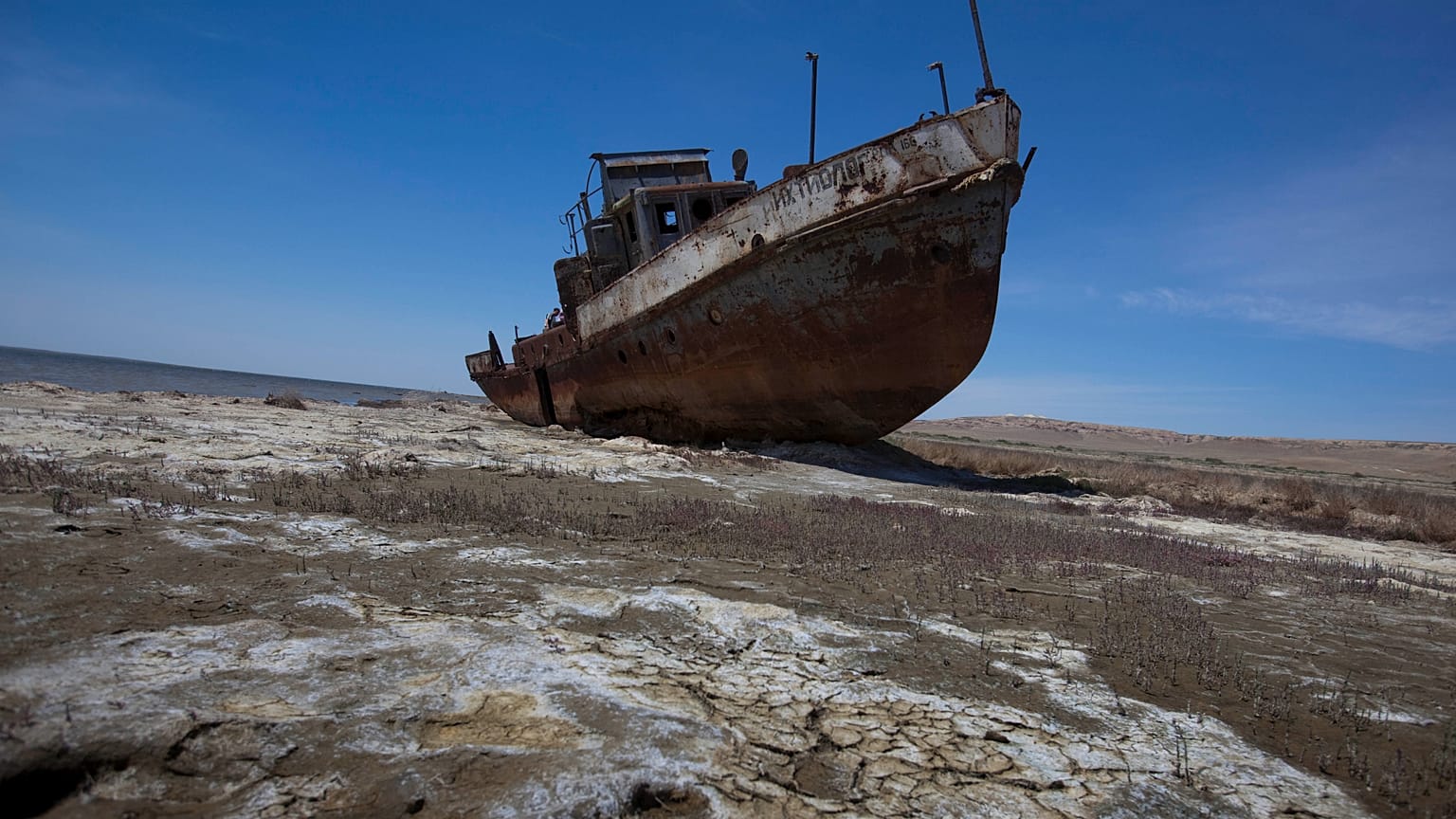













Restoration efforts including a dam and water use controls are helping Kazakhstan revive part of the shrinking Aral Sea.
For decades the shrinking Aral Sea has been the poster child for environmental catastrophe. Behind images of rusty fishing boat shells sitting awkwardly among the sand dunes lies a story of human recklessness and an insatiable thirst for resources.
 ADVERTISEMENT
ADVERTISEMENT
ADVERTISEMENT
Once the fourth largest lake on Earth, the Aral Sea is fed by two rivers that originate in the high mountains of Central Asia.
In the 1960s, the Soviet government decided to plant cotton fields on enormous swathes of land in the region, and the rivers were diverted for irrigation. The Aral Sea’s water supplies soon began to dwindle.
By the mid-2010s, it had lost around 90 per cent of its water mass. The lake split into four smaller bodies of very salty water, devastating local communities and ecosystems.
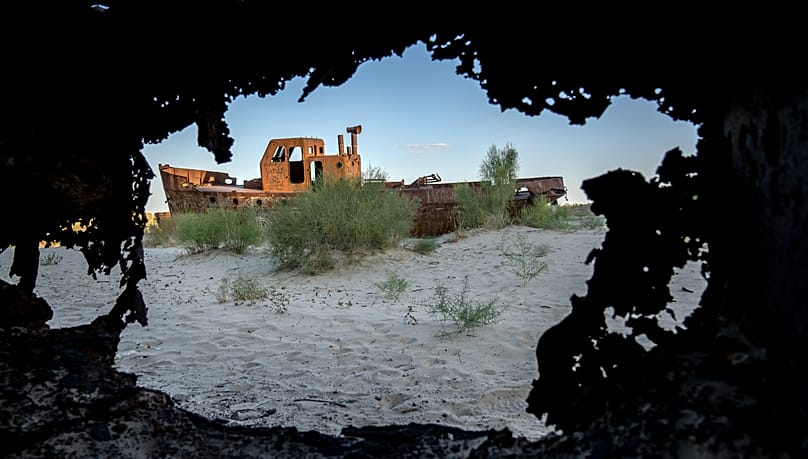
The South Aral Sea, in Uzbekistan, all but disappeared leaving behind a toxic salty desert, known as the Aralkum. Thanks in part to the Kokaral river dam, built by Kazakhstan in 2005, the situation in the North Aral Sea is more hopeful.
A regional agreement signed by the water resource ministers of Uzbekistan, Tajikistan, the Kyrgyz Republic and Kazakhstan was also instrumental. It provides for an equal distribution of water inflow among the countries.
Kazakhstan doubles down on efforts to save the North Aral Sea
The government in the Kazakh capital Astana set water management and restoration of the Aral Sea as one of its priorities.
On a recent session of the people’s assembly, the National Kurultai, President Kassym-Jomart Tokayev emphasised the significance of preserving the North Aral Sea and reaffirmed it as one of the key priorities of the country’s water policy.
In his address to the nation he also emphasised the restoration gains already made. He noted that in 20 years of systematic efforts, the surface area of the Northern Aral grew by 36 per cent, the water volume nearly doubled, and salinity decreased by half.
However, the President stressed that efforts to raise water levels in the Aral Sea must continue actively.
A scientific study released in 2022 warned that Central Asia is among the areas in the world most affected by global warming induced water shortage.
In response, Kazakhstan introduced a new ministry in 2023 in charge of Water Resources and Irrigation. Its goal is to plan, proscribe and enforce the use of water.
A new water usage law was adopted, which improved the situation in the Syr Darya river basin. At the beginning of February 2026, a report was released on the progress of the Water Resources Management System Development Concept.
It says that the volume of water in the Northern Aral Sea has increased to 24.1 billion cubic metres from 2023 to the present. During this period, 5 billion cubic metres of water have been directed into the sea.
Data from the World Bank shows that the water level in Northern Aral Sea is now 50 per cent higher than at its lowest point some years ago.
Restoration efforts are 'progressing ahead of schedule'
“The achievement of the target indicators of the Water Resources Management System Development Concept, in terms of increasing the volume of the Northern Aral, is progressing ahead of schedule,” says Minister of Water Resources and Irrigation Nurzhan Nurzhigitov. "The current figures were initially projected for 2029."
He adds that, funded by a World Bank grant, a feasibility study is being developed for a project to preserve the North Aral Sea. Among the options being considered are raising the height of the Kokaral Dam by two metres and constructing a hydraulic complex to stabilise water levels in the Akshatau and Kamystybas lake systems.
“The project is aimed at increasing the volume and improving the quality of water in the Northern Aral, restoring the Syr Darya River delta, reducing salt sediment outflow from the sea bottom, developing the fishing industry in the Kyzylorda region, and improving the living conditions of local residents,” says Minister Nurzhigitov.
And some economic and environmental data suggest that life is coming back to the North Aral Sea.
“Owing to the measures undertaken in the lower section of the Syr Darya river, 20 species of fish reappeared that had vanished before the project,” says Bulat Yessekin, Coordinator of the Central Asian Platform on Water and Climate Change.
There are now 10 fish processing plants in the Aral region, four of which have 'Eurocodes' or EU certification. Each year, around 4,000-5,000 tonnes of fish from the Aral Sea and the 160 lakes of the Kyzylorda region are exported to 13 countries, including EU member states, China and Russia.
Is Aral out of the woods?
Promising as these gains may be, they are limited. Just one of the four parts of the Aral Sea – the North Aral in Kazakhstan – is recovering. The South Aral in Uzbekistan is hanging by a thread, while the West is all but gone and the East had completely dried out in 2014. It is on the border between Kazakhstan and Uzbekistan and both countries have joined forces to at least try to prevent the spread of the toxic salty desert that is left behind.
“On the Kazakhstan side of the dried-out lakebed, 4.4 million seedlings have been planted," says Yessekin. "At the end of 2025 the area of greened surfaces was 1.1 million hectares. Uzbekistan is greening 1.8 million hectares."
But danger still hangs over the partially recovered North Aral as the natural inflow of water in the Syr Darya river decreases.
“In the last several years, we've witnessed a low water period in Syr Darya, which affects the level of the Aral Sea,” says Yessekin. "It fell to 18.9 km3 and it is only owing to the measures taken by the Ministry that we managed to boost the level to 22.85 km3. But the expectation was 27 km3."
Which brings us to the ultimate threat to the Aral Sea. Most of the water in both Syr Darya and Amu Darya rivers comes from the melting glaciers of the Tienshan and Pamir mountains respectively. Those glaciers are shrinking due to global warming. If they disappear completely, the amount of water in the rivers may not be sufficient for them to reach the Aral at all.