




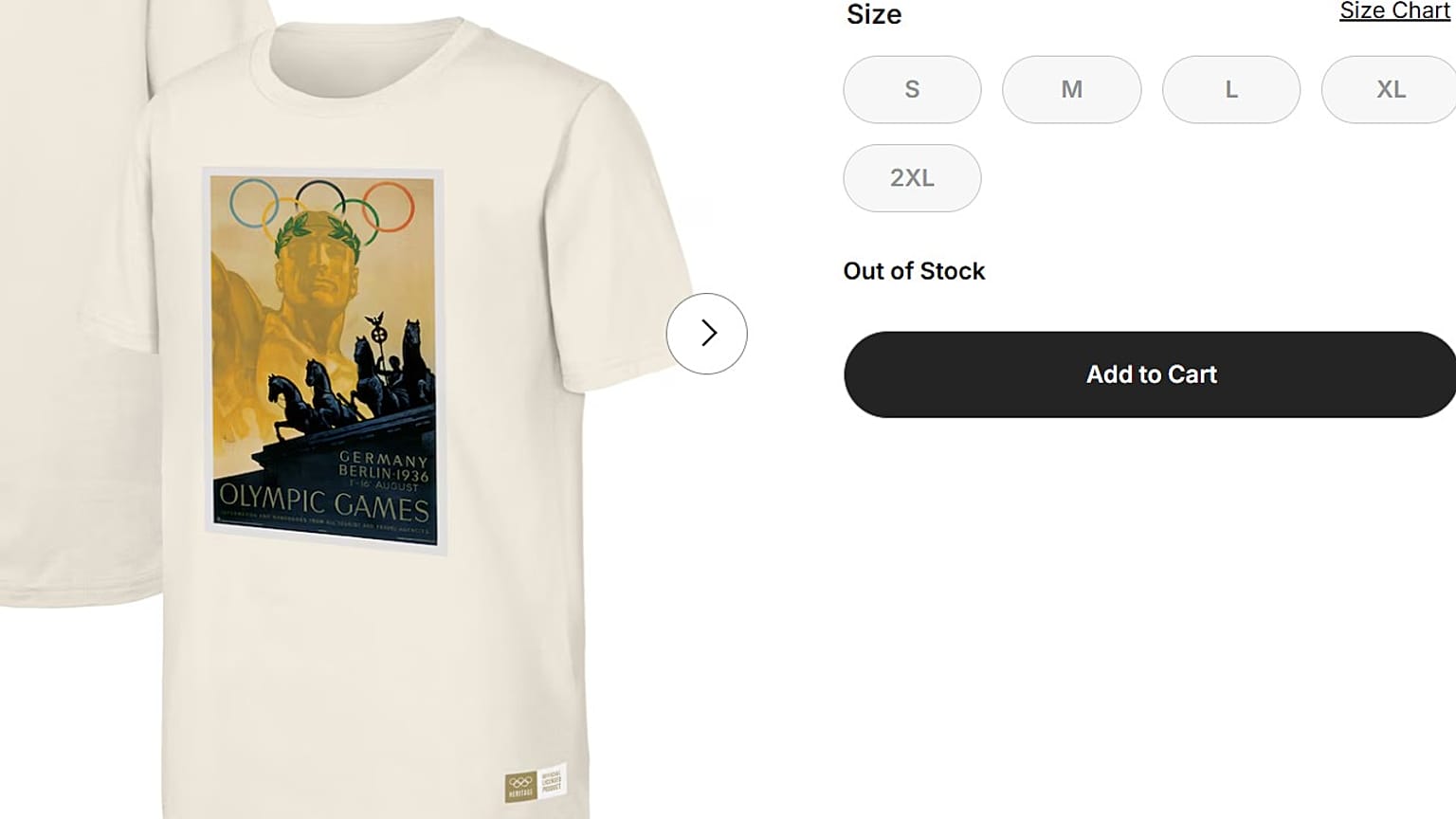













The T-shirt sold on the Olympic Games' online stores has caused widespread controversy across Germany as people accused the IOC of disseminating Nazi propaganda.
The International Olympic Committee has rejected calls to withdraw merchandise featuring design elements from the 1936 Berlin Olympics, despite coming under fire from Holocaust organisations and German lawmakers.
 ADVERTISEMENT
ADVERTISEMENT
ADVERTISEMENT
A men's T-shirt priced at €39 sold out from the IOC's online shop after drawing complaints, according to reports.
The garment reproduced artwork from Adolf Hitler's Games, showing an athlete wearing a laurel crown alongside the Brandenburg Gate and Olympic rings.
Green Party politician Klara Schedlich, spokesperson for sports policy in Berlin's House of Representatives, said "the 1936 Olympic Games were a central propaganda tool of the Nazi regime".
She added the IOC "absolutely no understanding of history". "IOC, are you serious," Schedlich asked.
The IOC lacks sufficient awareness of its own past, Schedlich said, adding that using such imagery on clothing without context is unacceptable.
An IOC spokesperson said the organisation recognises the Nazi propaganda associated with Berlin 1936 but emphasised that 4,483 competitors from 49 nations participated in 149 medal events, with many delivering remarkable athletic performances including Jesse Owens.
The Olympic Committee opted for a limited production of 1936 T-shirts to protect a trademark which would otherwise expire, the IOC spokesperson added.
"The 1936 Games happened, and we hold up what Jesse Owens did and a number of other athletes as great examples of upholding the Olympic spirit. So I think we need to also remember there are some good aspects of that," IOC spokesman Mark Adams said at a press conference in Milan on Sunday.
"The validity of those trademarks depends on us exercising our rights to use those trademarks. So if we stop using those trademarks, they can be taken by other people and potentially misused."
The committee stated that context about the Games can be found in exhibits at its museum in Lausanne.
Groups raise concerns
Christine Schmidt, who co-directs the Wiener Holocaust Library in London, told CNN the Nazis exploited the 1936 Olympics to present their regime favourably internationally while barring nearly all German-Jewish athletes from competing, detaining 800 Roma residents in Berlin, and hiding antisemitic violence from foreign visitors.
Schmidt questioned whether appreciation of the Games' aesthetics can reasonably be separated from subsequent atrocities.
Scott Saunders, who leads International March of the Living — an education programme bringing thousands annually to the Auschwitz site — told US outlets the controversy arrives nearly 90 years after Berlin hosted an event the Nazi regime used for international legitimacy while persecution of the Jewish community was already under way.
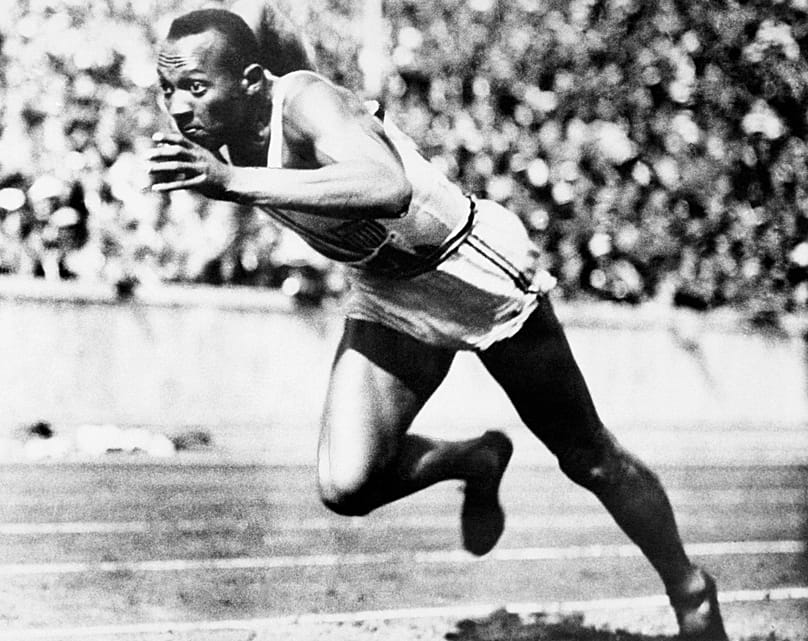
Hitler used the event three years after seizing power to promote Nazi ideology and claims of racial superiority, particularly targeting Black athletes during the Olympics.
Jesse Owens, a US sprinter, claimed four golds — in the 100m, 200m, relay and long jump — undermining Nazi racial theories.
The Heritage Collection features designs spanning Olympic history across 130 years, according to IOC materials.