


















On Holocaust Remembrance Day, the victims of the Nazi regime are commemorated throughout Germany. At the same time, anti-semitism in the western European country and across the continent is rising at an alarming rate.
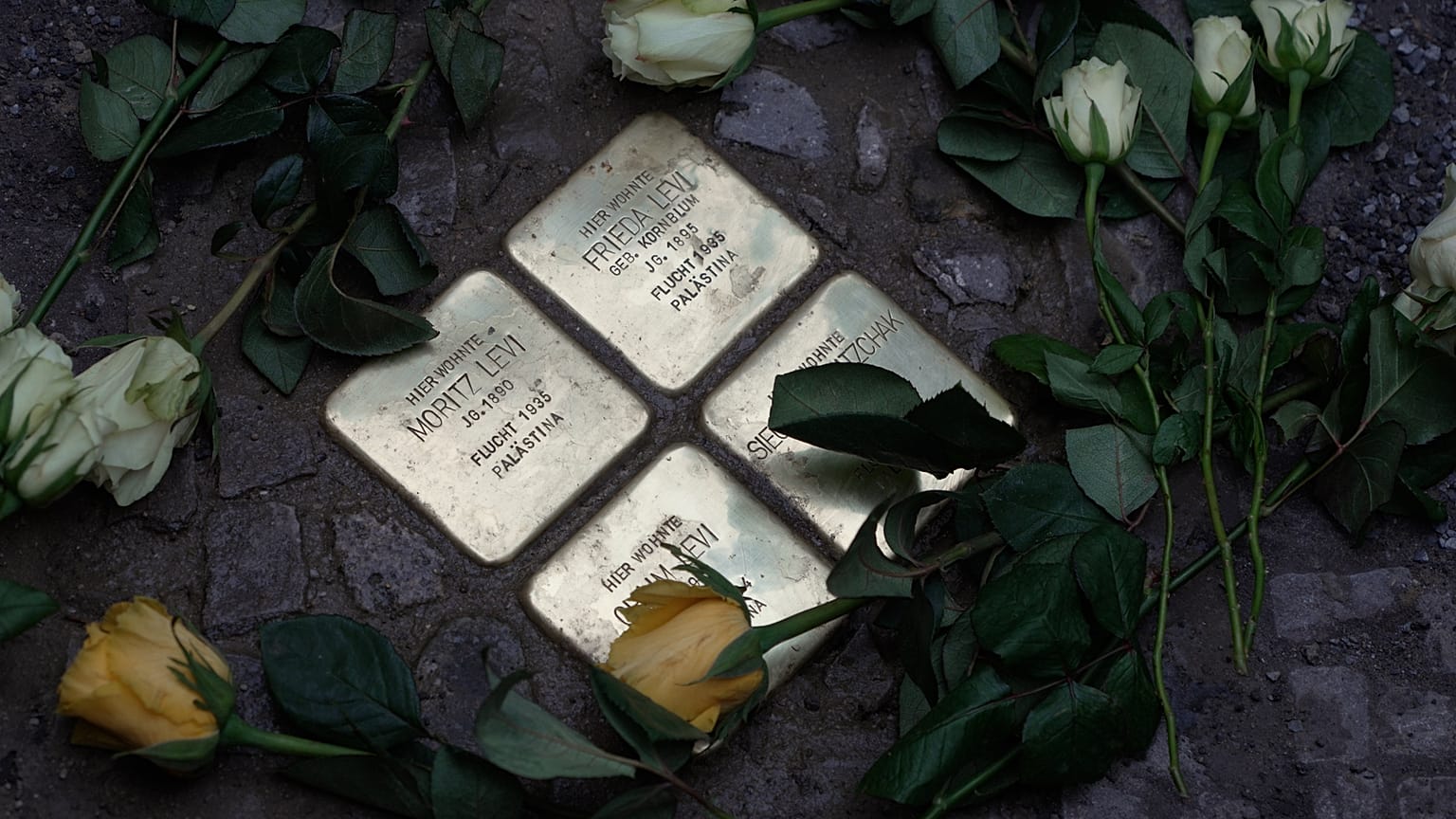
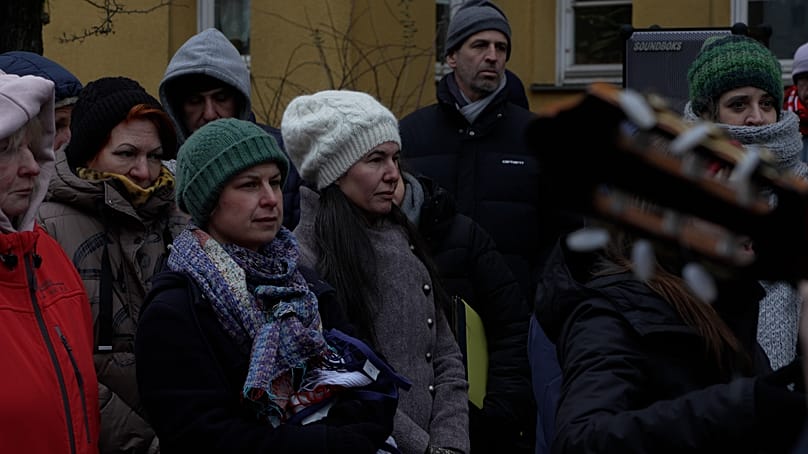
Four brass memorial plaques were installed in Berlin-Johannisthal to commemorate the Levi family, who fled Nazi Germany for what is now Israel between 1934 and 1935, as new figures show antisemitic offences in Germany have more than quadrupled in recent years.
 ADVERTISEMENT
ADVERTISEMENT
ADVERTISEMENT
The stolpersteine or "stumbling stones" — small brass plaques embedded in pavements at victims' last addresses — mark the former home of Frieda and Moritz Levi and their sons Siegbert and Chaim at Greifstraße 16. Chaim was the first to flee in 1934, with the rest of the family following a year later.
"It's very moving. We have been working on it for over two years now," said Dana Yeshouroune, Siegbert Levi's granddaughter, who travelled from Israel for the installation alongside relatives from Italy.
"We were able to find out some facts that we didn't know before. We never knew that our grandfather had served in the German army during World War I."
After fleeing Germany, the family built a new life running a small poultry farm near Tel Aviv.
Yeshouroune said her grandfather maintained complicated feelings about Germany. "He admired many things about Germany — his origins, his roots, the way he grew up. But at the same time, he was also angry and disappointed that he was forced to leave this country."
The memorial project, created by artist Gunter Demnig in 1992, has seen more than 116,000 brass plaques embedded in pavements across Europe, most of them in Germany.
The stones commemorate people, predominantly Jews, who were murdered, deported or expelled by the Nazis during the Holocaust.
Demnig deliberately chose "slow and continuous laying of the stones" to counteract what he described as the factory-like mass extermination of the Nazi era.
"It is very important to make the names of the victims visible and also to show that these people were our neighbours and where they lived," said Sabine Karten from the Treptow Association of Anti-Fascists, which organised the installation.
Violence against Jewish community on the rise
The commemoration comes as antisemitic incidents in Germany have risen sharply.
The federal association RIAS reported that antisemitic offences more than quadrupled between 2020 and 2024. The organisation counts violence, property damage, threats, offensive behaviour, meetings and mass mailings as antisemitic incidents.
Official figures from the Federal Criminal Police Office show recorded antisemitic offences rose from 2,351 in 2020 to 6,236 in 2024.
"Antisemitism in Germany has exploded since 7 October 2023," Dr Josef Schuster, chairman of the Central Council of Jews in Germany, told Euronews. "All the figures indicate that it is now consolidating at an alarmingly high level."
Schuster said security measures alone were insufficient. "This is symptom-fighting that will not drive antisemites off our streets," he said, calling for stronger action against root causes.
In Berlin's Kreuzberg district, residents hold weekly vigils outside the Fraenkelufer synagogue to protest the need for police protection at Jewish sites.
"It's a scandal that Jewish people in our country need police protection when they want to go to their synagogue," said Julia Ertl, who regularly attends the vigils.
The stumbling stones project extends beyond Germany to France, the Netherlands, Italy and other countries where Nazi persecution occurred.
Around 6 million Jews were systematically murdered by the Nazis and their collaborators during the rule of Adolf Hitler, many at the Auschwitz concentration and extermination camp.
Tuesday marks the 81st anniversary of the camp's liberation by Allied soldiers on 27 January 1945.