




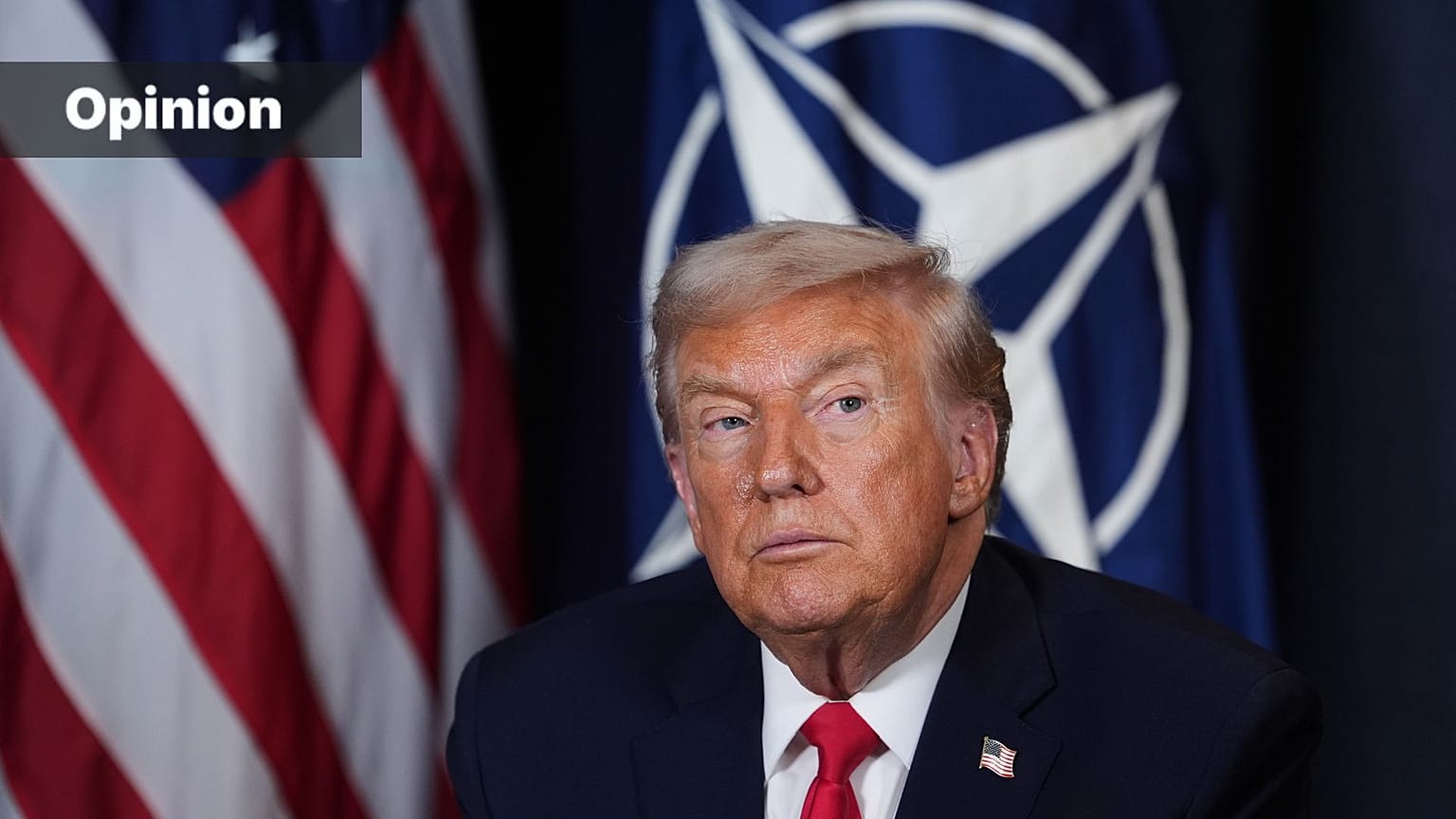













Trump is alienating the US from the West, while the threat from Russia is becoming ever more real. Even without the US, Europe could secure its defence independently in the future, former President of the Federal Academy for Security Policy Karl-Heinz Kamp writes in an opinion article for Euronews.
The Munich Security Conference, which begins today, takes place in what is arguably one of the most difficult phases for the transatlantic alliance.
 ADVERTISEMENT
ADVERTISEMENT
ADVERTISEMENT
In addition to the threat from an aggressive and violent Russia, a second, internal danger has emerged over the past year: the drift of the United States away from what has hitherto been called the "Western community."
A mercurial American president alienates friends and foes alike under the guise of a dealmaker and no longer regards Europe as an ally, but primarily as an adversary.
US President Donald Trump’s largely meaningless "28-point plan" to end the war in Ukraine, or his threat to annex Greenland, are merely the most prominent examples.
One might hardly even recall his announcement of a takeover of Canada or the idea of turning the Gaza Strip into a Côte d’Azur of the Middle East.
It is no coincidence that the organisers of this year’s Security Conference have titled the meeting "Under Destruction."
Russia’s economy is weakening
A definitive break in transatlantic security relations would be a catastrophe, as it would likely mark the end of NATO as the most successful security alliance in history.
Whether it will be possible to keep the United States in the alliance during the next three years of a Trump administration is currently unforeseeable, but it must be attempted at all costs.
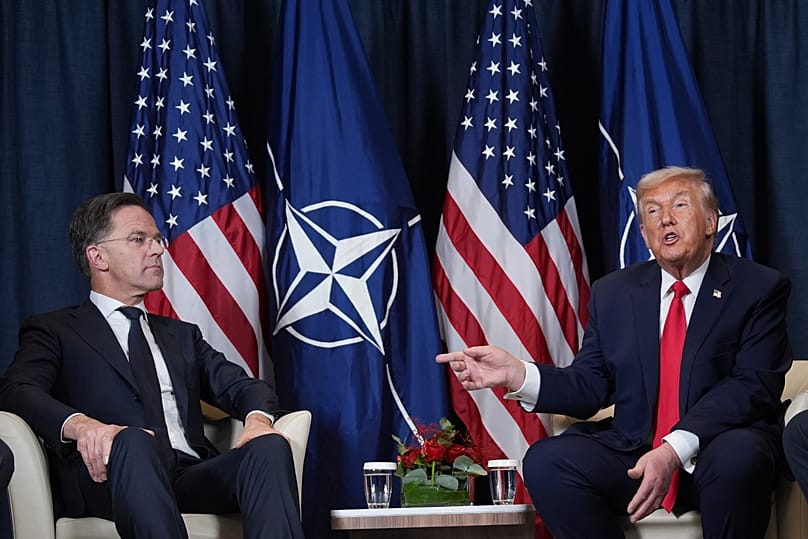
Even if the U.S., to its own detriment, were to abandon the North Atlantic alliance, there have been signs of cautious optimism in recent months regarding Europe’s defence against a revanchist Russia.
Moscow’s military capabilities for offensive operations and Europe’s capacity for deterrence and defence are not static, but are developing dynamically in opposite directions.
Russia’s military and economic situation deteriorates with each day of fighting in Ukraine, while Europe’s defensive capabilities are slowly but steadily improving.
While Russia’s economy showed unexpected resilience in the first two years of the war despite sanctions and the oil boycott, since 2024 all indicators have been trending downward.
Economic growth, which was already largely driven by the arms industry, is approaching zero. In 2025, revenue from oil and gas sales fell by 24%, and a further 46% decline is projected for 2026.
Investment now flows almost exclusively into the defence sector, significantly setting back the civilian economy, and Russia no longer plays a role in high-tech industries. The gap between Russia’s self-image as a great power and economic realities is widening.
More than a million Russian soldiers killed or wounded
This does not mean that a total economic collapse is imminent, nor that Russia cannot continue the war in Ukraine. Propaganda is running at full speed, and the Russian people are accustomed to suffering.
However, it is unlikely that Russia can build up significant military potential for an attack on NATO while also replacing losses in the war. A country whose nominal GDP roughly matches Italy's and is trending downward is unlikely to be able to do so.
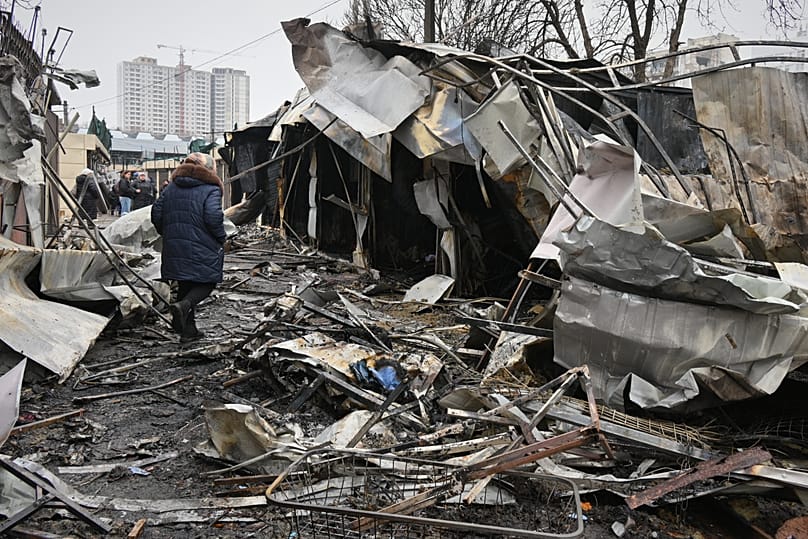
Militarily, Russia has already suffered around 1.3 million killed and wounded soldiers. While it imports and produces vast quantities of drones, the number of conventional major weapons is shrinking dramatically.
The stockpile of stored (older) armoured vehicles, which had been modernised and returned to the battlefield, is now nearly exhausted. Russia’s air force and satellite capabilities are particularly affected by long-standing sanctions and are correspondingly outdated.
The shutdown of Elon Musk’s Starlink internet system cannot be compensated for by Moscow, leaving battlefield communications severely limited.
By contrast, the European Union, despite complaints about economic stagnation in major European states, remains the world’s second-largest economic power.
The GDP of the European NATO countries plus Canada, at roughly $25 trillion, is more than 10 times that of Russia.
While Russia suffers most from Europe’s decoupling from Russian energy supplies, Europe has largely absorbed this energy shock. The economic conditions for substantial military buildup therefore fundamentally exist.
Politically, most Europeans have set the course accordingly. European defence spending has grown significantly each year since 2023, reaching approximately $580 billion in 2025 (including Canada), roughly doubling.
Germany’s defence budget alone has risen from about €50 billion in 2022 to a planned €108 billion in 2026. Civilian and military support for Ukraine continues, with Germany providing €11.5 billion in 2026 alone.
Europe must get used to decoupling from US
This is reflected in a visible strengthening of military capabilities, although considerable gaps remain due to years of neglect. These gaps can, however, be gradually closed if the increase in defence spending continues through the end of the decade.
Looking to the future, a proverbial silver lining emerges. Yes, the dissolution of NATO would be a tragedy for both Europe and the United States.
However, Europe will have to become accustomed to the possibility of a substantial decoupling from America.
In such a scenario, European NATO partners would indeed be capable of building their own defence against a Russia in decline. Europe possesses the economic strength, financial resources, defence industrial base, and know-how to achieve this in the coming years.
There is no need for nonsensical debates about a "European army" or "European nuclear weapons," only the political will to translate commitments to European self-assertion into action.
Karl-Heinz Kamp is an Associate Fellow at the German Council on Foreign Relations (DGAP) and former president of the Federal Academy for Security Policy.