


















The US and Iran held indirect talks on Friday in Oman that appeared to return to the starting point on how to approach discussions over Tehran’s nuclear programme.
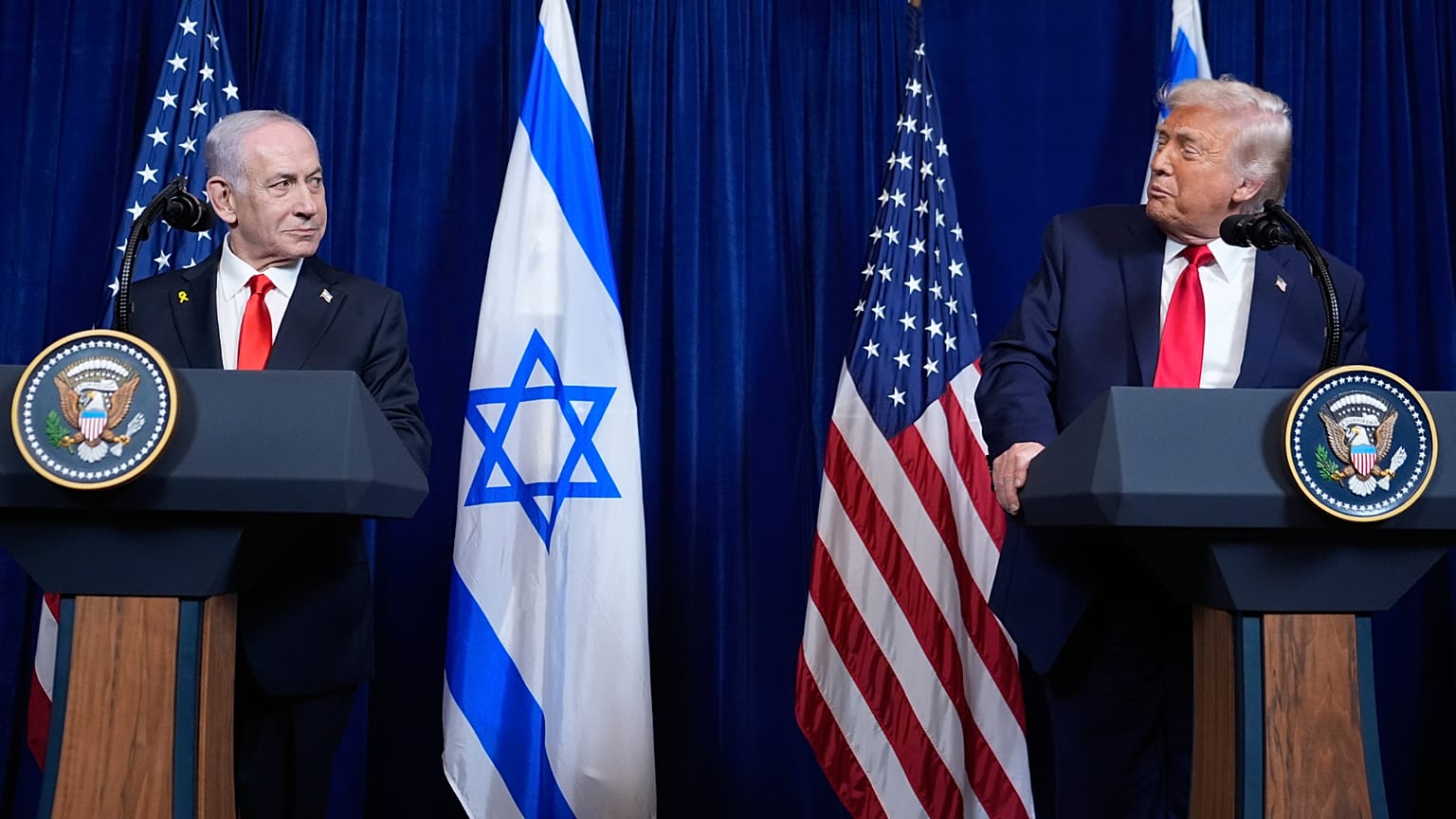
Israeli Prime Minister Benjamin Netanyahu will meet US President Donald Trump in Washington on Wednesday to discuss recent talks with Iran on its nuclear programme, his office said.
 ADVERTISEMENT
ADVERTISEMENT
ADVERTISEMENT
Netanyahu "believes that all negotiations must include limiting the ballistic missiles, and ending support for the Iranian axis,” Netanyahu’s office said in a brief statement, referring to Tehran's support for militant groups in the region.
The US and the Islamic Republic of Iran held indirect talks on Friday in Oman that appeared to return to the starting point on how to approach discussions over Tehran’s nuclear programme.
Trump called the talks “very good” and said more were planned for early next week. Washington was represented by Middle East special envoy Steve Witkoff and Jared Kushner, Trump’s son-in-law.
Trump has repeatedly threatened to use force to compel Iran to reach a deal on its nuclear programme after sending the aircraft carrier USS Abraham Lincoln and other warships to the region amid Tehran’s crackdown on nationwide protests that killed thousands.
On Sunday, Iranian Foreign Minister Abbas Araghchi said that US "military deployment in the region does not scare us," while speaking at a summit in Tehran.
He insisted that Tehran's strength came from its ability to “say no to the great powers," adding that "the secret of the Islamic Republic of Iran’s power lies in its ability to stand against bullying, domination and pressures from others."
"They fear our atomic bomb, while we are not pursuing an atomic bomb. Our atomic bomb is the power to say no to the great powers. The secret of the Islamic Republic’s power is in the power to say no to the powers.”
Araghchi also signaled that Iran would stick to its position that it must be able to enrich uranium even if war "is imposed on us".
Separately, Araghchi said on Saturday that Iran's missile programme was "never negotiable".
He said there is “very, very deep distrust” after what happened during the previous talks, when the US bombed Iranian nuclear sites during last year's Israel-Iran conflict, adding that Tehran would target US bases in the region if the US attacked Iranian territory.
He called the talks "a good start", but insisted "there is a long way to go to build trust". He said the talks would resume "soon".
Araghchi criticised what he labelled a "doctrine of domination" that allows Israel to expand its military arsenal while pressuring other states in the region to disarm.