




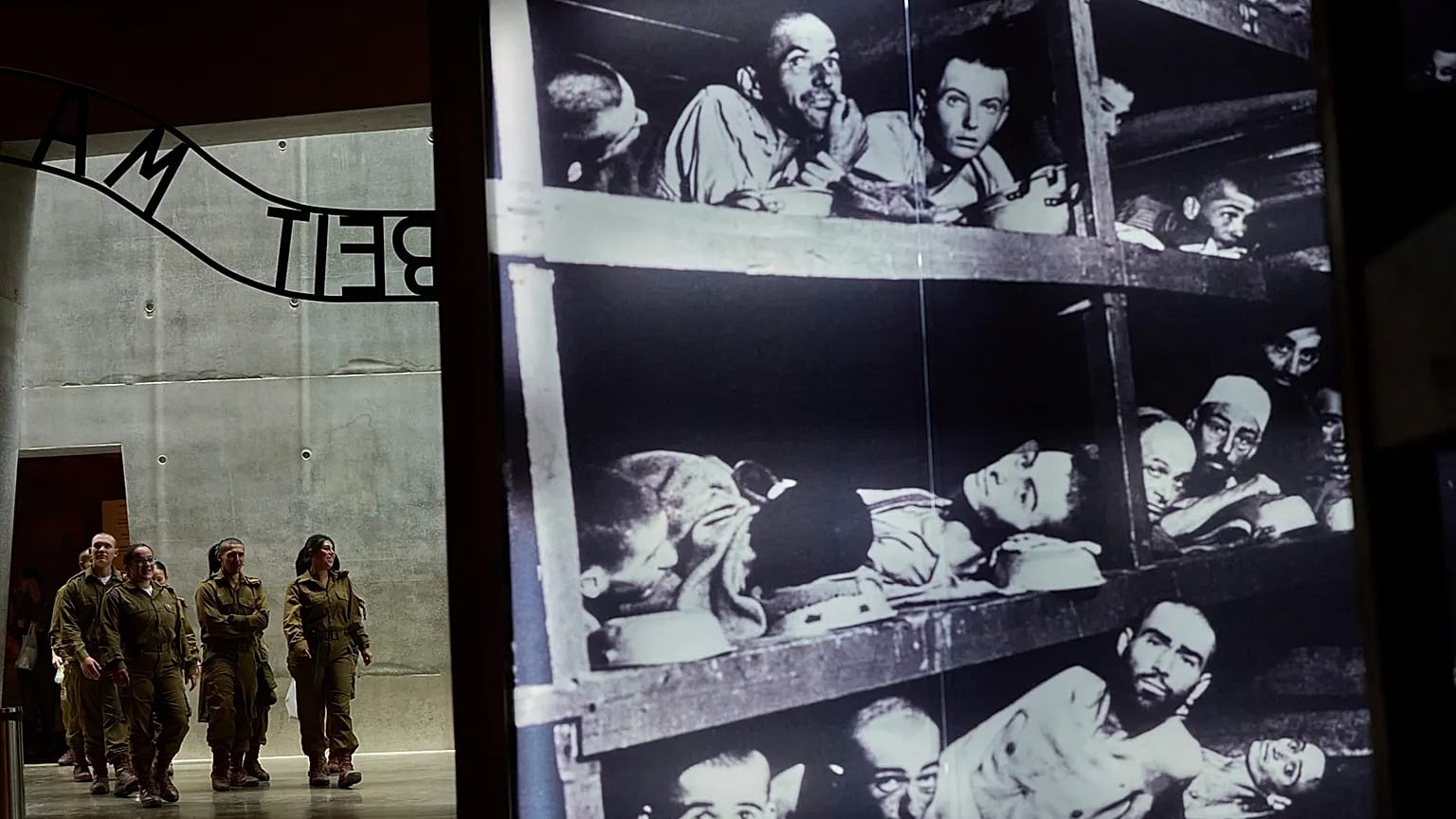














In November, Yad Vashem announced that the World Holocaust Remembrance Centre had established the identites of five of the six million Jews murdered in the Holocaust.
As the world marked International Holocaust Remembrance Day earlier this week, Dani Dayan, the chairman of Yad Vashem, told Euronews the centre's work is not a "one day job."
 ADVERTISEMENT
ADVERTISEMENT
ADVERTISEMENT
"Holocaust remembrance and the lessons from the Holocaust should be remembered and implemented 365 days a year," he said during a visit to Brussels to meet European Parliament President Roberta Metsola.
Dayan said while the EU is making effort and cooperates "fruitfully" with Yad Vashem, he "cannot say the same about the landscape in Europe itself, in the member states themselves."
"We see rampant anti-Semitism and Holocaust distortion in many of them."
Identifying victims gives them back their dignity
This week, the body of the last Israeli hostage was recovered in Gaza a day before International Holocaust Remembrance Day.
Israeli troops located the body of police officer Ran Gvili in a Gaza cemetery and returned it to Israel on Monday after 843 days.
It marked the first time since 2014 that there are no Israeli hostages in Gaza and opened the way to the second phase of the Israel-Hamas ceasefire.
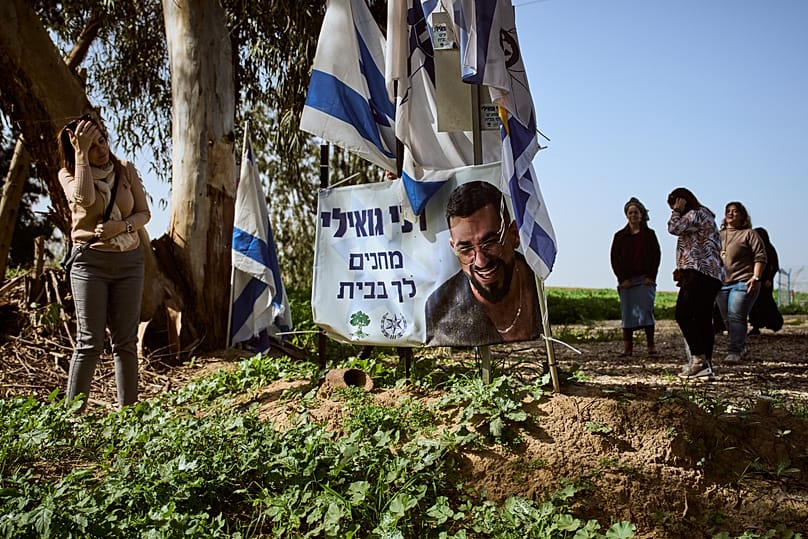
The return of all remaining hostages, living or dead, was a key part of the Gaza ceasefire's first phase.
"I remember I was recently in a European country and the prime minister of that country told me that he had the hard work in explaining to his colleagues why we are, he used the word 'obsessed' with returning the bodies of our hostages," Dayan said.
"It's similar to our project in Yad Vashem to recover the names of the victims of the Holocaust."
In November, Yad Vashem announced that the World Holocaust Remembrance Centre had established the identites of five of the six million Jews murdered in the Holocaust.
"For us was so important because that was the first step in giving them back the dignity that the Nazis tried to eradicate from them. And the same applies to the bodies of our hostages. It's the first thing returning them, the dignity that was taken away by carrying their bodies to Gaza."
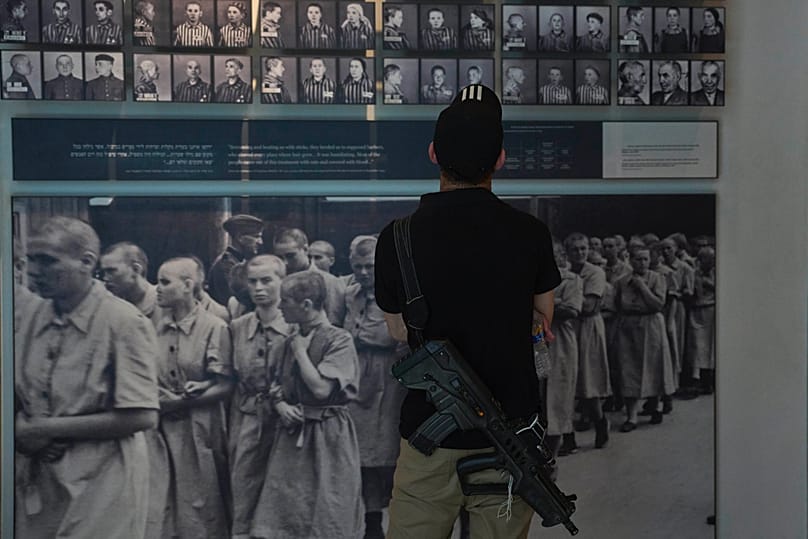
But he sharply rejects any attempts to draw further comparisons to the 7 October 2023 Hamas-led attack on southern Israel.
"October 7 was atrocious. It was not a continuation of the Holocaust. October 7 is not Shoah 2.0," he told Euronews.
"There were similarities: the sadism, the cruelty and the intention. The intention was genocidal. But the difference is much greater. To make that comparison that is usually being done, even in Israel, between the Holocaust and October 7, also plays into the hands of Hamas."
Old lies, deadly realities
Marking International Holocaust Remembrance Day, European Parliament President Roberta Metsola said "Today, antisemitism spreads faster than ever, amplified online and turning old lies into deadly realities."
"Remembering the Holocaust means confronting hatred wherever it appears, before it is allowed to take root again."
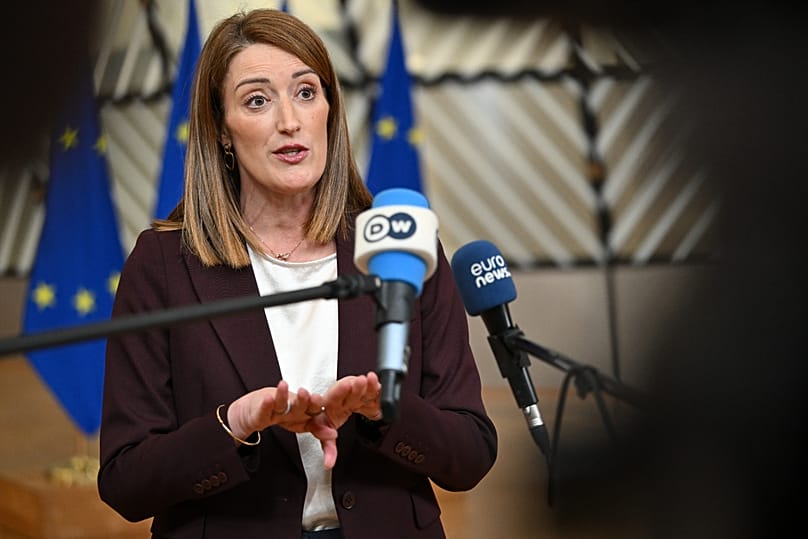
Dayan calls it "an old virus" while admitting the situation has become worse since the 2023 Hamas attack and Israel's subsequent military operation in Gaza.
"Antisemitism is skyrocketing. It is an old virus, millennia old, that every time it changes, it metastasises into a different characteristic. But it's the same old continuum of hatred of the Jews."
He adds that the nowadays it has been heavily politicised.
"The thing that characterises antisemitism today I think is the most worrying, it is that it had become the only common denominator of all extremists. Right-wing extremists, left-wing, Islamist extremists they hate each other, they don't agree on anything. On the issue of hatred of Jews and hatred of the Jewish state, they don't only agree but they collaborate, they create synergy and that is very worrying, very concerning."
The way to befriend Jews is not to hate Muslims
Several European right-wing parties now position themselves as defenders of Jews and repeatedly express their support for Israel and Jewish community.
Dayan says this is not the support him and Yad Vashem are seeking.
"We see parties in Europe that have clear neo-Nazi roots and I don't want their support. I don't want their friendship, I don't want to collaborate with them. We have no relations in Yad Vashem, not with the AfD (Alternative for Germany), not the FPÖ (Freedom Party of Austria), and others."
"There are those that think that the way to befriend the Jews, to show sympathy to the Jews is to hate Muslims. I don't want that kind of friendship. I don't want someone to show me that he likes me by hating others, by hating Muslims. No, we reject also Islamophobia."
Any form of racism, any form of hatred and extremism is what Yad Vashem and its chairman firmly reject, he insists calling it "a danger for the future of democracy."
"Antisemitism is one reflection of that. It's not the only one."
Dayan recalls how a year ago tech billionaire Elon Musk made a surprise virtual address at the campaign launch for Germany's right-wing AfD party, calling it Germany's "best hope" in the upcoming general election.
Dayan specifically recalls how Musk told the crowd that it was time to "move on" from historical guilt.
"He said that Germans should abandon their culture of memory of the Holocaust. And move on. Forget your past and move on."
Dayan told Euronews that he "immediately" took on X, owned by Musk, to publish "a really strong statement."
"If Germany abandons its culture of memory and moves on, as Mr. Musk recommended, it will not only be an insult and affront to the victims and to the survivors of the Shoah and to Jewish people. But it will be a clear and imminent danger to the future of German democracy that will encourage extremists from all sides and that will erode the foundations of German democracy. So it's not only a Jewish issue, it's also a European issue."
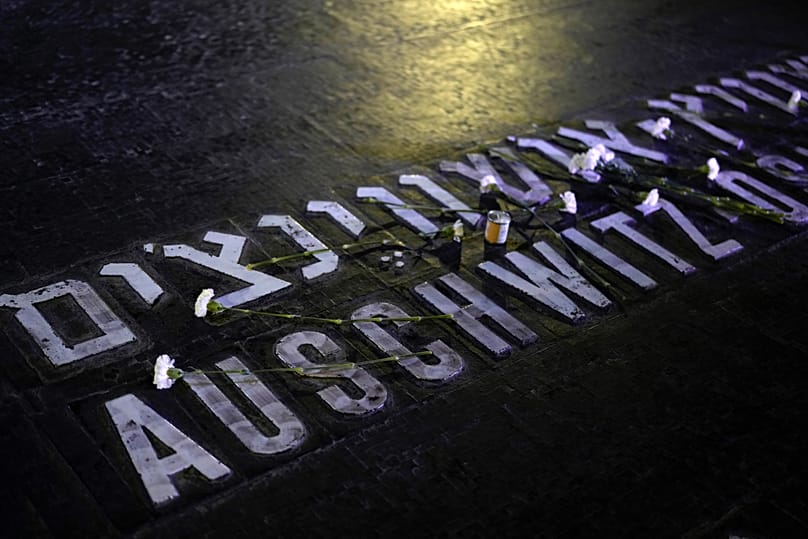
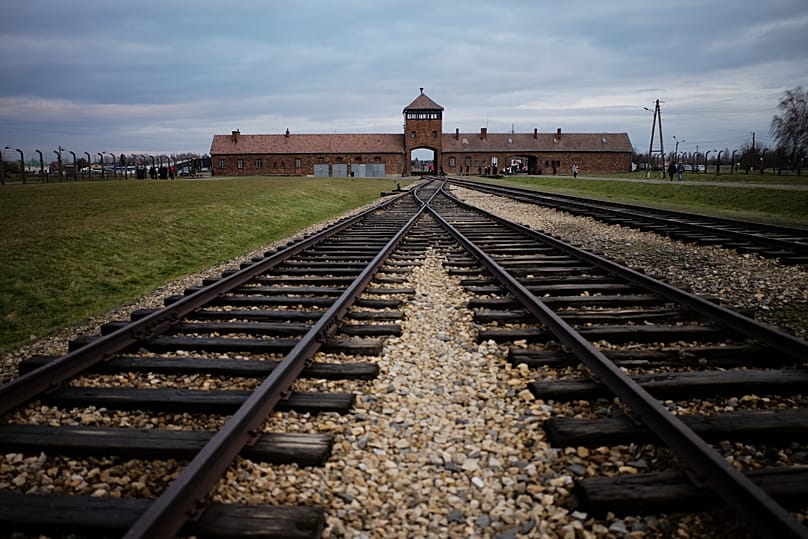
For Dayan moving on is the opposite of what Yad Vashem stands for. With around 80% of Holocaust victims now identified, he admits that the researchers will never be able to extablished all 6 million names.
How Holocaust survivors' grandchildren keep the memory alive
The number of Holocaust survivors is dwindling and soon the world will be without first-hand witnesses. According to a recent report, only a fraction of Holocaust survivors will still be alive by 2040.
"Nobody believed that we would achieve 5 million names," Dayan told Euronews, adding that the crucial role is on the survivors' families and often on their grandchildren.
"There are many families of Holocaust survivors, in which the first generation didn't speak. The victims, the survivors themselves didn't speak, didn't share to protect their children, to protect themselves. The children didn't ask, were afraid to ask. And then came the grandchildren and started asking their grandparents and then the grandparents started talking."
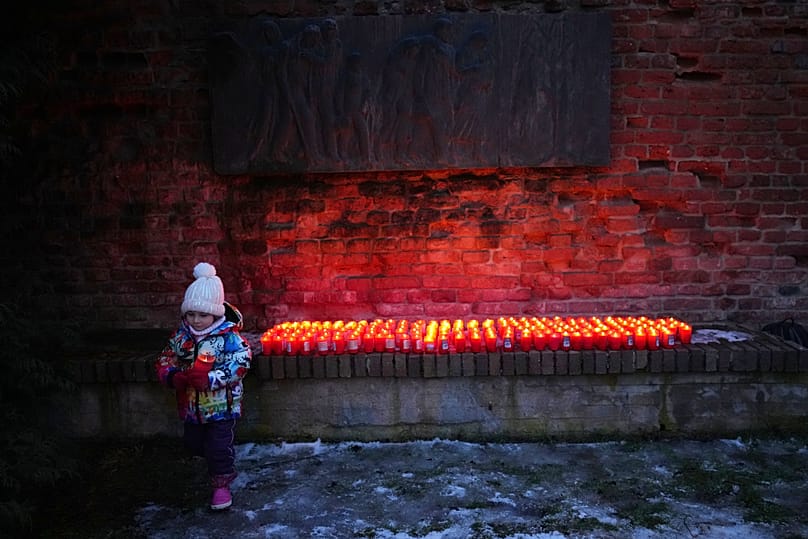
The youngest survivors of the Holocaust are around 80 years old now, Dayan said, explaining that they were so young that they can remember very little from those times. The big question Yad Vashem and its researchers is facing is "how will we continue to educate and to remember."
"I have no doubt that when there will be no more survivors, that will be the happy hour of the denialists and distortionists and the inversionists of the Holocaust that suddenly will believe that they have a free field in order to propagate their lies without actual witnesses rebutting them."