




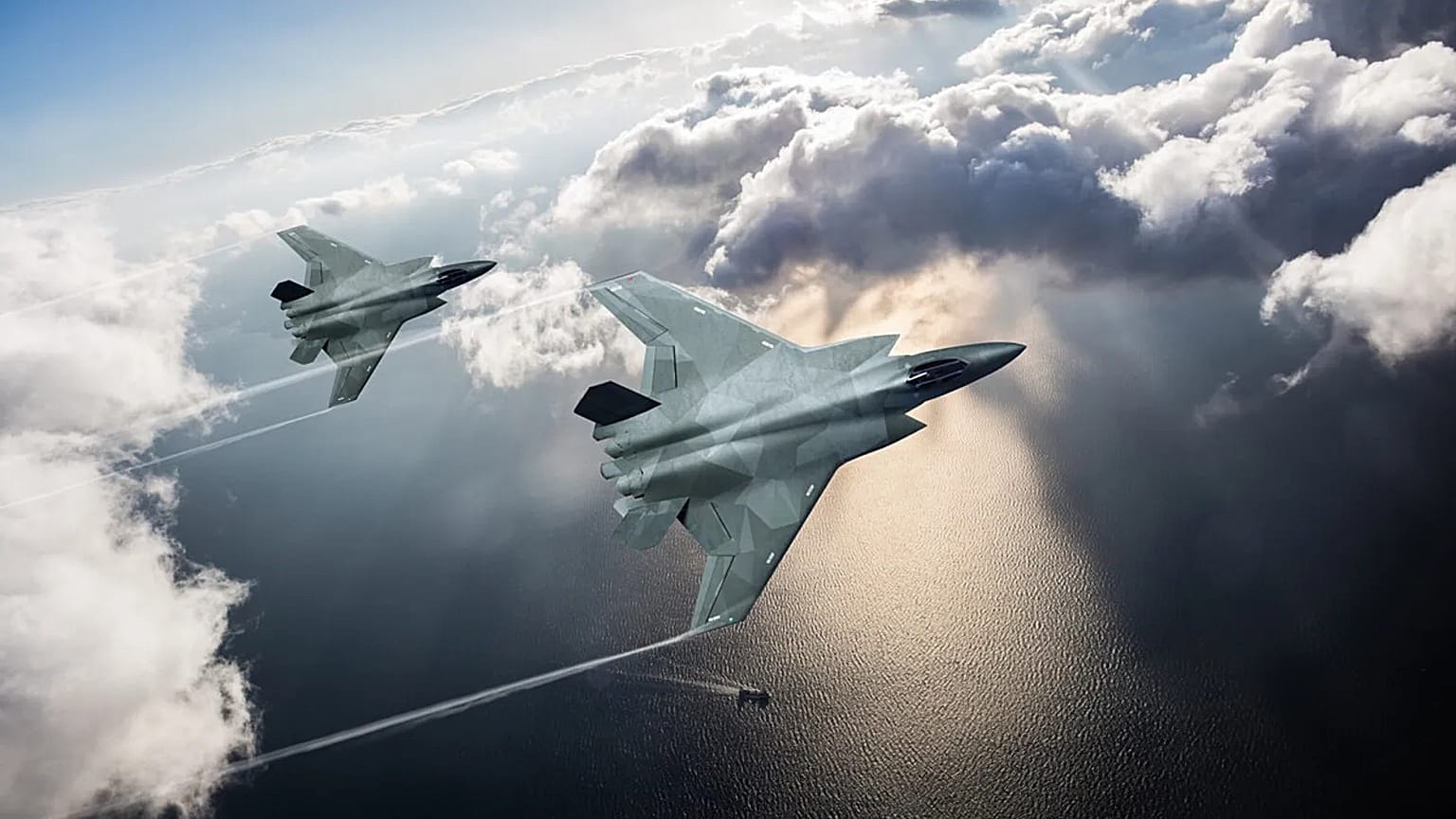













It is an expensive gamble, but also an attempt at technological emancipation from the major programmes of the past, in which Italy has often played a subordinate role.
In the next few weeks, Italy's parliament will have to decide whether to commit substantial resources to the Global Combat Air Programme (Gcap).
 ADVERTISEMENT
ADVERTISEMENT
ADVERTISEMENT
Rome, along with with the United Kingdom and Japan, is hoping to join a select group of countries capable of designing and governing next-generation combat aircraft systems.
It is an expensive gamble, but also an attempt at technological emancipation from the major programmes of the past, in which Italy has often played a subordinate role.
The Gcap represents one of the cornerstones of Italian military planning in the medium to long term and marks a possible change of course from previous programmes, from the Eurofighter to the F-35, in which access to technology and control of capabilities remained largely in the hands of the strongest partners.
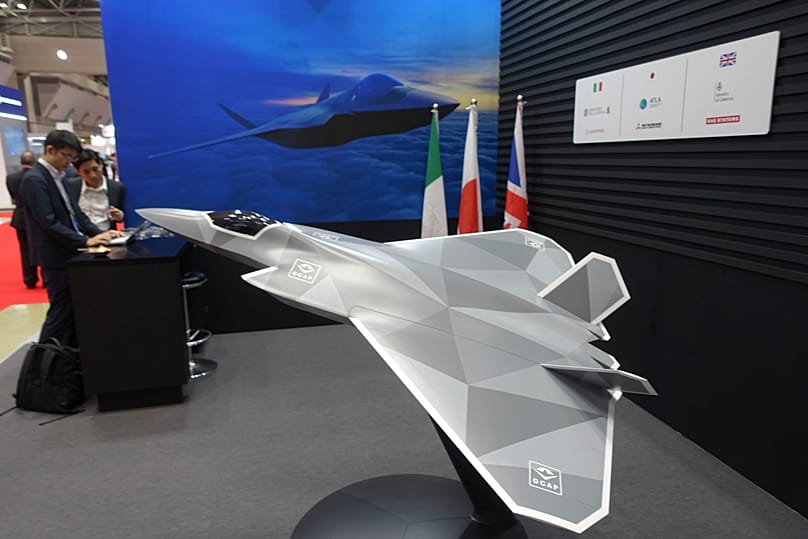
What is the Global Combat Air Programme?
The Gcap is the result of the unification of two previous programmes: the British Tempest and the Japanese FX project.
The aim is to develop a sixth-generation air combat system by 2035, intended to progressively replace platforms such as the Eurofighter Typhoon and the Mitsubishi F-2.
It is an integrated air system designed to operate in complex warfare contexts, with a strong emphasis on interoperability with allied forces.
According to the Defence Multi-Year Planning Document, the Italian contribution to the Gcap is estimated at around €9 billion until 2035.
The figure concerns the development phase and does not include any future costs related to series production or the operational life cycle of the systems.
For 2025 alone, the allocation exceeds €600 million, making the Gcap one of the most expensive programmes in the military aviation sector, together with the F-35 and the Eurofighter upgrade. As is often the case with large defence programmes, initial estimates could be revised over time: defence itself speaks of a possible "integration."
From the Eurofighters to the Gcap
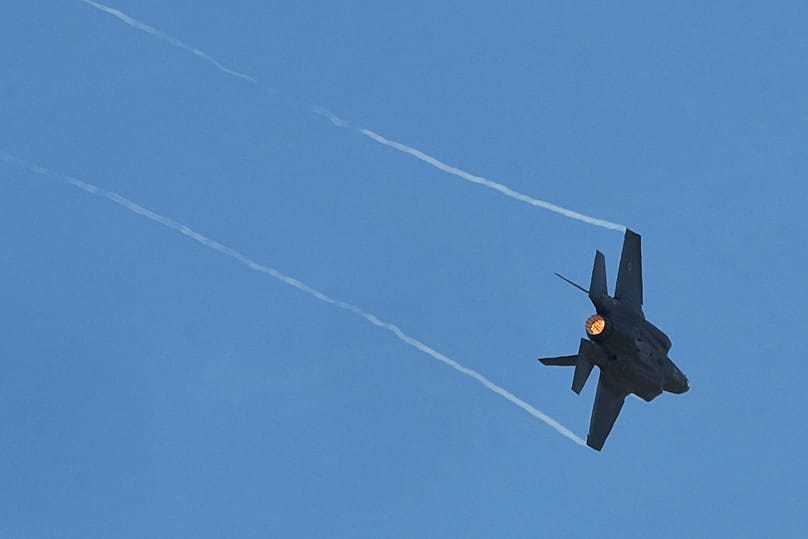
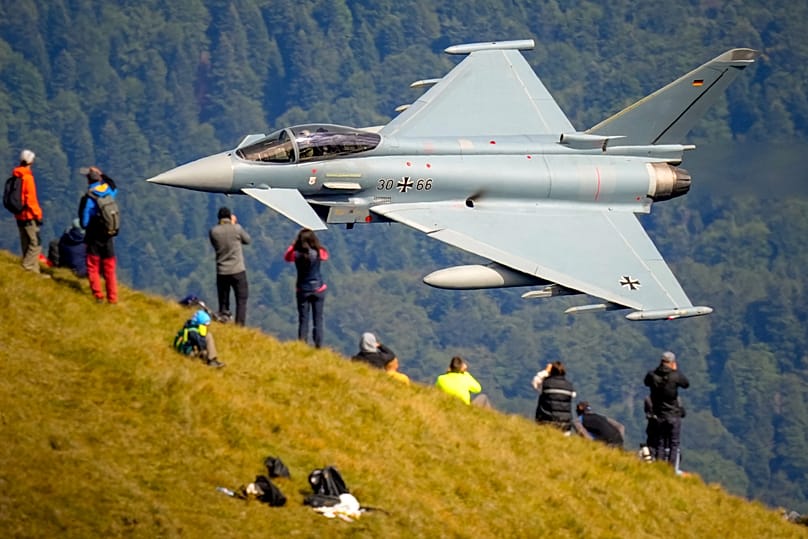
The Gcap will flank the Eurofighter and F-35 for a period before gradually replacing them. Italy has 118 Eurofighters and aims for 115 F-35s, with more than 180 combined aircraft planned around 2040.
The programme will also help to close the gap on Ucas (Uncrewed Combat Air Systems) by developing advanced auxiliary systems for the main platform.
"We need to equip ourselves looking ahead to the next 10, 20, 30 years to maintain deterrence against Russia and, more generally, to contain Russia and Chinese assertiveness in various regional quadrants," says Alessandro Marrone, head of the Defence, Security and Space programme at theIstituto Affari Internazionali, an independent think tank.
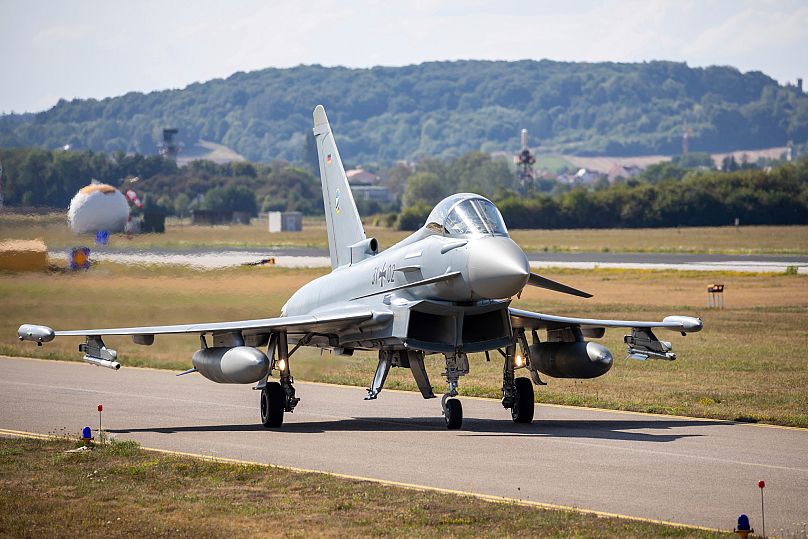
The experience of the F-35 programme
Unlike the F-35 programme, which has aroused strong political divisions in Italy, the Global Combat Air Programme has so far enjoyed a broader consensus.
In the case of the F-35, the cooperation model was heavily skewed towards the United States, which bore the bulk of the research and development costs and maintained a central role in the programme's technological and operational choices.
"The limited transfer of technology and the presence of 'black boxes' in the F-35 programme frustrated Italian actors," according to an Istituto Affari Internazionali report. In contrast , the Gcap's commitment to equal access to technology aligns with Italy's insistence on operational sovereignty.
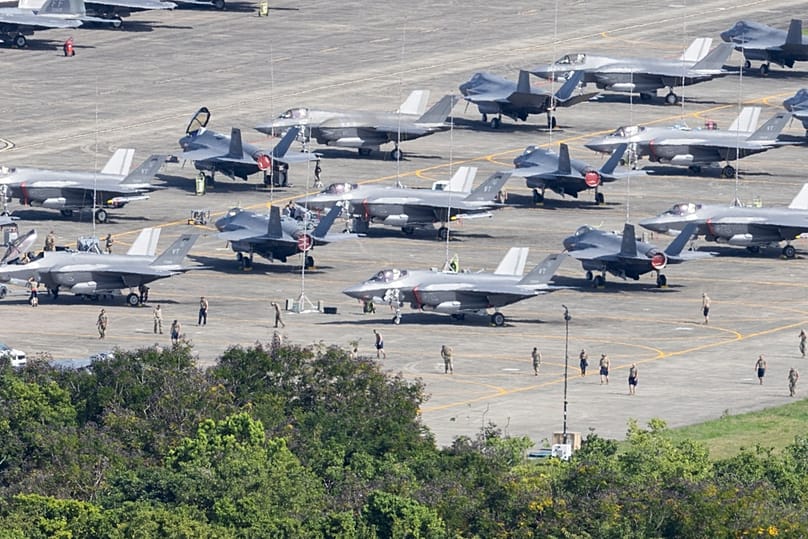
In practice, black boxes are closed, US-controlled parts that prevent partner countries from directly intervening in technology, advanced maintenance or upgrades, thus limiting the technological sovereignty and industrial control of the partners.
The Gcap is based on a different approach: the absence of Washington guarantees Rome greater operational and technological autonomy, while Italy's equal participation, with a 33.3% share on a par with the United Kingdom and Japan, ensures industrial returns that are significantly higher than in the past.
What others are doing
The US is developing two separate programmes for next-generation aircraft, while France, Germany and Spain have launched the Future Combat Air System (Fcas), a trilateral programme involving a piloted aircraft, armed drones and an integrated "combat cloud."
Despite the political and industrial commitment, the project has encountered significant difficulties: Franco-German cooperation has proved complex and, even with the entry of Spain, delays and uncertainties over the timetable remain.
The first phase, financed with around €3.85 billion until 2026, aims to develop and test key technologies, while the next phase envisions the development of a demonstrator with around €4.5 billion, with entry into service estimated around 2040, five years after the Gcap.
Main criticalities of the Gcap for Italy
According to the Istituto Affari Internazionali, the Gcap is an unprecedented investment for Italy, but also a high-risk test bed. The complexity of the programme - which integrates a sixth-generation fighter, drones, advanced communication networks and open digital architectures - requires constant coordination between industry and institutions. Interoperability with Eurofighters and F-35s and continuous upgrades represent delicate junctions, capable of turning into friction factors rather than capability multipliers.
A first critical front concerns the management of classified information. Many Italian SMEs and research centres do not routinely operate at these security levels, with the real risk that part of the industrial chain will remain on the margins of the programme, reducing its overall impact on the country system.
Also central is the tightness of the supply chain. The Gcap requires the integration of large industrial groups, SMEs and high-tech start-ups, while maintaining very high standards of quality, safety and business continuity. In this framework, human capital becomes a decisive factor: the availability of qualified and permanently employed STEM engineers and technicians directly conditions the credibility of Italy's technological autonomy.
Weighing in, finally, is the unknown factor of resources. The programme is on a tight schedule and requires regular and consistent investment over time. Delays, fragmented funding or regulatory uncertainties affect the industrial return and the maturation of key technologies. The rules governing the exchange of components and exports also play a strategic role: the absence of a clear and shared framework risks slowing down international cooperation, weakening one of the most ambitious projects ever undertaken by Italian defence.