




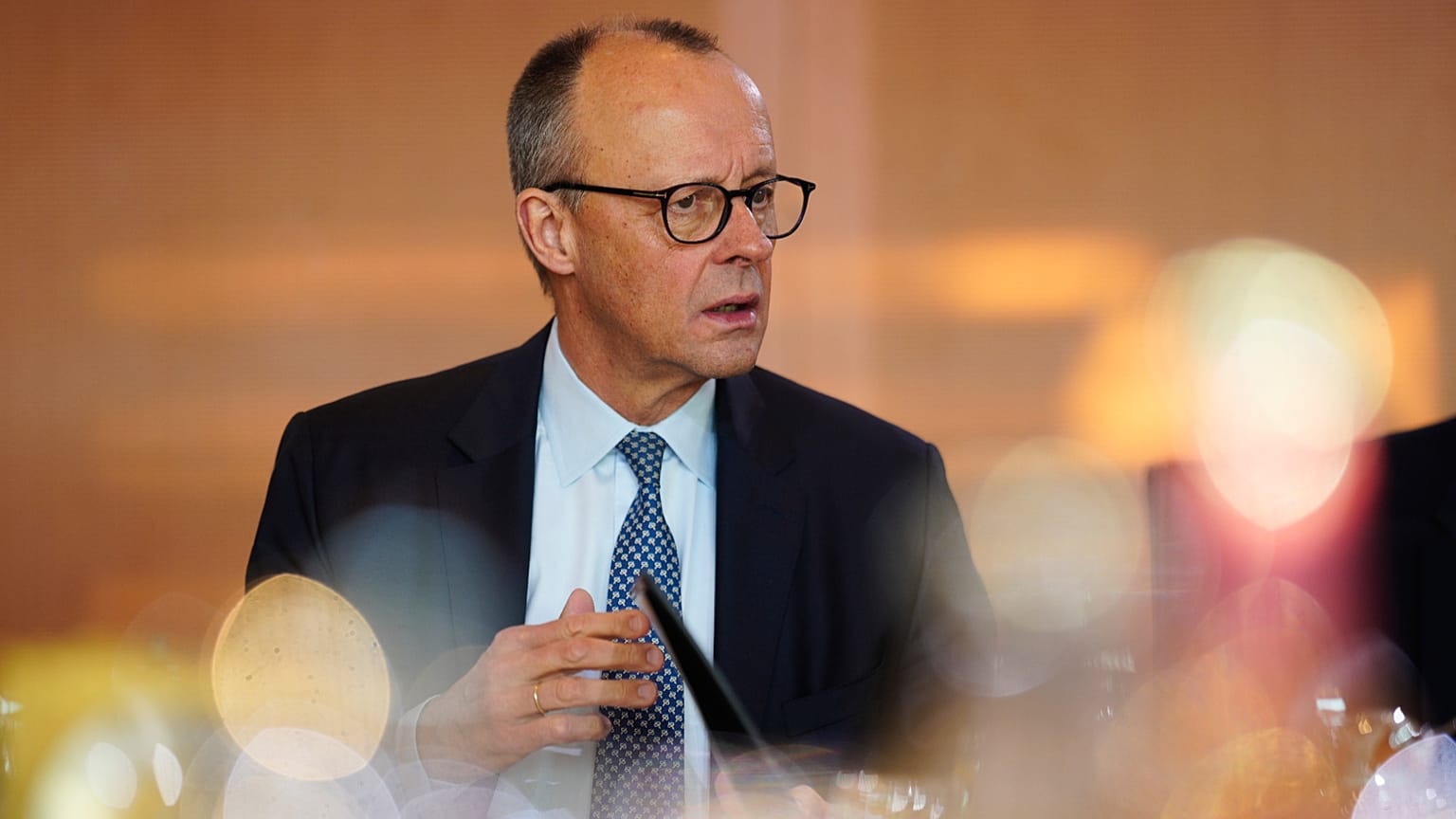














European leaders are closing ranks in response to Donald Trump's threat of additional tariffs to force the acquisition of Greenland. German Chancellor Friedrich Merz said Europe would hit back "if necessary".
European leaders are seeking to diffuse tensions with the United States over the future state of Greenland, even as Donald Trump doubles down on his threats to impose extra tariffs on eight European nations to force the sale of the sprawling island.
 ADVERTISEMENT
ADVERTISEMENT
ADVERTISEMENT
"NATO has been telling Denmark, for 20 years, that 'you have to get the Russian threat away from Greenland.' Unfortunately, Denmark has been unable to do anything about it. Now it is time, and it will be done!!!" Trump wrote on Truth Social overnight.
British Prime Minister Keir Starmer denounced Trump's escalation as "completely wrong" and vowed to find a "pragmatic, sensible, sustained" solution to the "serious" crisis.
"A tariff war is in nobody's interest," he said on Monday morning at a press conference, as he called on "the whole country to pull together".
From Berlin, German Chancellor Friedrich Merz urged dialogue and warned that a sudden hike in duties would hurt both sides of the Atlantic Ocean.
"We want to avoid any escalation in this dispute if at all possible," Merz said. "We simply want to try to resolve this problem together, and the American government knows that we could also retaliate. I don't want to, but if necessary, we will of course protect our European interests as well as our German national interests."
Numerous meetings, including between Europeans and Americans, are set to take place on the sidelines of the World Economic Forum in Davos, where world leaders will gather this week. EU leaders will later convene in Brussels for an extraordinary summit.
Read up on what happened in our live blog below

 ${title}
Live ended
That's it from us - back again at 09.00 CET tomorrow
We'll close our live blog here for the day but not to worry, we will have you covered tomorrow too!
Davos will be where most of the action is with several must-watch events on our radar. These include:
- 10.50-11.20: European Commission President Ursula von der Leyen delivers a speech;
- 13.00-13.45: the leaders of Belgium, Croatia and Lithuania take part in a panel entitled "Redefining Europe's place in the World";
- 14.00-14.30: French President Emmanuel Macron takes to the stage.
We will, of course, continue to monitor what's happening in Brussels, other European capitals, and Washington
Have a good evening.
UK, Denmark agree on 'need for stronger NATO engagement' in Arctic
Danish Foreign Minister Lars Løkke Rasmussen had a "productive" meeting with his British counterpart on Monday, his ministry said on X.
"In turbulent times, close allies are crucial - Denmark and the UK stand close together. We agree on the need for stronger NATO engagement in the Arctic and closer security cooperation," Rasmussen added.
FM @larsloekke: "A productive meeting today with 🇬🇧Foreign Secretary @YvetteCooperMP. In turbulent times, close allies are crucial - Denmark and the UK stand close together. We agree on the need for stronger NATO engagement in the Arctic and closer security cooperation." pic.twitter.com/T8jLe56Lws
— Denmark MFA 🇩🇰 (@DanishMFA) January 19, 2026
German soldiers sent to Greenland return home
A 15-strong team of German soldiers sent to Greenland last week has returned home, the German delegation to NATO has confirmed.
"They gathered on--the-ground insights into possible German contributions to the joint strengthening of security in the Arctic - coordinated with our partners within the NATO framework," it added on X.
European countries that also sent officers last week to Greenland at the invitation of Denmark as part of a reconnaissance mission to boost the numbers of troops on the sprawling island on a more permanent basis include France, Estonia, Finland, Norway, the UK and the Netherlands.
Today, our 15-member Bundeswehr team returned from Greenland.
— Germany at NATO (@GermanyNATO) January 19, 2026
They gathered on-the-ground insights into possible German contributions to the joint strengthening of security in the Arctic - coordinated with our partners within the NATO framework.#WeAreNato
📸: Bundeswehr pic.twitter.com/8AWVr1jZge
European Parliament changes its agenda over Trump's latest claims
A vote at the European Parliament on a non-binding report on EU-US political relations, initially foreseen on Wednesday, has been postponed, Roberta Metsola announced at the beginning of the plenary session in Strasbourg.
The decision was taken in order "to reflect the recent developments," a Parliament spokesperson said. The report will be voted on in a future session and will incorporate some changes from the current text, which already expresses "the EU’s full solidarity and unwavering support for Greenland and its territorial integrity".
According to Parliament's sources, the postponement was initially requested by the Parliament's left-wing groups as well as the liberal Renew Europe group.
The title of a debate to be held on Tuesday has also been slightly changed. The former title "Territorial integrity and sovereignty of Greenland and the Kingdom of Denmark" has been amended to: "Territorial integrity and sovereignty of Greenland and the Kingdom of Denmark: the need for a united EU response to US blackmail attempts."
'We will stand our ground," EU top diplomat says
The EU's High Representative said on Monday afternoon that "sovereignty is not for sale" following a meeting in Brussels with ministers from Denmark and Greenland.
"Arctic security is a shared transatlantic interest, and one we can discuss with our US allies. But tariff threats are not the way to go about this," Kaja Kallas said on X after meeting with the defence minister of Denmark, Troels Lund Poulsen, and Greenland's foreign minister, Vivian Motzfeldt.
"We have no interest to pick a fight, but we will hold our ground. Europe has a slate of tools to protect its interests," Kallas also wrote.
The two ministers still have a busy schedule ahead of them today, this time at NATO HQ with meetings with the alliance chief, Mark Rutte, followed by a meeting of Nordic defence ministers.
Denmark and Greenland are not alone.
— Kaja Kallas (@kajakallas) January 19, 2026
Good to see my colleagues @troelslundp and Vivian Motzfeldt.
Arctic security is a shared transatlantic interest, and one we can discuss with our US allies.
But tariff threats are not the way to go about this. Sovereignty is not for… pic.twitter.com/AbIhQ2ZI13
European Parliament President: 'Greenland territorial integrity must be respected'
"The European Union supports Denmark and the people of Greenland, and we do so united in our resolve," European Parliament President Roberta Metsola stated at the beginning of the plenary session in Strasbourg, prompting a standing ovation by almost all the lawmakers present in the chamber.
"The measures threatened over the weekend by the United States’ administration will not help security in the Arctic. In fact, they risk the opposite," Metsola said, referring to US President Donald Trump's latest threat to levy additional tariffs on some European countries in a bid to annex Greenland.
Greenland and Denmark have both made clear that Greenland is not for sale and their sovereignty and territorial integrity must be respected. That fact will not change," she added, as a strong message of support.
Metsola believes that the EU should always "be open to continue to discuss in a spirit of mutual respect" with the US on the matter.
"I know some will mistake our way of calm resolve, restraint and dialogue for weakness. They are wrong. It is the opposite. We are Europe: We will always stand up for our way, rationally, confidently, and deliberately, and we will make no apologies for that."
Trump says he will '100%' follow through on tariff threat
Donald Trump said on Monday that he will "100%" follow through on his threat to slap an additional 10% tariff on eight European countries from 1 February over this bid for the US to acquire Greenland.
During a brief telephone interview with NBC News, the US president also said that “Europe ought to focus on the war with Russia and Ukraine because, frankly, you see what that’s gotten them".
“That’s what Europe should focus on — not Greenland," he added.
He also rejected the Norwegian Prime Minister's explanation that his government holds no sway over who receives the Nobel Peace Prize, saying that "Norway totally controls it despite what they say".
"They like to say they have nothing to do with it, but they have everything to do with it," Trump said, adding: "I don't care about the Nobel prize."
US tariff threat is 'unnecessary and irresponsible', says Dutch minister
The Dutch finance minister has described the US tariff threat issued over the weekend as "unnecessary and irresponsible".
The Netherlands is among the eight countries that coud be targeted by an additional 10% levy on exports to the US.
"It's unnecessary because we are part of the same alliance, we make the same threat analysis, we are willing to work together. And it's irresponsible because this is going to hurt the world economy and it's not in the benefit of both continents," Eelco Heinen told reporters in Brussels ahead of a Eurogroup meeting.
"So most important is that we de-escalate and we need to use the time ahead of us to, once again, try to get these tariffs off the table," he added.
“We see this as unnecessary and irresponsible. It's unnecessary because we are part of the same alliance, we make the same threat analysis, we are willing to work together. And it's irresponsible because this is going to hurt the world economy.”
— Netherlands at the EU (@NLatEU) January 19, 2026
📢@Minister_FIN Heinen at today’s… pic.twitter.com/gZTMRJJU2o
What is Trump's proposed 'Golden Dome' missile defence system and how would it work?
Donald Trump said he needs Greenland for his planned "Golden Dome for America", a missile defence shield.
"The United States needs Greenland for the purpose of national security," Trump wrote last week on his social media platform, Truth Social. "It is vital for the Golden Dome that we are building," adding that NATO should support the American acquisition of the island because the alliance becomes "far more formidable".
But what exactly is the "Golden Dome," and how would it work?
Our colleague Anna Desmarais takes a closer look.
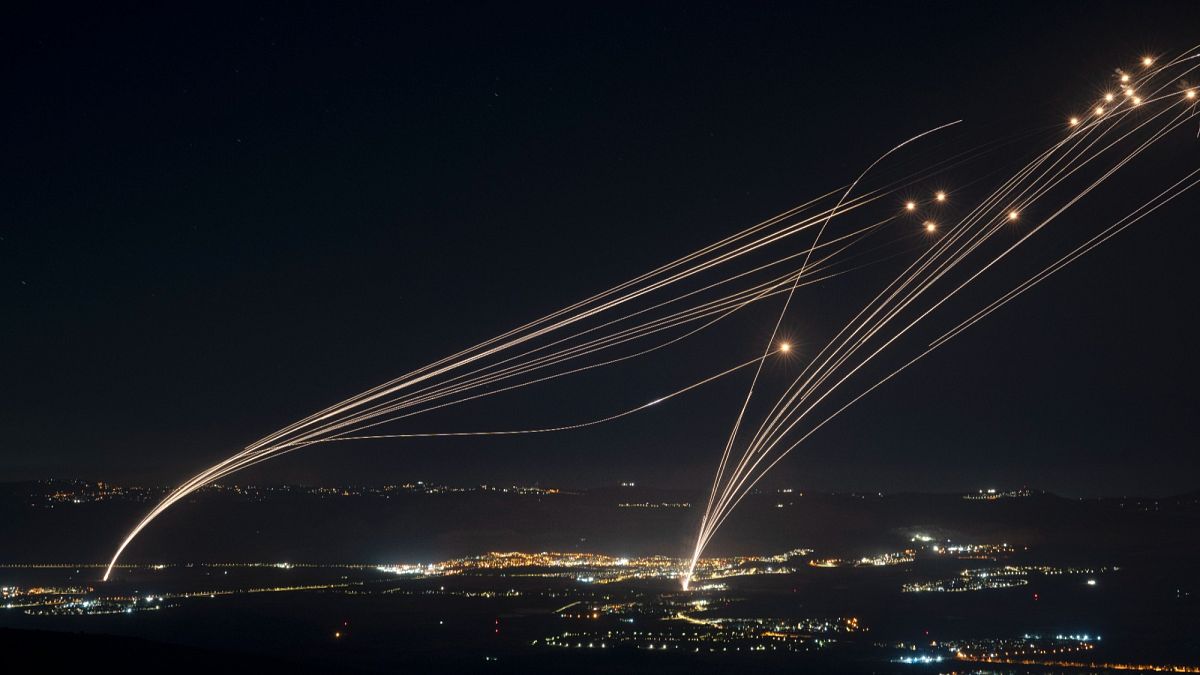
What is the ‘Golden Dome’ and how would it work?
US President Donald Trump said his planned acquisition of Greenland is crucial for his $175-billion ‘Golden Dome’ defence project. Here’s what we know so far a…
'Logic of domination' is 'doomed to failure', says French foreign minister
In a thinly-veiled swipe at the US, France's Foreign Minister said that "those who predict the demise of European civilisation" should first question "their own weakness, their own fragility, and the risk of their own demise."
Reminder: The US released a national security strategy in November in which it said Europe is facing "civilisational erasure" due in part to migration. Washington also said in the 33-page document that it would seek to cultivate "resistance to Europe's current trajectory within European nations".
Jean-Noel Barrot also told France's Academy of Moral and Political Sciences that the "logic of domination" is "futile and doomed to failure".
"History teaches us that whenever a nation has sought to expand its own influence, economic footprint or territory at the expense of others, it has ended up losing everything, blinded by its hubris," Barrot said.
France and Germany display unity
Germany’s Vice Chancellor and Finance Minister Lars Klingbeil and French Economy and Finance Minister Roland Lescure on Monday presented a united front in response to US threats to impose tariffs on several European countries unless Washington is allowed to acquire Greenland.
“We are in agreement,” Klingbeil said in a joint doorstep with Lescure as they headed to a meeting of EU finance ministers in Brussels, adding: “We are not looking for an escalation, but we are prepared for that moment.”
Earlier, Klingbeil had backed the use of the EU’s anti-coercion instrument, often dubbed its trade bazooka, which allows a range of countermeasures - including restrictions on licenses or access to public procurement - in cases of economic coercion by a third country. Paris on Sunday became the first EU member state to call for activation of the tool, adopted in 2023.
“We're living through uncharted territories. We've never seen this before. An ally, a friend of 250 years, is considering using tariffs. We don't like tariffs, we don't like using tariffs as a geopolitical weapon,” Lescure said.
“We need to be able to show that we're willing to use all the instruments we have at our disposal, whether they are tariffs, whether they're the trade agreements, whether they're anti-coercion measures.”
The French minister added that the ability of France and Germany to "work together in a close manner” was essential at such a moment.
Foreign policy is about diplomacy, not social media posts, says Czech prime minister
Andrej Babiš, the new prime minister of the Czech Republic, has sent a brief message of support to Greenland amid Donald Trump's tariff threat.
"Greenland is a Danish autonomous territory. There is no doubt about that. But we will support dialogue, not declarations," Babiš wrote on X.
"Foreign policy is about diplomacy, not about who posts the stronger statement on social media."
Since his election last year, Babiš has reshaped the Czech position in the European Union. In December, he sided with the leaders of Hungary and Slovakia to exempt his country from a new scheme to borrow €90 billion to meet Ukraine's financial and military needs for the next two years.
Grónsko je dánské autonomní území. O tom není pochyb. Ale my budeme podporovat dialog, ne deklarace. Zahraniční politika je totiž o diplomacii, ne o tom, kdo dá na sociální sítě silnější prohlášení. Pokud mají Novinky potřebu zase manipulovat, měly by to zkusit jinde. pic.twitter.com/duQdm6otEV
— Andrej Babiš (@AndrejBabis) January 19, 2026
Irish foreign minister says it's 'time for cool heads'
Ireland's Foreign Minister Simon Harris has just warned that the "destabilising effect of the recent geopolitical developments could potentially be enormous" for Europe, saying it's "more important than ever now that we seek dialogue."
"It’s time for cool heads," Harris, who is also finance minister, said from Brussels. "We want to have dialogue, in a cool and calm way, and use the window that’s available. But we will, of course, prepare accordingly should that be required."
It's 'premature' to talk about using the Anti-Coercion instrument, says Lithuanian minister
Lithuania's finance minister just told reporters that for him, "even just talking about the usage" of the Anti-Coercion Instrument, "is premature".
"There are other minor measures we can take first," Kristupas Vaitiekūnas said upon arriving at a Eurogroup meeting in Brussels.
France and Germany have both seemingly backed the use of the instrument, created in 2023 to punish unfriendly states for economic coercion but never used to date.
Asked about what he thinks Europe's response should be, Vaitiekūnas said: "I think it's a little bit premature to say but of course we have to be united in this threat and we have to have a united stance against it and we have to see how negotiations go."
Friedrich Merz urges de-escalation with the US
German Chancellor Friedrich Merz says Europe wants to "avoid escalation" with the United States over Greenland's future. Germany is among the eight countries that Donald Trump has threatened with a 10% tariff to force the sale of the semi-autonomous island.
"We want to avoid any escalation in this dispute if at all possible," Merz said in a press conference, according to AFP.
"We simply want to try to resolve this problem together, and the American government knows that we could also retaliate. I don't want to, but if necessary, we will of course protect our European interests as well as our German national interests."
The German chancellor warned that a tariff hike would hurt both sides of the Atlantic. His country is heavily export-oriented and is still reeling from the impact of last year's so-called "reciprocal tariffs".
"Customs duties are usually paid by those in the country where the imports are received – in this case, American consumers," Merz said. "But (the tariffs) would also, of course, damage our economy, the European economy and, in particular, the German economy."
Merz added he would seek to meet Trump during his trip to Davos to attend the World Economic Forum.
Norwegian PM told Trump his government has nothing to do with Nobel prizes
Norwegian Prime Minister Jonas Gahr Støre has released a statement on his recent communications with Donald Trump after it was revealed the US president sent him a letter linking his failure to get a Nobel Peace Prize to his ambition to gain control over Greenland.
In his letter to Støre, first reported by PBS, Trump had written that "Considering your Country decided not to give me the Nobel Peace Prize for having stopped 8 Wars PLUS, I no longer feel an obligation to think purely of Peace, although it will always be predominant, but I can now think about what is good and proper for the United States of America."
Støre said in his statement released on Monday that "as regards the Nobel Peace Prize, I have clearly explained, including to president Trump what is well known, the prize is awarded by an independent Nobel Committee and not the Norwegian Government."
The Norwegian leader said he received the communication from Trump after reaching out to request a call to convey the country's opposition to his decision to levy additional tariffs over Greenland.
Norway is among the eight European countries targeted.
"Norway’s position on Greenland is clear. Greenland is a part of the Kingdom of Denmark, and Norway fully supports the Kingdom of Denmark on this matter. We also support that NATO in a responsible way is taking steps to strengthen security and stability in the Arctic," Støre said in his statement.
Europe will continue working with the US on Ukraine guarantees despite Greenland's tensions
Donald Trump's coercive threats to acquire Greenland will not derail the ongoing work that Europeans are conducting with the United States to design security guarantees for Ukraine, officials have stressed.
"I can only confirm that the work continues at full speed as before. Nothing has changed in this regard and in our unwavering support towards Ukraine," a spokesperson for the European Commission said on Monday afternoon in response to an Euronews question.
Earlier in the day, British Prime Minister Keir Starmer, who co-chairs the "Coalition of the Willing" for Ukraine alongside French President Emmanuel Macron, voiced a similar message of continuation. Starmer and Macron have formally committed to deploying troops on the ground in Ukraine after the war as part of the security guarantees, which have been substantially fleshed out in recent months.
"On Ukraine, I will be brief. We strongly support efforts to bring the killing to an end and to secure a ceasefire as soon as possible," Starmer told reporters in London. "We recognise President Trump’s role in pushing that process forward, and we will work closely with the United States, Ukraine, and our other allies to apply pressure where it belongs: on Putin."
However, the political dilemma can hardly be ignored: Europeans are currently defending Ukraine's sovereignty and territorial integrity against Russia and Denmark's sovereignty and territorial integrity against the United States. Can Europe credibly reconcile both realities?
Danish & Greenland ministers to also meet Kaja Kallas today
Troels Lund Poulsen, Denmark's defence minister, and Vivian Motzfeldt, Greenland's foreign affairs and research minister, will have a meeting with Kaja Kallas, the EU's high representative this afternoon.
It's quite the busy day for the two ministers who will also meet with NATO Secretary-General Mark Rutte at 16.30 CET, as well as with Nordic defence ministers.
Kallas reacted to the announcement this weekend by US President Donald Trump that the US could levy additional tariffs on European partners over Greenland by writing on X that "China and Russia must be having a field day".
"They are the ones who benefit from divisions among Allies. If Greenland's security is at risk, we can address this inside NATO," she added.
China and Russia must be having a field day. They are the ones who benefit from divisions among Allies.
— Kaja Kallas (@kajakallas) January 17, 2026
If Greenland’s security is at risk, we can address this inside NATO.
Tariffs risk making Europe and the United States poorer and undermine our shared prosperity.
We also…
European Parliament to condemn US interference on Greenland
The European Parliament is set to "condemn any attempts at unlawful interference in the internal affairs of the EU Member States, in particular those related to the jurisdiction of Greenland, as made in previous statements by the US administration," according to the text of a non-legislative resolution to be voted on this Wednesday in Strasbourg.
The text, seen by Euronews, is a broad report on EU-US political relations, drafted by Polish MEP Michał Szczerba. It also "expresses, once again, the EU’s full solidarity and unwavering support for Greenland and its territorial integrity".
Last week, the Parliament expressed "unequivocal support to Greenland and Denmark" and criticised the stated aim by the US of taking control of the Danish territory, in a statement agreed by political leaders. The statement was adopted by the Parliament's Conference of Presidents, meaning that the majority of the political groups support this position.
However, right-wing European Conservatives (ECR) and Reformists and far-right Patriots for Europe (PfE) made clear that they disagree with the statement.
Commission confirms President von der Leyen has been invited to Trump's Gaza 'Board of Peace'
In a separate development, the EU executive has said that President Ursula von der Leyen has received an invitation to sit on the Gaza 'Board of Peace' chaired by US President Donald Trump.
"I can confirm the receipt of the invitation, which we appreciate," Deputy Chief spokesperson Olof Gill said, adding that the President is in close touch with EU leaders on all geopolitical issues. "The objective here is to achieve peace and contribute to a comprehensive plan to end the Gaza conflict."
The US has reportedly reached out to as many as 60 countries with an invitation to sit on the Board. Hungarian Prime Minister Viktor Orbán is the only EU leader to have accepted the invitation to date. The Kremlin also said earlier on Monday that President Vladimir Putin had received an invitation.
Séjourné: EU experiencing 'a textbook case of coercion'
European Commission Vice-President Stéphane Séjourné said this morning that Donald Trump's threat of levying additional tariffs on European countries in a bid to annex Greenland is a "textbook case of coercion".
"What we are experiencing is a textbook case of coercion. So perhaps the first step for the European Commission is to recognise that a trade tool, in this case customs duties, is being used to blackmail us into giving up Greenland. So this is a textbook case today, and the definition of coercion is very clear in European texts. It is a textbook case of coercion," Séjourné told France Inter.
He said the EU should issue its own threat towards the US, including the use of its Anti-Coercion Instrument, which he described as a "weapon of deterrence" that should "enable dialogue".
But he said triggering the instrument is "done in stages". First, European authorities must establish that there is coercion and then member states must agree with that analysis via qualified majority.
Séjourné called for "unity" and 'European patriotism" going forward saying that this is what was lacking during the negotiations last year between the EU and the US that led to a trade deal described by some across Europe as a "capitulation".
"We must keep a cool head, and I believe that Europe must therefore have a strong voice at this time to avoid disaster," he said.
Commission spokesperson says tariffs on certain EU member states 'technically possible’ but ‘complex’
Asked if it’s feasible for the US to slap tariffs on a select number of EU countries, given the nature of the single market, a Commission spokesperson said that it is “technically possible” but “bureaucratically and procedurally complex to do so.”
The spokesperson explained that many EU-origin products are manufactured across several member states and move freely across borders, making it “practically very difficult to attribute goods exclusively to a single member state.”
“According to EU rules, there is only an EU origin for goods manufactured in the EU.”
He added that while possible in principle, imposing levies on products coming from certain EU markets would "result in layers of additional complexity (...) that would impede the smooth functioning of transatlantic goods trade, particularly for US importers.”
Extraordinary European Council summit convened on Thursday
EU leaders will convene in Brussels on Thursday for an extraordinary Council summit to discuss the US tariff threat, a spokesperson for European Council President António Costa has confirmed.
The meeting will start at 19.00 CET.
Costa had already said late on Sunday that a summit would likely be convened before the end of the week, following consultations with EU heads of state "in order to further coordinate".
My consultations with member states on the latest tensions over Greenland reconfirm our strong commitment to the following:
— António Costa (@eucopresident) January 18, 2026
▪️ Unity on the principles of international law, territorial integrity and national sovereignty;
▪️ Unity in support of and solidarity with Denmark and…
EU priority is to 'engage, not escalate' in order to 'avoid' tariffs, Commission spokesperson says
The European Commission's Deputy Chief Spokesperson Olof Gill has told reporters that "intensive consultations" are currently ongoing among EU leaders over Trump's tariff threats.
"It’s clear from the consultations among EU leaders (...) that the priority here is to engage, not escalate, and avoid the imposition of tariffs," Gill said. “The EU has consistently underlined its shared transatlantic interest in peace and security in the Arctic, including through NATO."
He nonetheless said that the bloc is also prepared to respond should Trump follow through on his threats. "Should the threatened tariffs be imposed, the European Union has the tools at its disposal and is prepared to respond because we will prepare everything necessary to protect EU economic interests," Gill said.
Kremlin: Trump will go 'down in history' if he gets Greenland
A Kremlin spokesperson has said that US President Donald Trump would go down in the history of the United States and the rest of the world if he successfully acquires Greenland from Denmark, according to comments reported by Reuters.
In a separate development, Trump has invited the Russian President to be part of his so-called Board of Peace for Gaza, the Kremlin said on Monday. The Board is chaired by Trump and is intended to rebuild war-torn Gaza.
According to several reports citing a draft charter for the Board, the US administration wants nations sitting on it to pay $1 billion to the US.
'We should start the anti-coercion procedure,' senior MEP says
German lawmaker Bernd Lange (S&D), chair of the European Parliament’s trade committee, told Euronews it was time for the EU to trigger its trade "bazooka" - the anti-coercion instrument.
“I think we should start the procedure. We need to make an investigation, then also dialogue with the US, and then we can decide on measures,” Lange said. “Trump has now, for the first time, used trade to have political pressure; we have to defend our European sovereignty.”
The anti-coercion instrument, adopted in 2023, has never been used. It is designed as a last-resort trade defence tool to counter economic coercion by a third country.
On Saturday, US President Donald Trump threatened to impose 10% tariffs on imports from Denmark, Sweden, Norway, France, Germany, the Netherlands, Finland and the UK until Copenhagen agrees to sell its Arctic island, Greenland. The levies would take effect on 1 February, on top of the 15% US tariffs on the EU agreed under a trade deal clinched last summer.
That deal also includes a reduction of EU tariffs on US industrial goods to zero, but this still requires approval from MEPs to enter into force.
Leaders of several parliamentary political groups called on Saturday for the deal to be frozen. Lawmakers are set to decide how to proceed on Wednesday.
“We have a meeting with political groups on Wednesday, but there’s a clear unanimity to do it,” Lange said.
Analysis: Caught between the US and the EU, Starmer urges calm
We've just heard from British Prime Minister Keir Starmer, who held a press conference to address the spiralling crisis over Greenland's future. In his intervention, Starmer was visibly caught between his country's commitment to international law and the decades-long bond to the United States, both of which Donald Trump's tariff threat has put on a collision course.
Starmer did not mince words about the seriousness of the situation, asking the entire country to "pull together" to weather what he described as a "downward spiral" that could wreak economic havoc. He also expressed total support for Denmark and underscored the need to preserve NATO as a trust-based alliance.
"The use of tariffs against allies is completely wrong. It’s not the right way to resolve differences within an alliance. Nor is it helpful to frame efforts to strengthen Greenland’s security as a justification for economic pressure," he said.
But Starmer trod extremely carefully when he asked about the possibility of imposing tit-for-tat measures if Trump goes ahead with his additional 10% tariff, instead calling for "calm discussions between allies" to find a "pragmatic" solution. He repeatedly hailed the UK-US cooperation on defence, security, intelligence and nuclear deterrence as one of the "strongest" in the world and argued it was "manifestly" in the British interest to maintain the "strong relation" nurtured since World War II. He also declined to choose between the EU and the US if push came to shove.
His remarks laid bare the diplomatic predicament that Britain, the European country most interlinked with America, faces in the second Trump era.
Credit: Associated Press.
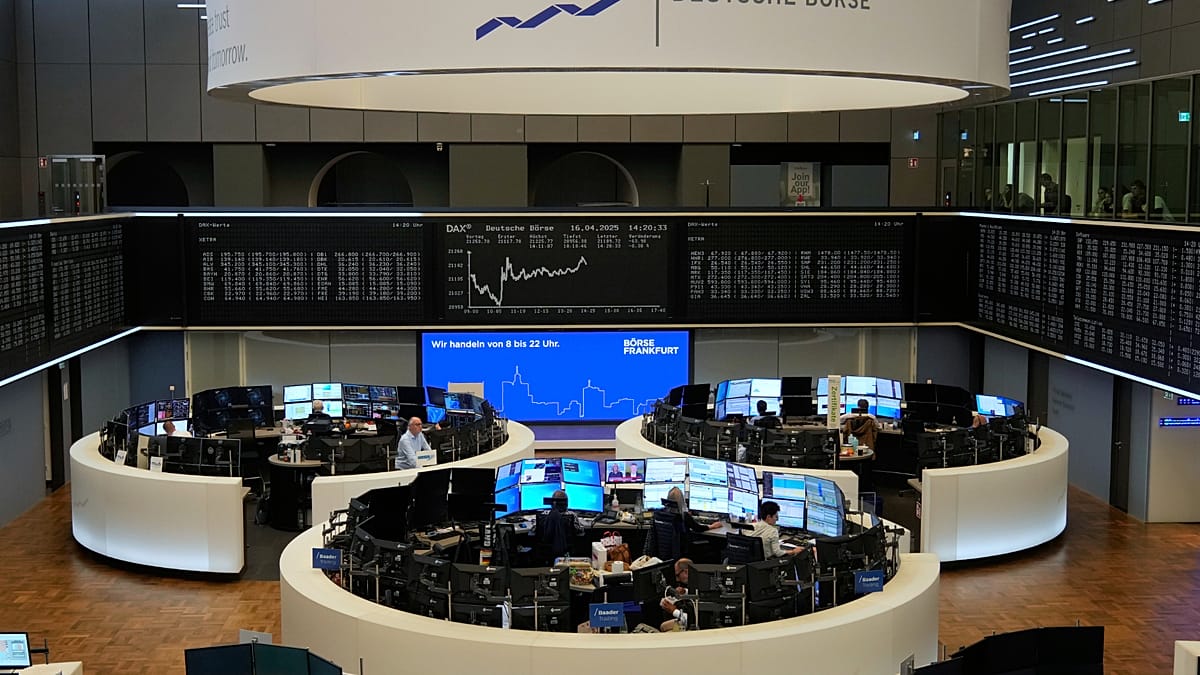
European markets drop as Greenland tariff threat looms
European markets opened lower on Monday as threats from US President Donald Trump reignited a trade war with traditional allies across the Atlantic.
At around 10am CET, France’s CAC 40 had slipped 1.28%, Germany’s DAX was down 1.02%, and the UK’s FTSE 100 dropped 0.27%. Spain’s IBEX 35 fell 0.59% and Italy’s FTSE MIB slid 1.43%. Meanwhile, the wider STOXX 600 fell 0.87%.
Shares in European carmakers saw a significant drop on Monday morning, with the STOXX Europe 600 Automobiles & Parts Index falling more than 2% and hitting a 52-week low. BMW shares were down 4.10% at just after 10am CET, while Volvo and Volkswagen were down 2.21% and 3.43% respectively.
Europe’s luxury goods sector also opened lower, with the STOXX Europe Luxury 10 dropping almost 3%.
On the other hand, safe haven assets such as gold and silver hit new highs as investors moved away from riskier assets such as crypto. Bullion neared $4,700 an ounce on Monday, climbing over 1.66%, and silver prices crossed the $94 threshold.
Read more here:
European markets drop, gold rises as Greenland tariff threat looms
The US is threatening to impose tariffs on eight European countries unless they support his plans to acquire Greenland. EU leaders are contemplating potential…
German minister expresses support for using EU's Anti-Coercion Instrument (ACI)
Germany's Finance Minister Lars Klingbeil has told reporters that the EU needs to use "sensitive measures" in response to Trump's tariff threats, seemingly pointing to the so-called Anti-Coercion Instrument (ACI).
"Europeans must make clear the limit has been reached. There is a legally established toolbox that can respond to economic blackmail with sensitive measures, we should now examine use," Klingbeil said.
The Anti-Coercion Instrument (ACI) is a powerful tool adopted in 2023 to allow the EU to punish unfriendly states for economic coercion by restricting third countries from participating in public procurement tenders, limiting trade licenses and shutting off access to the single market.
It has never been used by the EU, but Trump’s threats prompted calls over the weekend, including from the French president, for the instrument to be deployed. Former senior EU officials including former Commissioners Paolo Gentiloni and Cecilia Malmström have also backed deploying the instrument.
EU weighs revival of €93 billion retaliation package
EU countries agreed on Sunday that dialogue should take precedence over retaliation in the short term, but left open the option of reviving a €93 billion package of countermeasures if US President Donald Trump follows through on his threat to impose additional tariffs on EU goods on 1 February.
The retaliation package, suspended last year, was prepared as trade tensions between the EU and the US escalated following the so-called “Liberation Day” on 2 April 2025, when Trump announced tariffs on trading partners worldwide. The European Commission, which has authority over trade policy, drew up two sets of counter-tariffs in case talks with Washington failed.
The first package, approved in early April, covered a wide range of US products hit with 25% duties, including almonds, orange juice, poultry, soybeans, steel and aluminium, tobacco and yachts. Many of the targeted goods were linked to Republican constituencies in the US. The measures were later suspended but were on the table to deter Washington from imposing steep tariffs on EU exports.
A second package, adopted in May, targeted €72 billion of US goods, including aircraft, cars and car parts, as well as agri-food products. It too was put on hold to give negotiations a chance.
Taken together, the EU has a €93 billion retaliation package at its disposal. In responding to US tariff threats, it would take precedence over anti-coercion measures, which would be used only as a last resort.
Starmer: UK 'coordinating very closely' with the EU
The UK is " coordinating very closely with the EU," Starmer said during his address to the nation that ended a few minutes ago.
He reiterated that he spoke with European Commission President Ursula von der Leyen over the weekend and that he intends "to do so either today or tomorrow" as the EU mulls what it can do in response to Washington's threat.
Asked if the UK is considering its own retaliatory measures, including import levies, Starmer said: "A tariff war is in nobody's interests."
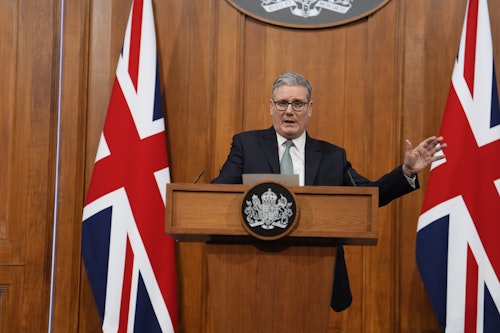
Photo credit: AP.
'We will keep dialogue open,' Starmer also said
Starmer also told reporters that the UK will work with its allies in Europe, the US and NATO to resolve the row.
"We will keep dialogue open, we will defend international law and we will use the full strength of government at home and abroad," he said. He repeatedly said Britain is a "pragmatic" country that respects alliances and its values and interests at home and abroad.
He added that "being pragmatic does not mean being passive" and that it also "does not mean abandoning principles".
Quizzed on whether this latest row shows the UK has been taking the wrong tack when it comes to dealing with the US administration of Donald Trump, the British prime minister said: "I don't think it's right for us to choose between the US and Europe."
"We are allies with our European partners and allies with the US and the strength in being able to keep both those alliances served us well over the last 80 years."
"A trade war is not in our interest and therefore my first task is to ensure we don't get to that place," he said, adding: "We do have to remember at all times that it is in our national interest that we continue to work with the Americans when it comes to security and defence" as well as intelligence and nuclear deterrence.
Applying tariffs on allies is 'completely wrong', Starmer says
British Premier Keir Starmer is talking right now.
He has told the nation he is focused on a "pragmatic solution" to the threat by US President Donald Trump to levy an additional 10% of tariffs on the UK and seven other European countries over Greenland.
"On Greenland, the right way to approach an issue of this seriousness is through calm discussion between allies. And let's be clear, the security of Greenland matters. And it will matter more as climate change reshapes the Arctic, as sea routes open and strategic competition intensifies, the High North will require greater attention, greater investment and stronger collective defence," Starmer said, adding that Britain "stands ready to contribute" to that effort.
"Alliances endure because they're built on respect and partnership, not pressure. That is why I said the use of tariffs against allies is completely wrong. It is not the right way to resolve differences within an alliance. Nor is it helpful to frame efforts to strengthen Greenland's security as a justification for economic pressure," Starmer also said.
As Europeans bet on diplomacy, Trump doubles down on annexation
Europe's push for diplomacy is already off to a rough start. In an overnight message, Donald Trump doubled down on his desire to annex Greenland and make the sprawling island part of the United States.
"NATO has been telling Denmark, for 20 years, that 'you have to get the Russian threat away from Greenland.' Unfortunately, Denmark has been unable to do anything about it. Now it is time, and it will be done!!!" Trump wrote on Truth Social.
Donald J. Trump Truth Social Post 11:10 PM EST 01.18.26
— Commentary Donald J. Trump Posts From Truth Social (@TrumpDailyPosts) January 19, 2026
NATO has been telling Denmark, for 20 years, that “you have to get the Russian threat away from Greenland.” Unfortunately, Denmark has been unable to do anything about it. Now it is time, and it will be done!!! President…
Trump tells Norway PM: 'I no longer feel obliged to think of peace’ after Nobel Prize snub
In an explosive letter sent to Norwegian Prime Minister Jonas Gahr Stør, US President Donald Trump has linked his ambition to gain control of Greenland to his failure to secure the Nobel Peace Prize.
In a letter styled as a Truth Social post, Trump said: “Dear Jonas, Considering your Country decided not to give me the Nobel Peace Prize for having stopped 8 Wars PLUS, I no longer feel an obligation to think purely of Peace, although it will always be predominant, but I can now think about what is good and proper for the United States of America."
The letter was first reported by PBS News Hour correspondent Nick Schifrin. Norwegian media VG has since said that Prime Minister Stør has confirmed the veracity of the letter to them.
Trump has repeatedly said he deserves the Nobel Peace Prize and has lashed out at Norway for refusing to award it to him. The 2025 prize was given to Venezuelan opposition leader Maria Corina Machado, who last week gave Trump her Nobel medal during a closed-door meeting in the White House.
Norway is among the eight European countries targeted with additional tariffs by Trump over the weekend over their support to Greenland.
Nordic defence ministers to meet later today
Defence ministers from Nordic countries will also meet today at NATO headquarters in Brussels, the Danish defence ministry said in a statement.
Reminder: Troels Lund Poulsen, Denmark's defence minister, and Vivian Motzfeldt, Greenland's foreign affairs and research minister, are scheduled to meet with NATO chief Mark Rutte at 16.30 CET today.
"Greenland is in an extraordinary situation that has the attention of the whole world. The situation requires that we strengthen cooperation on defence and security in the Arctic broadly within the NATO circle. I look forward to discussing the way forward with NATO's Secretary General and with my Nordic colleagues in Brussels," Motzfeldt said in a statement.
Poulsen meanwhile said that the discussions with Nordic ministers will focus on how NATO can do more in the Arctic.
“The Danish and Greenlandic governments, together with a number of NATO allies, have decided to increase the military presence and exercise activity in the Arctic and the North Atlantic. A number of allies are already contributing, and we are meeting broad support for NATO to do more in the Arctic," he said.
EU lawmakers call to freeze EU-US trade deal
Leaders from the European Parliament’s pro-EU majority are calling to suspend the EU-US trade agreement struck last summer after US President Donald Trump stepped up pressure on the bloc over Greenland, threatening to impose 10% tariffs on goods from several EU member states.
“The EPP is in favour of the EU–US trade deal, but given Donald Trump’s threats regarding Greenland, approval is not possible at this stage,” the group's president, Manfred Weber (Germany), wrote on Saturday on X, adding: “The 0% tariffs on US products must be put on hold.”
The European People’s Party is the largest political group in the Parliament.
Calls to freeze the deal also came from the Socialists & Democrats (S&D) and Renew, both part of the parliamentary pro-EU majority.
“The EU will not bow to intimidation,” S&D President Iratxe García Pérez wrote on X, while Valérie Hayer, who leads the liberal Renew group, wrote that "it is now time to move from a logic of dependence to a logic of deterrence."
“@RenewEurope cannot vote in favour of the EU–United States Turnberry trade agreement," she added.
The EU-US deal was concluded after weeks of trade tensions in 2025. Described as a “humiliation” by some European lawmakers, it includes 15% US tariffs on EU goods, while the EU committed to cutting most of its tariffs on US products to zero.
Members of the Parliament’s trade committee were due to vote this week on legislation implementing the EU tariff cuts.
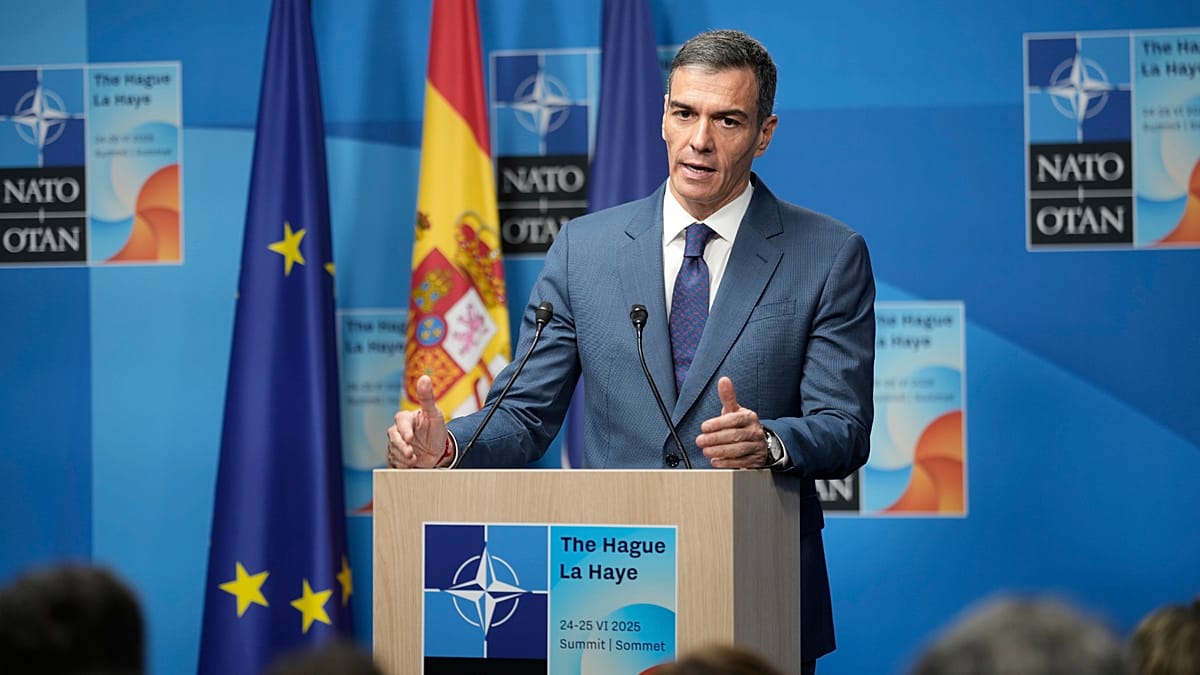
US takeover of Greenland would be 'death knell' of NATO: Pedro Sánchez
Spanish Prime Minister Pedro Sánchez warned on Sunday that a US invasion of Greenland would be the "death knell" of the NATO military alliance.
Reminder: Both the US and Denmark are NATO allies.
"Greenland is not a real estate whim. It is a territory that has its sovereignty, that has its rights, and if anyone has to decide the future of Greenland, it will have to be its people, and in this case, Denmark," Sánchez told Spanish media outlet La Vanguardia in an interview.
He also said such an action by the US would make Russian President Vladimir Putin "the happiest man in the world" because "it would somehow legitimise his invasion and unilateral action and questioning of Ukraine's territory".
"Europe is naturally interested in constructive transatlantic relations, but not on the basis of vassalage, but rather on an equal footing. Europe is interested in ensuring that the national sovereignty and territorial integrity of nations are respected," Sánchez also said.
Watch Sánchez speak below:
Video. US invasion of Greenland would be ‘death knell for NATO,’ warns Spain’s Sánchez
Video. US President Donald Trump is threatening several European countries that oppose his plan to seize the Danish territory with tariffs. “An invasion of Gre…
What is the anti-coercion instrument?
Often dubbed the EU’s trade “bazooka,” the anti-coercion instrument was adopted in 2023 to counter economic pressure from third countries, with the US and China in mind. Activating it requires a qualified majority of member states.
The tool allows the EU to go beyond traditional retaliatory tariffs, including by restricting licenses, intellectual property rights or access to public procurement tenders.
Targeting US services has been raised repeatedly over the past year as Washington stepped up tariff threats against the bloc before a trade deal was reached last summer. The US runs a services trade surplus with the EU, making the bloc’s 500 million consumers a key market for American companies.
The anti-coercion instrument is designed as a last-resort measure, with any steps taken required to be “proportionate” to the damage suffered by the EU or an individual member state.
Read more on Euronews.
What is the EU’s anti-coercion instrument, and how does it work?
Calls grow for the EU to deploy its ultimate trade bazooka as Trump threatens fresh tariffs to force the sale of Greenland. The anti-coercion instrument would…
Rutte to meet with Danish, Greenland ministers this afternoon
Here's an important meeting to monitor today: NATO chief Mark Rutte will receive Danish Defence Minister Troels Lund Poulsen and the Minister for Foreign Affairs and Research of Greenland, Vivian Motzfeldt.
The meeting, which was announced on Friday before Trump revealed his plan to levy an additional 10% tariffs on eight European countries over Greenland, is set to start at 16.30 CET.
No media opportunity is foreseen.
Rutte last week rejected claims the military alliance he leads is in crisis over Washington's bid to acquire Greenland, telling reporters instead that allies were evaluating the "next steps" in order to boost security in the High North and Arctic.
Europeans bet on diplomacy to avoid the worst-case scenario
European leaders are poised to continue working the phones on Monday to intensify diplomatic efforts and prevent Donald Trump's 10% tariff threat from becoming a reality.
British Prime Minister Keir Starmer, Italian Prime Minister Giorgia Meloni and NATO Secretary General Mark Rutte were among the first ones to speak direclty with Trump in a bid to contain the spiralling crisis over Greenland's future. We can expect other leaders to attempt a similar outreach in the coming hours and days. Meanwhile, António Costa, decided to convene an extraordinary EU summit for later this week after spending the weekend calling presidents and prime ministers across the bloc.
Diplomats in Brussels underscore the extreme gravity of the challenge posed by Trump's annexationist agenda but say hope is not all lost and diplomacy still has a role to play. Many European leaders will be present at the World Economic Forum in Davos, Switzerland, where Trump is expected to make a much-talked-about appearance. We will keep an eye out for any possible bilateral or multilateral meetings.
What can the EU do to retaliate?
EU countries on Sunday night reviewed their options to respond to threats by US President Donald Trump to impose 10% tariffs on several member states from 1 February unless they allowed him to acquire Greenland.
Diplomacy was agreed to take precedence over immediate countermeasures, though a decision on whether to revive the €93 billion retaliation package - suspended last year - is to be taken after Trump’s deadline.
Among the tools discussed was also the EU’s anti-coercion instrument, often dubbed as its trade “bazooka,” though no vote was held on whether to deploy it.
More in our story on Euronews.
EU holds back trade ‘bazooka’ to defuse Greenland tensions with US
European Union countries will not yet deploy the anti-coercion instrument (ACI) in response to Trump’s Greenland tariff threats, people familiar with the matte…
UK PM to address nation at 10.15 CET
British Prime Minister Keir Starmer is to address the nation at 10.15 CET on the issue.
The speech from Downing Street comes after Starmer spoke with multiple of his counterparts on Sunday including Danish Prime Minister Mette Frederiksen, European Commission President Ursula von der Leyen, and NATO Secretary-General Mark Rutte.
According to the British read-out of the calls, Starmer said that applying tariffs on allies for pursuing the collective security of NATO allies is "wrong" and that security in the High North is "a priority for all NATO allies in order to protect Euro-Atlantic interests."
We will, of course, live blog his speech later this morning.
Analysis: With one post, Trump brings the transatlantic alliance to the brink
With just one single post on his social media account, US President Donald Trump has brought the transatlantic alliance, and the security order that was forged at the end of World War II and has endured countless political shifts, to the brink of collapse. Trump has openly threatened eight allied countries with a 10% tariff to force them into giving up Greenland, a semi-autonomous territory that belongs to the Kingdom of Denmark and that refuses to be sold to the highest bidder.
"This Tariff will be due and payable until such time as a Deal is reached for the Complete and Total purchase of Greenland," Trump wrote on Saturday.
Though we are still days away from knowing whether the tariff threat materialises or vanishes, the mere fact that it has been made cuts through the foundations that underpin the transatlantic alliance, most notably the principle of collective defence, which, until now, has acted as a powerful deterrent against foreign attacks. If the US is able, and willing, to threaten another NATO member with outright annexation, can the other allies expect the US to abide by its obligation in a future conflict? After all, collective defence is based on trust and reliability, so if the expectation disappears, what is the point of the alliance? Can NATO deter Russia's expansionism in the East while it counters Trump's expansionism in the West?
It cannot be understated that this is a situation of extraordinary gravity that will compel Europeans to reckon with their long-standing dependency on America's security umbrella and take painful decisions that, until Trump's re-election, would have seemed unthinkable. The days ahead could very well become a watershed chapter that structurally redefines the 80-year-old bond between the two sides of the Atlantic. That is, if that bond manages to survive.