


















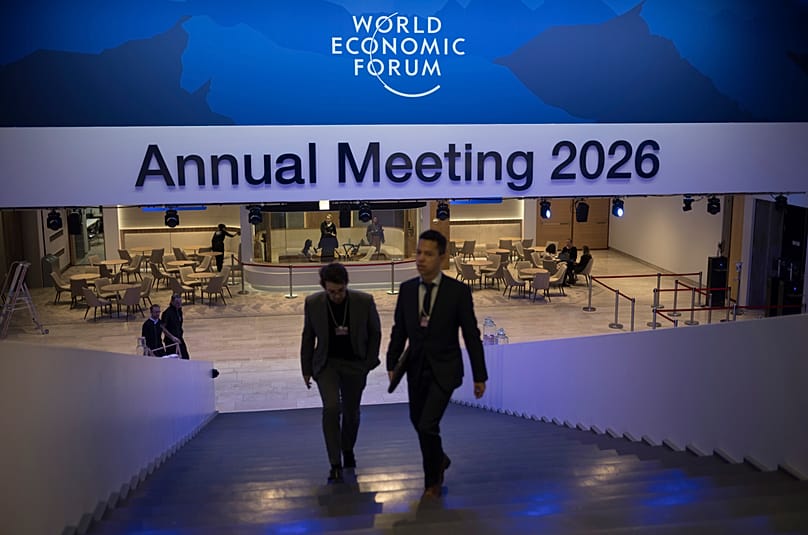
The annual gathering of political and business elites comes as Europe faces its biggest test ever over its relationship with Washington, its economic model and its security architecture.
To most Davos regulars, the Sunday before the world's biggest economic and political summit seemed unusually busy.
 ADVERTISEMENT
ADVERTISEMENT
ADVERTISEMENT
This year's World Economic Forum, they say, promises to be one like no other.
In the otherwise serene if not sangfroid Swiss resort town, anticipatory anxiety became increasingly palpable as world leaders were about to converge on it for what is almost certainly going to turn into a fundamental reassessment of the existing international system.
All eyes are on the midweek, as US President Donald Trump is expected to make his first appearance at the summit in six years, arriving amid tensions over his attempts to acquire Greenland, his tariff threats against European allies and his military intervention in Venezuela.
The annual gathering of political and business elites comes as Europe faces its biggest test ever over its relationship with Washington, its economic model and its security architecture.
Trump to talk about home, Europeans to expect answers
Trump's keynote speech on Wednesday is likely to focus heavily on concerns back home despite the international setting.
The president faces domestic pressure over affordability, and Trump wants to offset this by revealing "initiatives to drive down housing costs" and "tout his economic agenda that has propelled the United States to lead the world in economic growth," a White House official said.
But Trump will also address European leaders directly. He will "emphasise that the United States and Europe must leave behind economic stagnation and the policies that caused it," the White House official said.
The US president recently threatened tariffs against European NATO allies if they do not support his attempt to take control of Greenland from Denmark. European military personnel have deployed to Greenland in recent days in response.
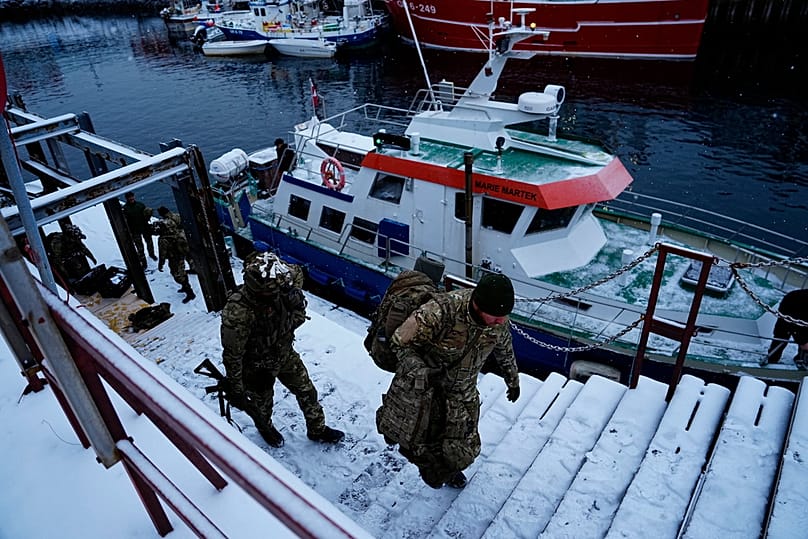
The series of moves has resulted in significant unease among Europe's leaders, who see the push to take control of the Arctic island "whether they like it or not" as undermining the foundations of NATO and jeopardising an age-old friendship forged by fire in World War II.
On Sunday, the UK, Denmark, Finland, France, Germany, the Netherlands, Norway and Sweden issued a joint statement saying Trump's actions over Greenland risk a “dangerous downward spiral” and undermine transatlantic relations, in one of the most strongly worded messages to Washington in recent times.
While others such as NATO Secretary General Mark Rutte have tried to calm the spirits, with Rutte saying, "We will continue working on (resolving the question of Greenland), and I look forward to seeing him in Davos later this week," anxiety that came with the new year not only persisted, but increased.
What happens in Davos does not stay in Davos
There is also the question of Russia's ongoing all-out war in Ukraine, which Trump has been desperate to find an end to.
Ukrainian President Volodymyr Zelenskyy, who will also appear in Davos in person, hopes to meet Trump to sign new security guarantees for a potential ceasefire deal with Russia. G7 leaders also seek discussions on Ukraine.
Washington's largest-ever Davos delegation includes US Secretary of State Marco Rubio, special envoy Steve Witkoff and son-in-law Jared Kushner, who have all played roles on Ukraine.
While the White House said no bilateral meetings have been scheduled, the presence of Witkoff and Kushner — seen as key to any negotiations with Moscow and Kyiv — has led insiders to believe that a deal between Trump and Zelenskyy will be signed in Davos.
Meanwhile, Trump is reportedly considering a first meeting of the "Board of Peace" for Gaza at Davos, after announcing its first members in recent days.
A $1 billion (€863 million) contribution secures permanent membership on the Trump-led board, rather than a three-year appointment, which has no contribution requirement, according to a US official who spoke on condition of anonymity about the charter, which has not been made public. The official said the money raised would be used to rebuild Gaza.
Hungarian Prime Minister Viktor Orbán has accepted an invitation to join the board, Foreign Minister Péter Szijjártó told state radio on Sunday. Orbán is one of Trump’s most ardent supporters in Europe.
Jordan, Greece, Cyprus and Pakistan also said Sunday they had received invitations. Canada, Turkey, Egypt, Paraguay, Argentina and Albania have already said they were invited, while an Indian official revealed Delhi has also received an invite. It was not clear how many have been approached in all.
In letters sent Friday to world leaders inviting them to be “founding members,” Trump said the Board of Peace would “embark on a bold new approach to resolving global conflict.”
Critics have claimed that the board might be an attempt by the US president to create an alternative to the UN, which would be under Trump's personal control.
Questions also surround the future of Venezuela following the blitz US military operation that removed Nicolás Maduro, part of Trump's muscular approach to what he calls America's "backyard".
Then there is also Iran, with reports stating that Trump called off an intervention against the regime in Tehran over its crackdown on widespread protests at the last minute.
While Washington may yet decide ayatollah's time in power is over, the presence of Iran's Foreign Minister Abbas Araghchi at Davos could signal that conversations on the sidelines are on the cards.
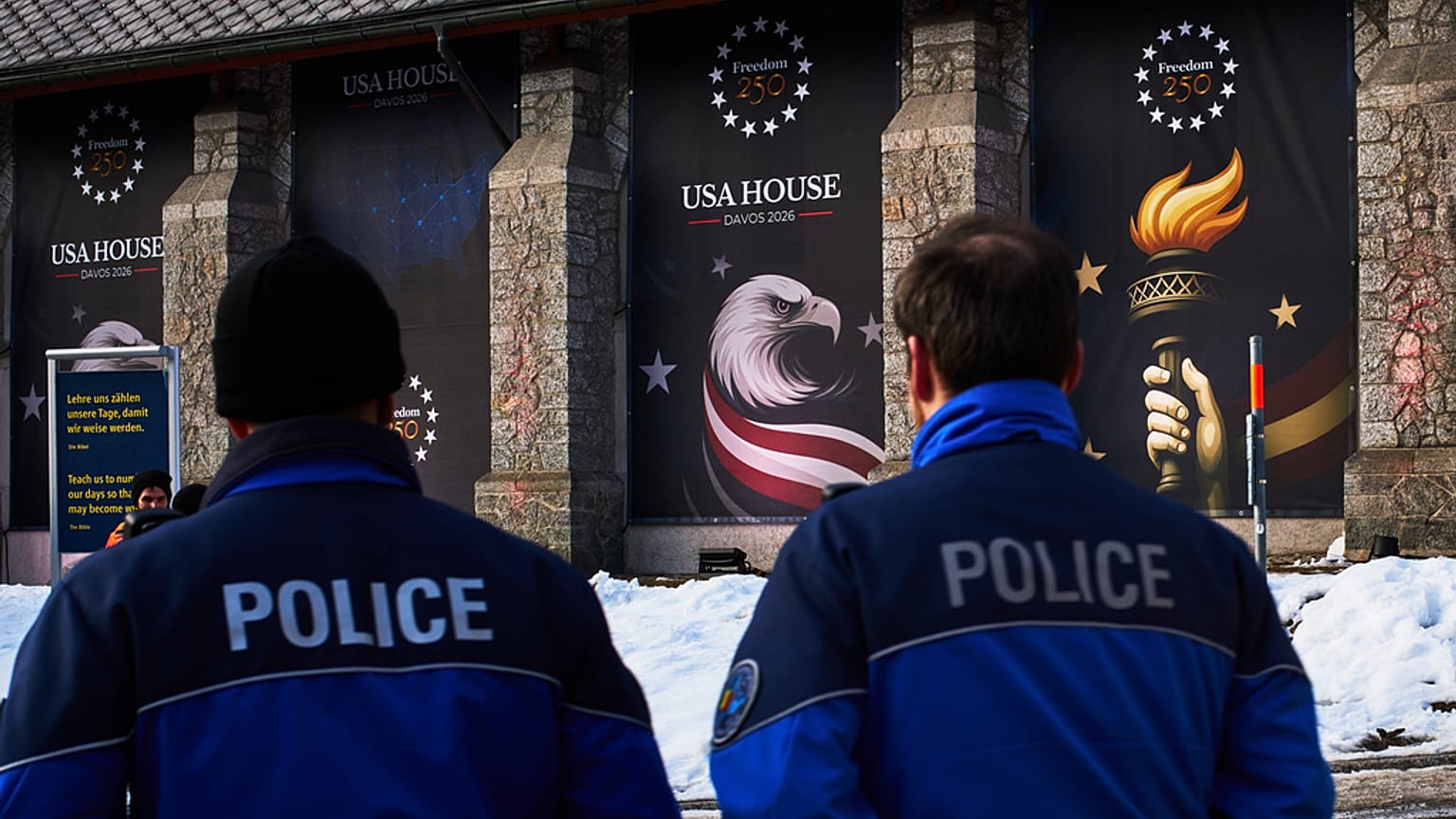
'USA House' talk of the town
The forum has historically been an awkward fit for Trump. His first Davos appearance in 2018 met occasional boos. He returned forcefully in 2020, dismissing "prophets of doom" on climate and the economy.
Trump left office in 2021 after losing re-election but has since returned as a more assertive president domestically and internationally.
Davos might prove crucial to his ambitions, and the fact that the US has two houses in the Swiss town — one of which is a church and a prominent venue — further signalled Washington's intentions to reestablish itself as the leader of the free world.
European leaders attending Davos have recently faced unprecedented pressure to respond to Trump's challenge to the transatlantic alliance that has underpinned the Western economic order for nearly a century.
The gathering comes as Europe grapples with anaemic economic growth, an ever-trigger-happy Moscow on its eastern border and questions about the continent's ability to defend itself without full US security guarantees.