




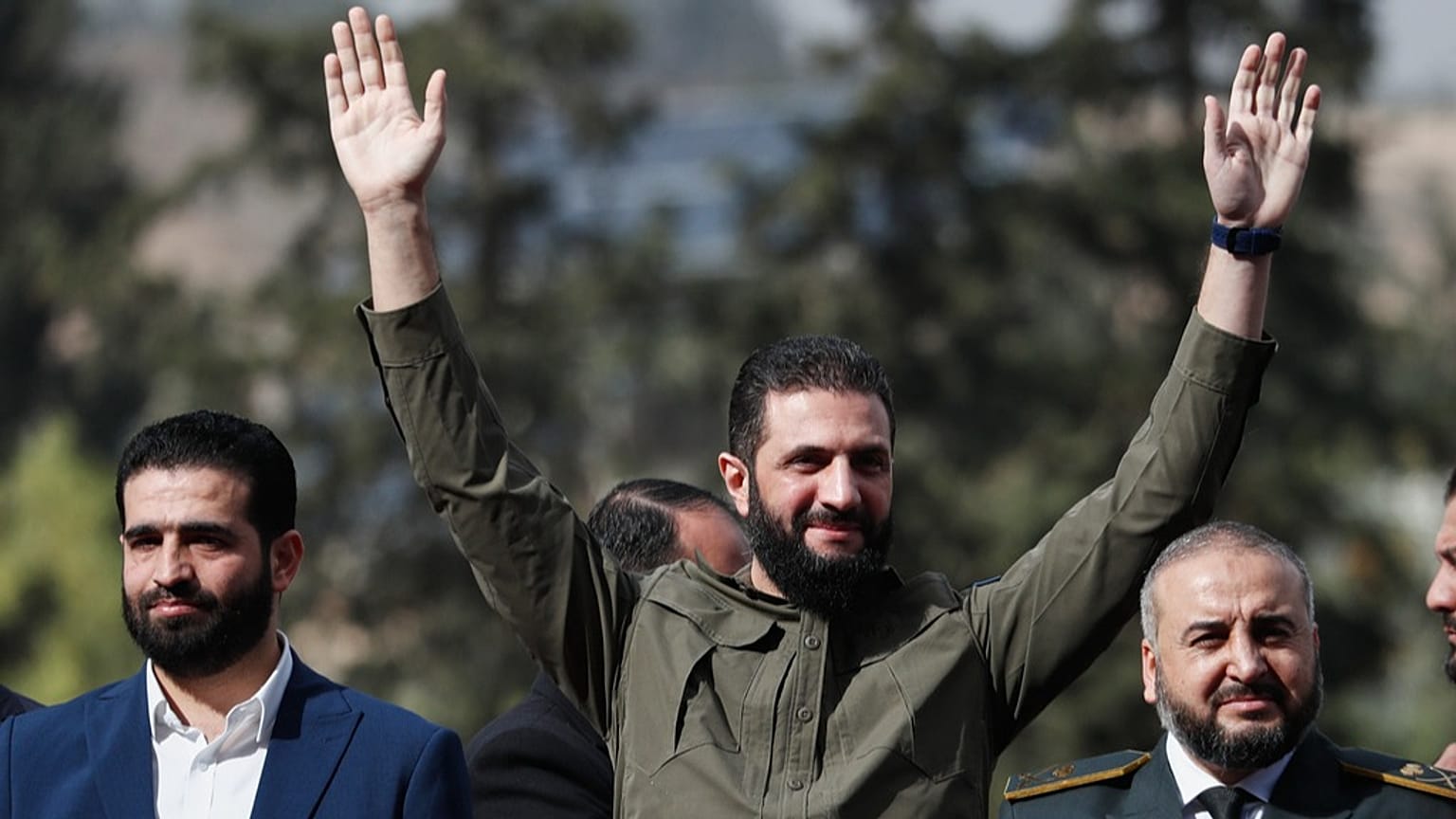













Israeli intelligence has warned Iran is planning to organise a hit against Syria's interim president, as further reports claim former al-Assad loyalists are pouring money into Alawite minority militias in alleged uprising plots.
Israeli military intelligence has warned that Iran is plotting to assassinate Syria's interim President Ahmad al-Sharaa as Syrian and Israeli officials prepare to resume US-mediated talks in Paris on Tuesday aimed at reaching a security agreement.
 ADVERTISEMENT
ADVERTISEMENT
ADVERTISEMENT
According to the Israeli military's assessment, al-Sharaa is facing threats from Iran alongside other hostile actors.
Israeli defence officials believe Tehran views al-Sharaa as weakening its network of influence across the region, Israeli media reported citing sources in the military.
Syrian authorities have not publicly responded to the Israeli intelligence assessment about an Iranian assassination plot announced Monday.
However, Syria's Interior Ministry denied separate rumours over the weekend about an alleged assassination attempt on al-Sharaa, calling those claims "completely false" and warning against forged documents attributed to official sources.
Al-Sharaa has previously survived multiple attempts on his life since ousting Syria's longtime dictator Bashar al-Assad in a lightning offensive of his forces leading to the collapse of the regime in Damascus.
In November 2025, Syrian authorities foiled two separate Islamic State jihadist group assassination plots against him.
US envoy Tom Barrack also warned of risks to al-Sharaa's life arising from his increasingly close relations with the West.
Meanwhile, al-Sharaa was seen in public in downtown Damascus on Monday evening, shopping at local stores in the Mazzeh neighbourhood while using the new Syrian banknotes — broadly understood as a message that he remains alive and well.
Al-Assad's former allies sending millions to insurgents
The warning came amid reports that al-Assad's former top generals and allies, also in exile in Moscow, have been channelling millions of dollars to recruit potential fighters in Syria in an apparent insurgency plot.
Al-Assad's former military intelligence chief Major General Kamal Hassan and the ousted dictator's billionaire cousin Rami Makhlouf are running competing operations to build militias among Syria's Alawite minority from their Russian exile, according to a Reuters investigation from December 2025.
A separate New York Times investigation revealed that Makhlouf is working closely with Suhail al-Hassan, a former special forces commander known as "the Tiger", who is coordinating recruitment efforts.
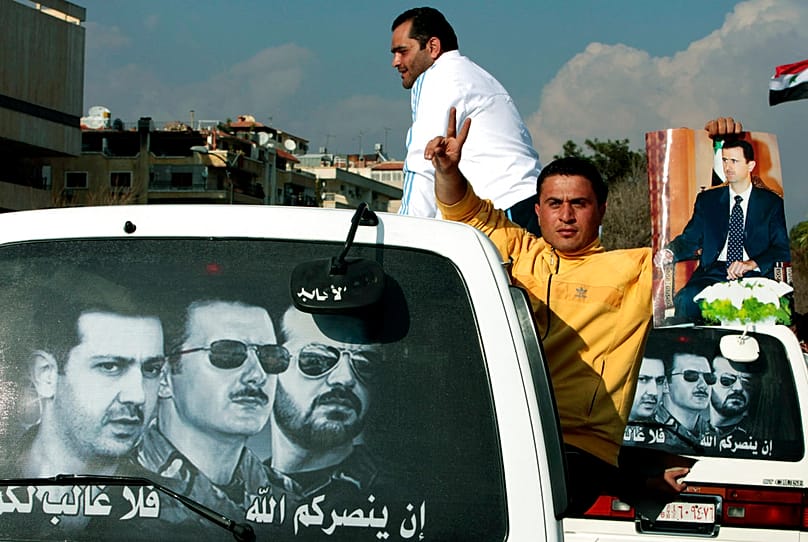
The two rival networks claim to fund between 12,000 and 54,000 fighters, pouring between $1.2 million and $6 million into the effort, although the numbers have been widely disputed.
Both are vying for control of 14 underground command centres built along the coast during Assad's rule, containing weapons and equipment.
The militants' presence is said to spread across Syria's coastal provinces of Latakia, Tartous, Homs and Hama, as well as parts of Lebanon.
Maher al-Assad, the former president's brother who commanded an elite division and remains in Moscow, has not provided funding or orders, according to sources close to the family.
Where does the money come from?
Makhlouf built a massive fortune estimated to be between $5 billion and $10 billion, controlling Syria's telecommunications, banking, real estate and smuggling networks before falling out with Bashar al-Assad in 2020.
Hassan enriched himself through military intelligence operations, including extortion, looting and front companies registered under his wife's and daughter's names.
However, many of Bashar al-Assad's family members and loyalists amassed considerable wealth from the sales of captagon, a synthetic amphetamine that became one of the main ways of funding the war effort after Damascus was placed under international sanctions.
Both Maher al-Assad and "The Tiger" played key roles in the former regime's production and distribution of the drug dubbed "chemical courage," which costs cents to make but sells for anywhere between $5 to $25 a pill across the region.
The al-Assad family and inner circle earned an estimated $2.4 billion annually at peak from captagon production and sales, according to data by New Lines Institute.
The regime's total earnings from the trade, which became industrialised around 2018-2019, remain difficult to calculate with precision.
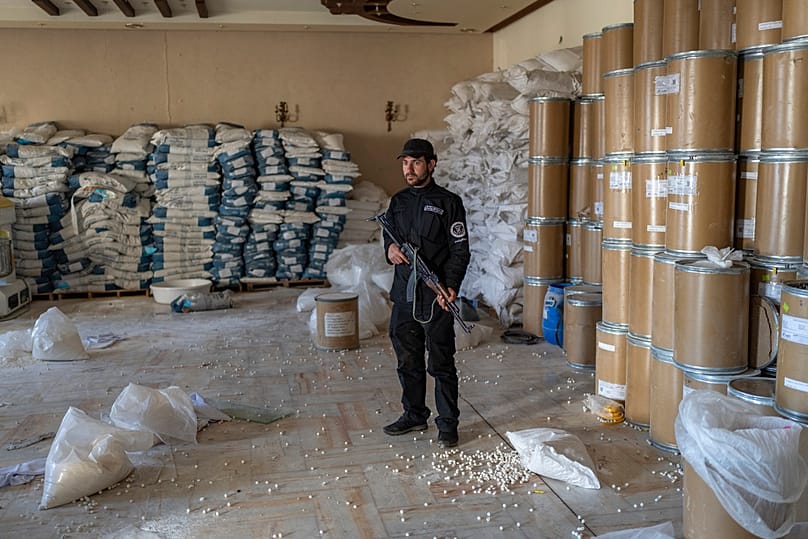
After Al-Sharaa's takeover, the new government in Damascus has made significant efforts to dismantle the illicit drug networks, with captagon seizures in recent months reaching an all-time low.
However, some of the production and trade still persists, mostly linked to al-Assad's loyalists with ties to Hezbollah in neighbouring Lebanon.
Remnants of al-Assad's supporters attempted in March 2025 to launch attacks on patrols in Tartous and Latakia. Syrian interior and defence ministries neutralised the rebellion within 24 hours, killing and arresting dozens. Investigations documented 1,426 civilian and military deaths during that period.
Ahmed al-Shami, governor of Tartous, said Syrian authorities are aware of the plots and confident that they can be thwarted.
Both Al-Assad and Hezbollah have been supported by Iran and are considered to be key regional proxies of the regime in Tehran.
Suhail al-Hassan's "Tiger Forces" worked alongside Hezbollah and Iranian militias during the Syrian civil war, but he was primarily backed by the Kremlin, who intervened in Syria on behalf of al-Assad.
Makhlouf, al-Assad's ally turned hostile rival, founded and funded "Al-Bustan Association," formally a charity that worked with Iran to enable its infiltration into Syria and helped establish centres in coastal areas.
Israeli and Syrian officials meet again
Meanwhile, officials from Syria and Israel are set to resume negotiations in Paris in hopes of reaching a security agreement to defuse tensions between the two countries, officials said Monday.
According to reports citing Syrian officials, Damascus' main aim in the talks is to reactivate a 1974 disengagement agreement that established a UN-patrolled buffer zone in southern Syria and to secure the withdrawal of Israeli forces, which seized control of that buffer zone more than a year ago.
Israel and Syria have been in a technical state of war since 1948. Israel seized the Golan Heights from Syria in the 1967 war and annexed the territory in 1981, a move not recognised internationally.
Al-Sharaa, formerly known by his nom de guerre Abu Mohammad al-Julani, led Hayat Tahrir al-Sham, an al-Qaeda affiliate designated a terrorist organisation by the US and UN.
However, he made a U-turn during the Syrian civil war, cutting ties with al-Qaeda in 2016 and turning towards the more pragmatic goal of the Syrian revolution.