

















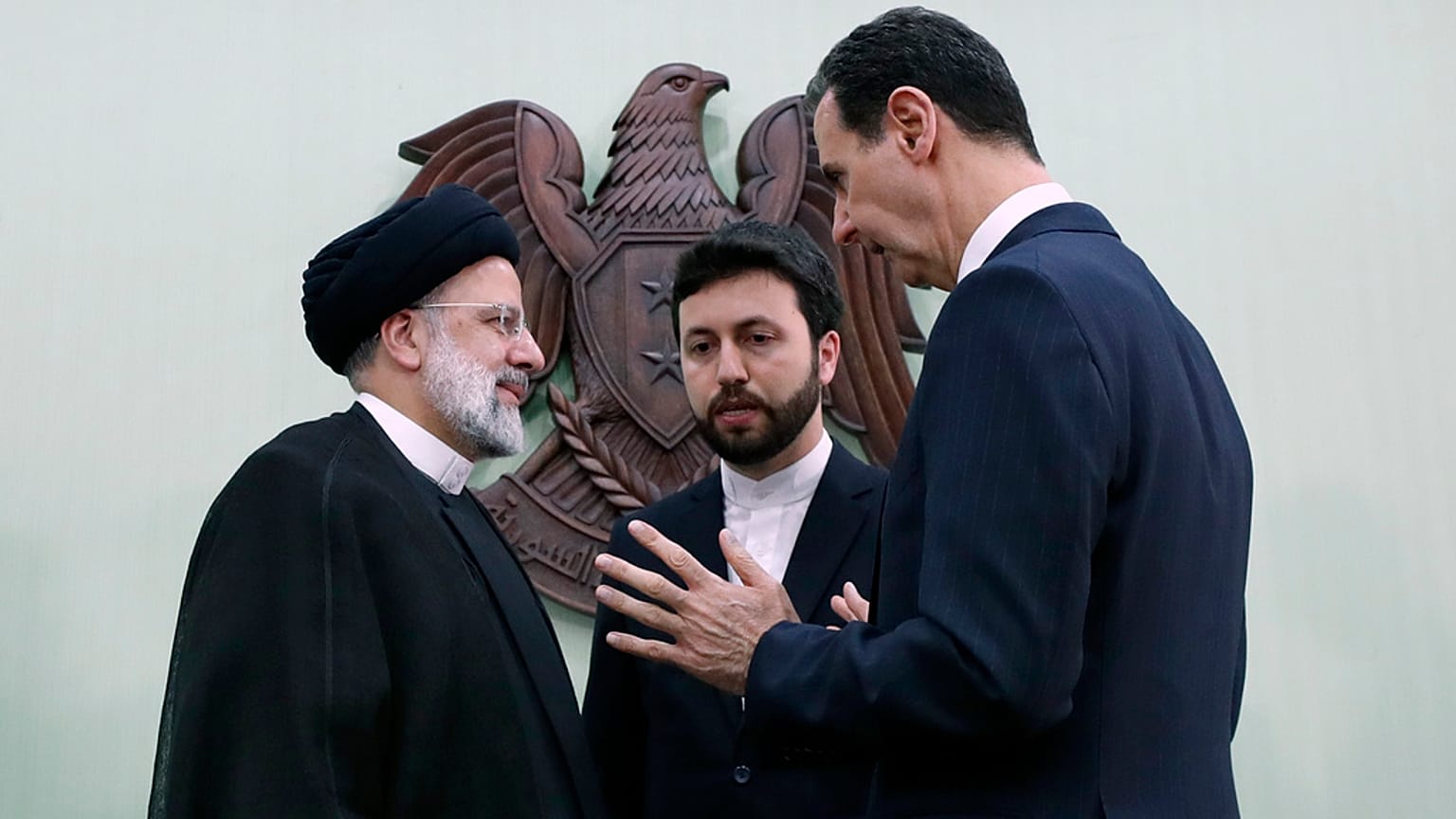













Syria's ousted dictator Bashar al-Assad's adviser Luna al-Shibl died in a suspected hit after Tehran's top general warned she was a spy. Recently leaked videos show her mocking Putin and Hezbollah with al-Assad.
Iranian General Qassem Soleimani warned Syrian officials that Luna al-Shibl, a close adviser to President Bashar al-Assad, was a spy months before she died in a suspected assassination disguised as a car accident, according to media reports.
 ADVERTISEMENT
ADVERTISEMENT
ADVERTISEMENT
The late Iranian commander confronted Ali Mamlouk, head of Syria's National Security Bureau, in late 2019 after seeing al-Shibl leave his office, according to a document reviewed by Al-Majalla magazine published this week.
"Who is this?" Soleimani asked, according to the transcript. When Mamlouk identified her as the president's adviser, Soleimani pressed further: "I know, I know... but who is she really? Where did she work?"
The Quds Force commander noted her former salary at Al Jazeera was "$10,000" compared with her current salary of "500,000 Syrian pounds" (equivalent to about $970 at the time), before concluding: "Does it make sense for someone to leave $10,000 for 500,000 pounds? She is a spy," according to Al-Majalla.
Al-Assad and adviser mock Putin and Hezbollah
Soleimani's suspicions about al-Shibl resurfaced this week when Al Arabiya aired exclusive video recordings showing al-Assad and al-Shibl in private conversations mocking Russian President Vladimir Putin, Hezbollah and Syrian soldiers.
The footage, believed to date from 2018 after opposition fighters were forced from Ghouta near Damascus, raised fresh questions about al-Shibl's loyalty and role in the al-Assad government.
In the videos, al-Shibl is shown sitting in a car with al-Assad, who was driving, as they discussed various allies of his regime.
When the subject turned to Putin's appearance, al-Shibl commented on the Russian president's "puffed up" look. Al-Assad responded: "It's all surgeries," according to Al Arabiya.
Al-Shibl also mocked Hezbollah's participation in the Syrian war, saying "Hezbollah in the end could not back up its claims and we never heard from it," despite the Iran-backed group's crucial role in propping up al-Assad's regime during the civil war.
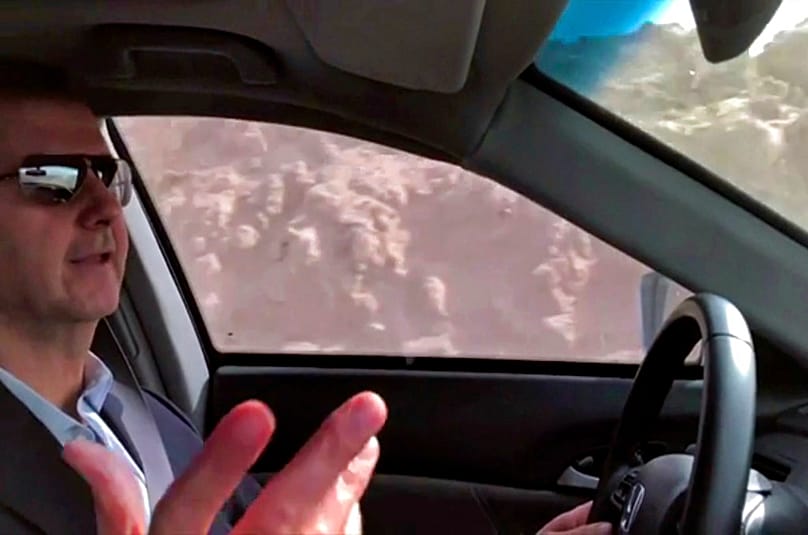
The recordings, which Al Arabiya said were found in an envelope marked "Top Secret" in the presidential palace along with personal documents belonging to al-Shibl, prompted dismay among Hezbollah supporters.
Soleimani, who was killed in a US airstrike in Baghdad in January 2020, was not alone in his suspicions. Maher al-Assad, commander of Syria's Fourth Division and Bashar al-Assad's younger brother, had also warned the president's inner circle about al-Shibl, Al-Majalla reported.
Al-Shibl, 48, died on 5 July 2024, four days after a car accident on the Damascus-Dimas highway that eyewitnesses and opposition sources claim was a deliberate assassination.
Official reports said her car "veered off the road" and was subjected to multiple collisions, causing a cerebral haemorrhage. However, photographs of her armoured BMW showed only minor damage, raising questions about the official account, according to Al-Majalla.
Eyewitnesses told the magazine that a car approached and deliberately rammed al-Shibl's vehicle. Before her bodyguard could exit, a man struck her on the back of the head, causing paralysis that led to her death.
"When Luna's bodyguard tried to talk about what happened, he was immediately detained in front of others," one witness told Al-Majalla.
Al-Assad did not attend her funeral, which was attended by only a handful of officials.
Purges before the fall?
The circumstances of al-Shibl's death intensified speculation about internal purges within the al-Assad regime. Two months before the accident, al-Assad removed al-Shibl and her husband, Ammar Saati, from the central committee of the Ba'ath Party in May 2024.
According to the Syrian Observatory for Human Rights, al-Shibl's responsibilities had been reduced in the month before her death, reportedly due to Iranian displeasure over claims that she had passed sensitive information about Syrian-Iranian meetings to Russian counterparts.
Syrian intelligence detained al-Shibl's brother, Brigadier General Mulham al-Shibl, in April 2024 on accusations of "collaborating with Israel and providing information about a meeting of 'Axis of Resistance' leaders at the Iranian Embassy in Damascus," according to the Syrian Observatory for Human Rights.
The detention came after an Israeli airstrike on Iran's consulate in Damascus on 1 April that killed seven Islamic Revolutionary Guard Corps officers.
Al-Shibl's husband, Saati, was dismissed from his position at Damascus University in June 2024 amid corruption investigations.
He was reportedly placed under house arrest and banned from leaving the country, preventing him from reaching the hospital when al-Shibl was injured, according to Israeli outlet Ynet.
Al-Shibl was born in 1975 in Suwayda Governorate into a Druze family. She studied French at Damascus University and joined Al Jazeera in 2003 as a presenter.
She resigned from the Qatari network in May 2010 and returned to Syria, where she briefly worked for state television before becoming director of the Media and Political Office at the Syrian presidency following the outbreak of the 2011 uprising.
Al-Shibl was sanctioned by the United States in 2020, with the US Treasury saying she was "instrumental in developing al-Assad's false narrative that he maintains control of the country and that the Syrian people flourish under his leadership." Britain sanctioned her in 2021.
Al-Shibl's rise reportedly created tensions within al-Assad's inner circle. First Lady Asma al-Assad allegedly sought to remove her from the palace amid persistent rumours of an affair with the president and frequent references to al-Shibl as Syria's "Second Lady," according to the Washington Institute for Near East Policy.
Al-Shibl accompanied al-Assad on high-level meetings and foreign trips, including his first visit to China in nearly two decades in September 2023.
Her family in Suwayda reportedly refused to receive her body due to longstanding familial disputes, and she was buried in al-Dahdah cemetery in Damascus.
What happened to al-Assad?
Meanwhile, a year after fleeing Syria, al-Assad is living in Moscow under tight restrictions imposed by the Kremlin, with his movements limited and public appearances banned, according to multiple reports.
The German weekly Die Zeit reported in October that al-Assad resides in the Russian capital's modern financial district, though the exact location remains unconfirmed.
A source close to the al-Assad family told Die Zeit that the family owns multiple apartment units and sometimes stays in a villa outside Moscow.
The apartments are described as luxury units with high ceilings, floor-to-ceiling windows and access to shopping centres and restaurants.
The source claimed al-Assad "spends much of his time playing online video games" and is protected by bodyguards from a private security company paid for by the Russian government.
The Syrian Observatory for Human Rights claimed in September that al-Assad was hospitalised in critical condition after suspected poisoning. The monitoring group said he spent nine days in a hospital on Moscow's outskirts before being discharged on 29 September.
Russian Foreign Minister Sergey Lavrov denied the poisoning reports in October, saying al-Assad "has no issues living in our capital".
Syria's transitional government under President Ahmed al-Sharaa has requested al-Assad's extradition for trial. Russia has refused to hand him over, with the Kremlin maintaining that Putin personally granted him asylum and that it would remain unchanged.