




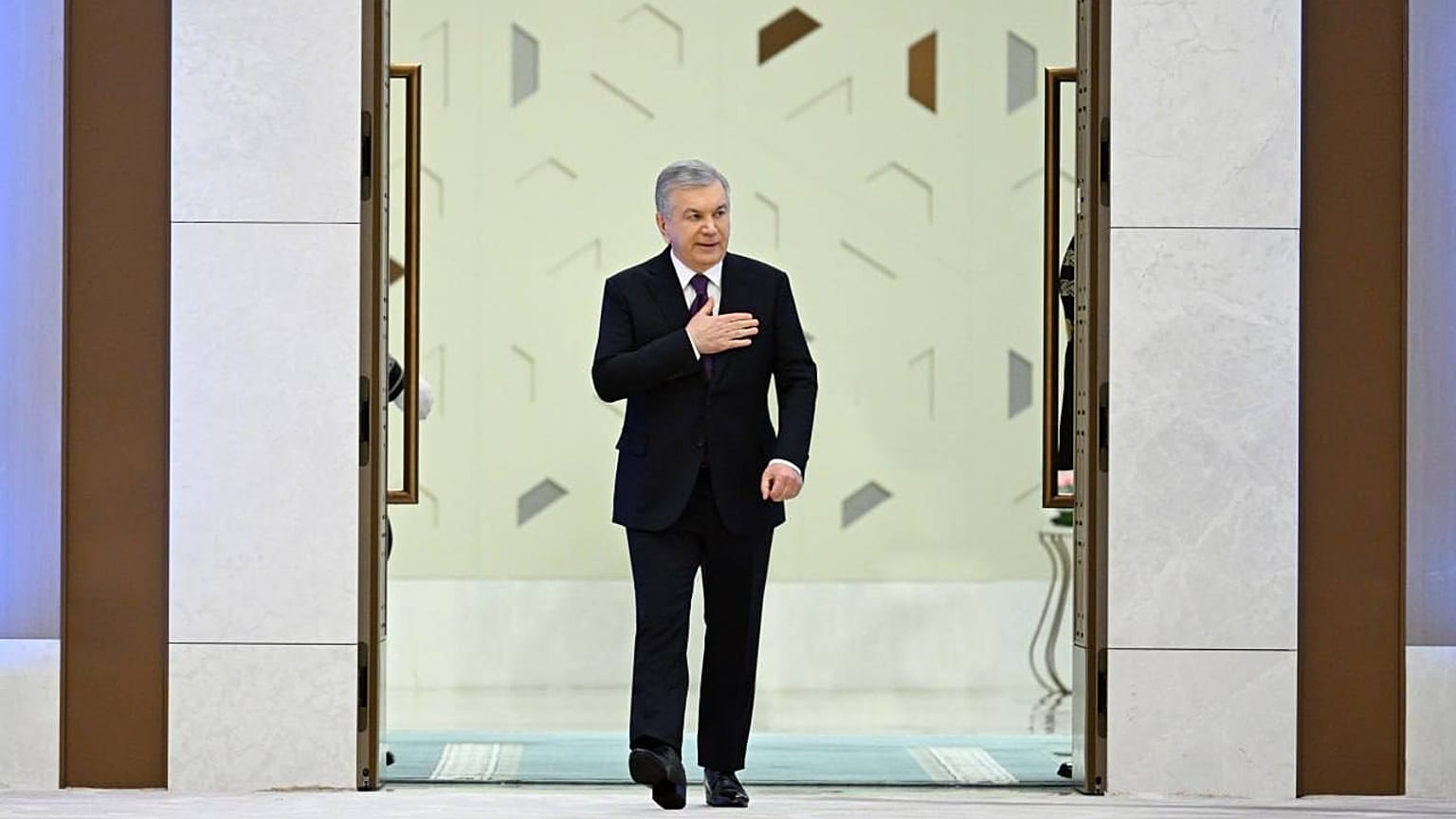














President Mirziyoyev says GDP reached a record high in the Central Asian country's history as exports rose 23% and foreign investment reached €37 billion.
Uzbekistan closed the year with its strongest economic performance on record, reporting a GDP of €123 billion, as President Shavkat Mirziyoyev said the effects of reforms are increasingly visible in everyday life.
 ADVERTISEMENT
ADVERTISEMENT
ADVERTISEMENT
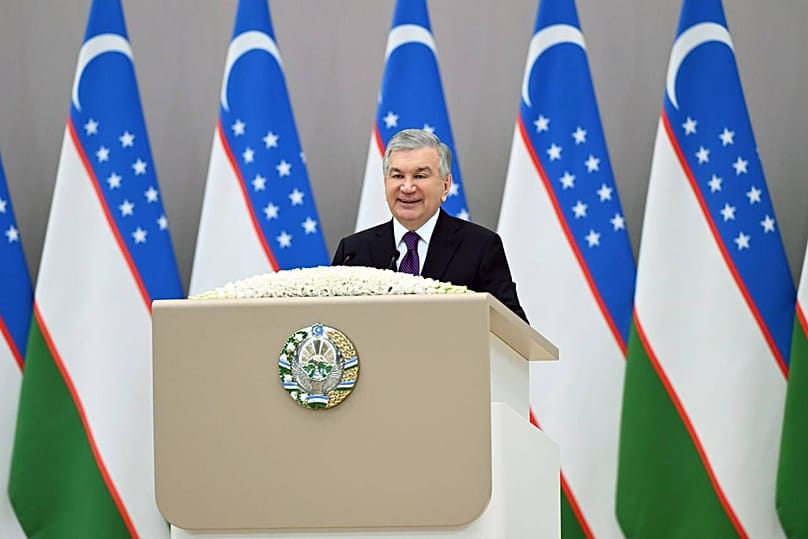
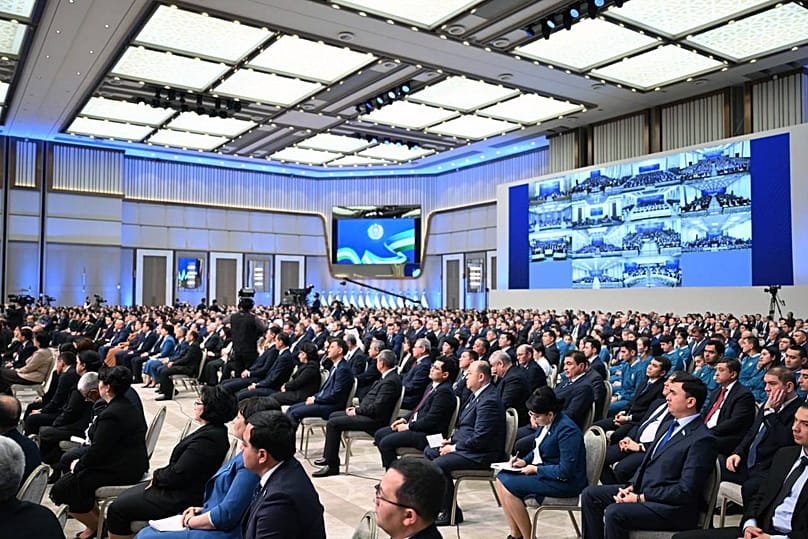
In his annual address to parliament and the nation, the president noted steady growth despite global economic turbulence, disrupted supply chains and rising commodity prices.
For the first time in the country’s history, he said, GDP exceeded €123.25 billion, exports grew by 23%, and foreign investment reached nearly €37 billion, accounting for almost a third of the economy. Additionally, Uzbekistan’s gold reserves surpassed €51 billion for the first time.
“The results of our reforms are felt in every mahalla (community), every family, and in daily life,” Mirziyoyev said, adding this was down to job creation, infrastructure upgrades and expanded access to basic services.
International confidence has strengthened alongside domestic growth. Leading rating agencies upgraded Uzbekistan’s sovereign credit rating from BB- to BB, a move expected to cut external borrowing costs by up to €250 million a year. The World Bank’s Technology Readiness Index saw the Central Asian country climb 71 places, putting Uzbekistan among the global top 10.
Infrastructure, incomes and poverty reduction
The government says economic growth has translated into measurable improvements in living standards. Electricity production rose to 85 billion kilowatt-hours, supporting a population of more than 38 million and an expanding industrial base.
Irrigation infrastructure reached 470,000 households in previously underserved areas, allowing around 3 million people to generate income from household plots several times a year.
Housing construction continued at scale, with 135,000 new apartments delivered in 2025. Over the past nine years, more than 210 million square metres of residential and non-residential space have been commissioned nationwide.
Unemployment fell from 5.5% to 4.9%, while 1.5 million people were lifted out of poverty this year alone. The national poverty rate fell to 5.8%, down from nearly one-third of the population when reforms began.
Uzbekistan’s regional and international profile also expanded in 2025. The country hosted major global and regional events, including a session of the UNESCO General Conference, the Central Asia-EU Summit, and high-level meetings with partners from the EU, the United States, Japan and neighbouring Central Asian states.
A trilateral border agreement with Tajikistan and Kyrgyzstan was signed, resolving a long-standing regional issue. Uzbekistan also strengthened ties with the EU through an enhanced partnership agreement and positioned itself as a platform for regional dialogue.
“All of this is taking our international relations to a fundamentally new level,” the president said. “We will continue to build bridges of cooperation with countries near and far.”
Six priorities for 2026
Looking ahead, Mirziyoyev outlined six priority directions that will guide policy in 2026. The year has been declared the Year of Mahalla Development and Social Prosperity, with a focus on local governance and community-level growth.
More than €715 million will be allocated to strengthen entrepreneurial infrastructure in mahallas, alongside €10 billion in financing for small and medium-sized businesses, including targeted support for women and young entrepreneurs.
Funding will be tied to job-creating local projects, with an emphasis on transparency and civic participation.
The president also announced plans to launch Uzbekistan’s first satellite and prepare for the country’s first astronaut, alongside investment in research centres and technology hubs.
Other priorities include job creation and labour market reform, expanded social protection, green development and climate resilience, and deep reforms in public administration and the justice system.
As part of a transparency push to sustain momentum for reforms, Mirziyoyev said a fully updated digital government platform will integrate more than 1,000 public services.
New compliance mechanisms will monitor the use of state funds across public institutions, while judicial reforms will introduce digital courts and AI-assisted procedures.
“All reforms lose their meaning if corruption is tolerated,” Mirziyoyev said, announcing stricter oversight and personal accountability for officials.
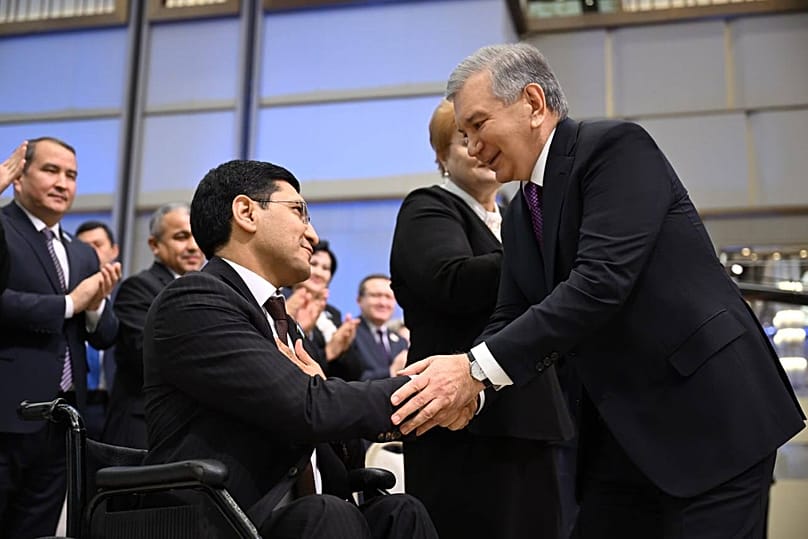
He also stressed that the goal is to reach upper-middle-income status in the coming years, measuring success not only by economic indicators but also by how reforms affect daily life across communities.