




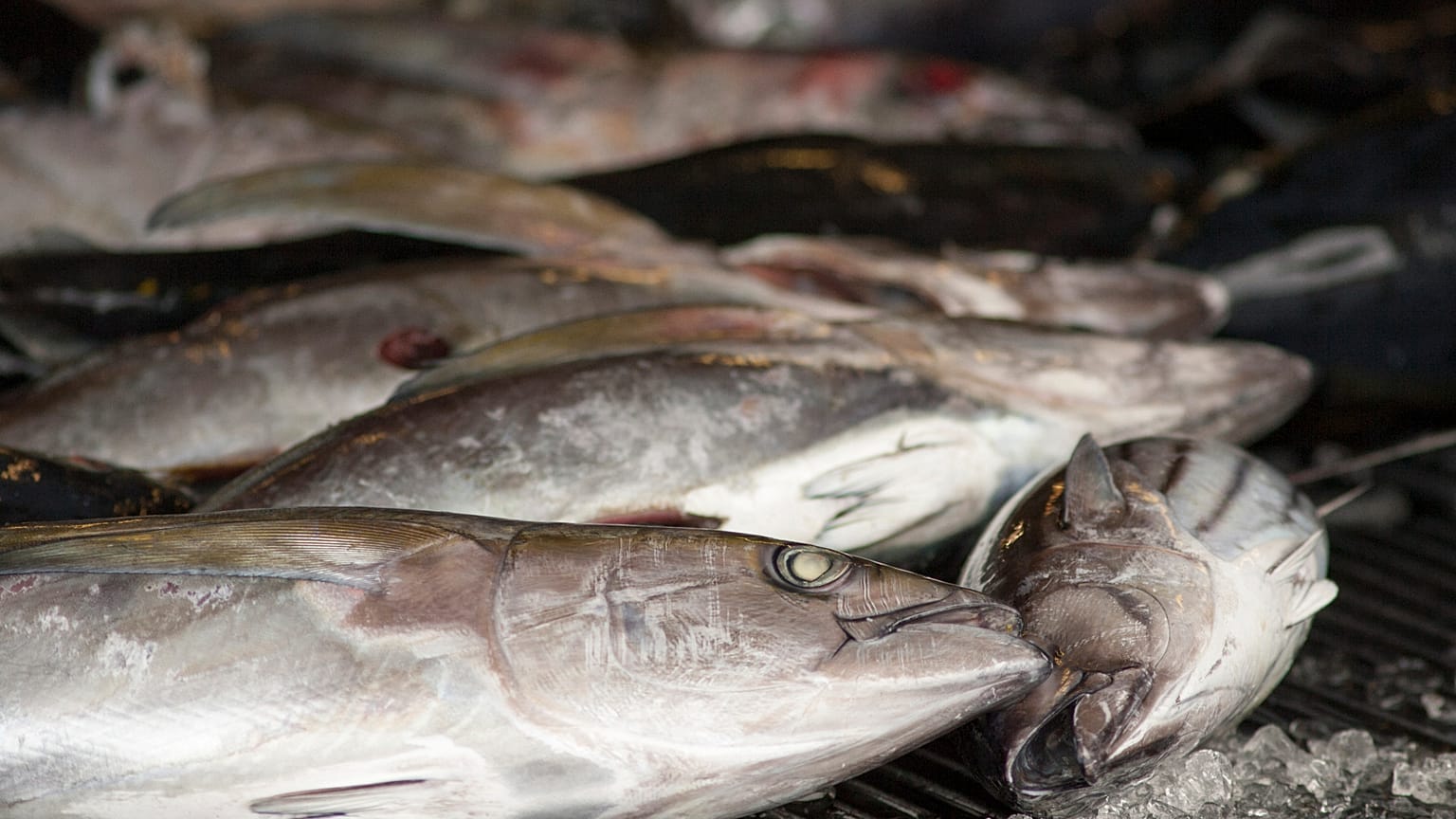













EU fisheries ministers have reached an agreement on quotas for 2026 after two days of negotiations.
The EU's Council of Agriculture and Fisheries Ministers has approved catch limits and fishing effort for 2026, and in some cases up to 2028. The agreement regulates the most critical commercial stocks in the Atlantic, the North Sea, the Mediterranean and the Black Sea.
 ADVERTISEMENT
ADVERTISEMENT
ADVERTISEMENT
Fishing effort combines vessel size and engine power with days spent fishing. After two days of talks, the 27 Member States have reached a compromise that balances scientific recommendations with the sector's economic viability.
Danish fisheries minister Jacob Jensen explained that the pact "gives fishermen certainty about their fishing possibilities for 2026," and seeks to ensure "the best possible conditions for a sustainable fisheries sector in the future."
Changes in quotas by area
For the Atlantic and North Sea, the EU autonomously manages 24 total allowable catches (TACs). The figures are up for species such as megrim, which increased by 12% in waters south of the Bay of Biscay, and Norway lobster, with a 54% increase in the same area.
On the other hand, permitted catches of standard sole (down 45% in the Kattegat and the Baltic), horse mackerel in Portuguese waters (down 5%), pollack (down 13%) and monkfish (down 1%) are down. Mackerel is a special case: ministers set provisional quotas for the first half of the year with a 70% reduction, pending the conclusion of consultations between the North-East Atlantic coastal countries.
In the Western Mediterranean, the 2025 effort level for trawlers is maintained, as are the limits for blue and red shrimp. In the Black Sea, turbot numbers are slightly lower than last year.