
















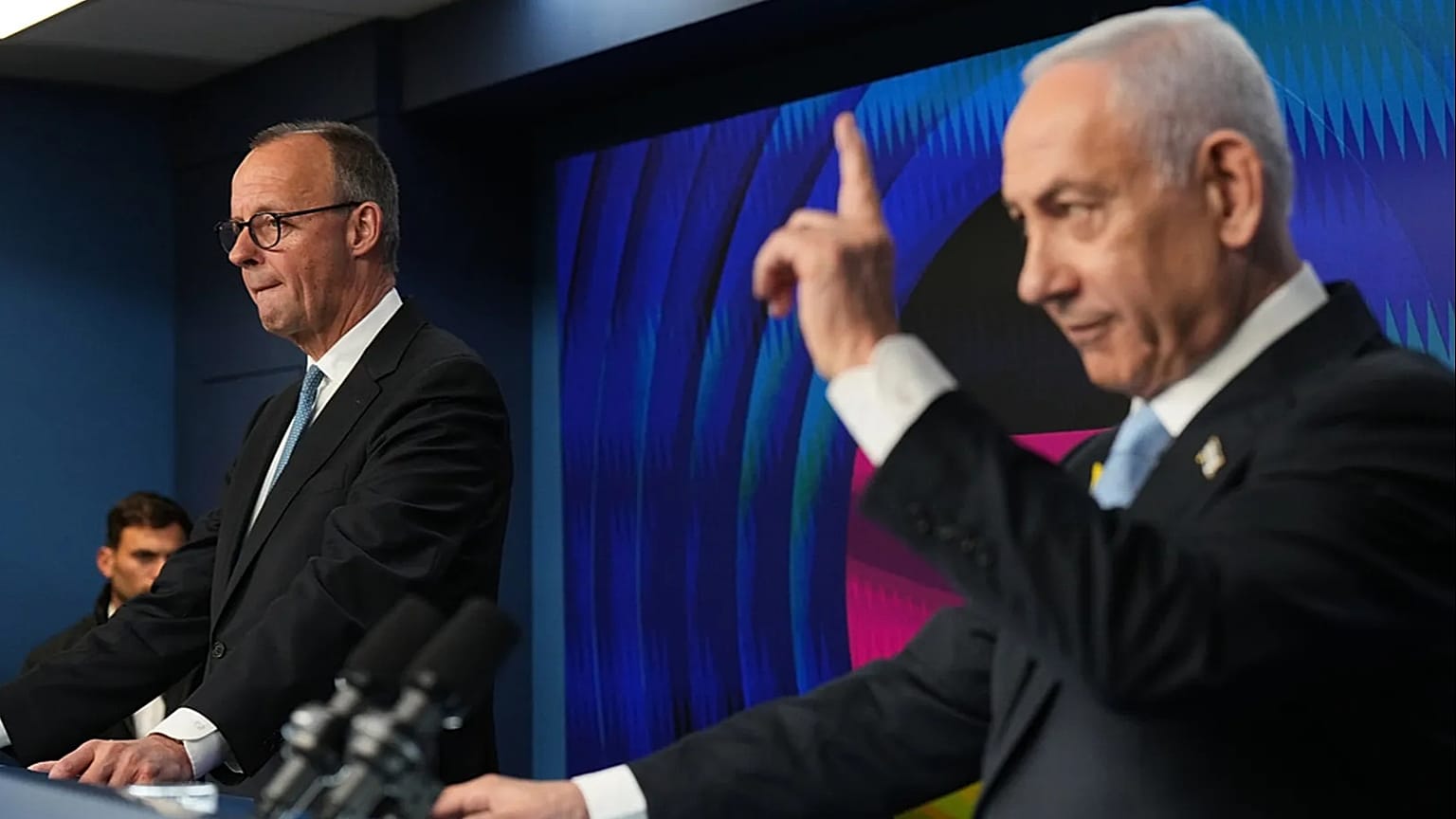














The meeting between Merz and Netanyahu revealed clear differences in their stance on Gaza and the two-state solution, however both leaders emphasised their commitment to maintaining a close bilateral relationship.
Israeli Prime Minister Benjamin Netanyahu has said that Israel and Hamas are expected to move into the second phase of the ceasefire "very shortly" after Hamas returns the remains of the last hostage held in Gaza.
 ADVERTISEMENT
ADVERTISEMENT
ADVERTISEMENT
The Israeli premier also added that he would be meeting US President Donald Trump later this month.
Netanyahu made the comments during a visit to Israel by German Chancellor Friedrich Merz, his first trip to the country as head of state, during which the latter also visited the Yad Vashem Holocaust memorial.
The two leaders discussed Gaza, a topic on which they expressed clear differences, but were still keen to emphasise a commitment to maintaining the two countries' close bilateral relationship.
Merz had come to Israel as a friend "much later than I actually wanted to", the German leader said.
Regarding the war in Gaza, Merz admitted that the actions of the Israeli government had "led Germany into a number of dilemmas," emphasising that Israel, like every state, must be held accountable under international law.
Given the severe suffering taking place Gaza, Germany had to set an example, Merz said. Nevertheless, he also stressed that Israel had the right to defend itself against Hamas.
"We will continue our diplomatic efforts to bring about peace," he added, and shared his optimistm that "a lasting peace is possible." With regards to governance in Gaza, he said "one thing is certain: there can be no role for Hamas in Gaza. Gaza must no longer pose a threat to Israel."
Differences on the two-state solution
According to Merz, the second phase of the peace process must begin now. He referenced trauma caused to both sides during the war, and pointed to the establishment of a Palestinian state under a two-state solution as the way towards lasting peace.
"We are convinced that the prospective establishment of a Palestinian state alongside Israel probably opens up the best prospects for this very future," Merz said. "A two-state solution can only be realised through negotiations."
Addressing the topic of annexation of the West Bank, Merz there should be "no formal, political, structural or other measures that would amount to annexation".
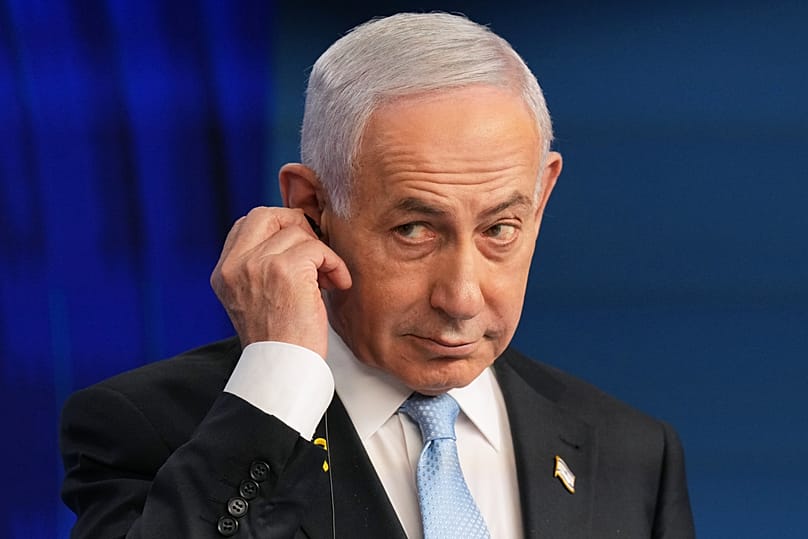
Netanyahu explicitly contradicted the chancellor on the subject of a two-state solution, arguing that there had already been a Palestinian state whose purpose, he claimed, was to destroy Israel. The Israeli leader maintained that control over the area from the Jordan River to the Mediterranean must therefore remain in Israeli hands.
According to Netanyahu, that would not amount to annexation but rather the necessary control of a security-relevant territory, adding that possible political arrangements could be discussed "in the distant future".
Merz: Criticism must not be a pretext for anti-semitism
Merz said that criticising the Israeli government was possible and sometimes necessary, but stressed that criticism "must not be misused as a pretext for anti-Semitism".
The trauma of the Shoah is an indelible part of both Israeli and German identity, emphasised Merz.
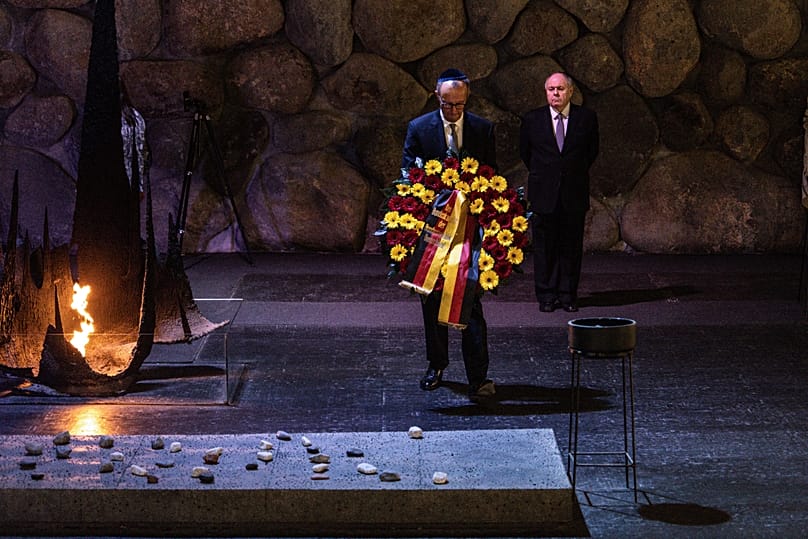
Just a few hours prior to his meeting with Netanyahu, the chancellor visited the Yad Vashem Holocaust memorial in Jerusalem, laying a wreath and reaffirming Israel's right to exist while acknowledging Germany's responsibility towards it.
This is "part of the unchanging essence of our relations, forever," Merz wrote in the guest book.
He bowed "before the six million men, women and children from all over Europe who were murdered by Germans because they were Jews." The chancellor added that "we will keep alive the memory of the terrible crime of the Shoah that Germans committed against the Jewish people".
Despite expressing a fundamentally different stance on key issues, both politicians emphasised the close relations between Israel and Germany, as well as the good personal relationship between the two of them.
"When I talk to Merz, it is an open, honest conversation between friends," Netanyahu said.
Netanyahu praised the support offered to Israely by Germany, and specifically referenced a comment by Merz that Israel was doing "the dirty work for the West" in the 12-day bombing campaign against Iran last June.
When asked by German press agency dpa whether an invitation had been extended to Netanyahu to visit Germany, Merz responded negatively: “There is no reason to discuss this at the moment."
Netanyahu was issued an arrest warrant by the International Criminal Court (ICC) last year, however Merz has previously assured the Israeli leader than he would not be arrested on German soil.