




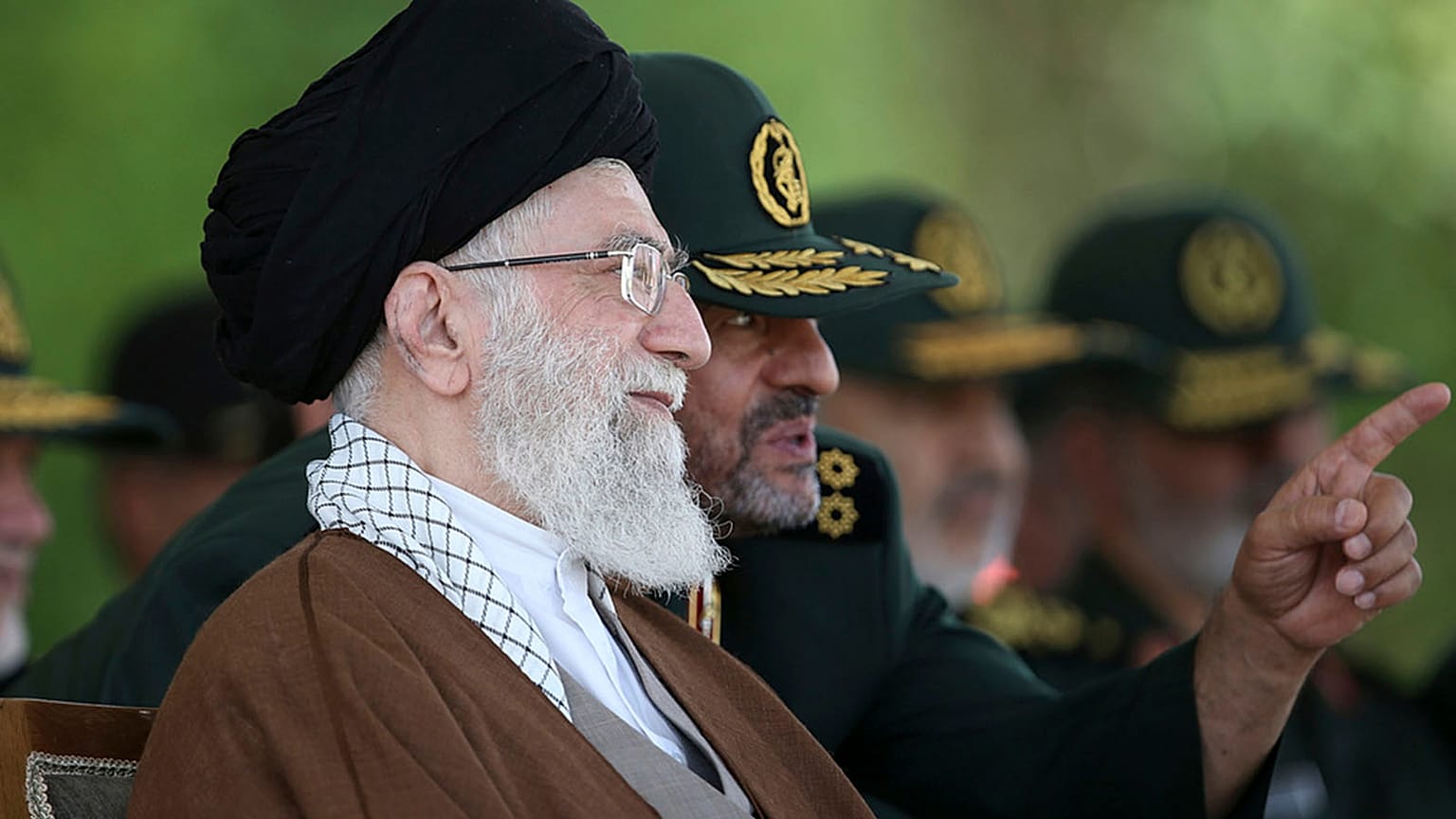













A former co-founder of the Revolutionary Guards (IRGC) told Euronews Mojtaba Khamenei had been preparing for the succession for years, yet lacks his father's stature. Meanwhile, IRGC military commanders have the upper hand in the power structure.
Mojtaba Khamenei lacks the authority to replace his father as Iran's supreme leader, and a circle of Islamic Revolutionary Guard Corps commanders now holds effective power in the country, former founder of the IRGC Mohsen Sazegara told Euronews.
 ADVERTISEMENT
ADVERTISEMENT
ADVERTISEMENT
Mojtaba Khamenei was announced Sunday evening as the new leader of the Islamic Republic, just a week after his father Ali Khamenei was killed in a US-Israeli strike.
However, he has not yet appeared publicly, with Iranian media reporting he was wounded in the attack that killed his father, mother and wife.
The appointment comes as Israeli officials have openly stated their intention to target any successor to the role, while US President Donald Trump has said any leader in Tehran who cannot secure US interests will be unacceptable to Washington.
Sazegara told Euronews that Ali Khamenei had spent 15 years preparing his son for succession, placing loyalists within the IRGC, among Friday prayer leaders and within the IRGC's intelligence organisation.
"In reality the real power of the leadership office was in Mojtaba's hands; in fact he was effectively the second figure of the leadership office," Sazegara said.
However, Sazegara said Mojtaba Khamenei cannot take his father's place. "First, he does not have that position, even if thousands of preparations have been made for it," he said. "Second, the structure of the leadership office has essentially been disrupted."
Sazegara said key figures who supported the leadership structure, including Asghar Hejazi and General Mohammad Shirazi, have been killed.
"Right now the biggest issue in front of him is the question of war and reconciliation or peace," Sazegara said. "If he chooses peace he has one problem, and if he does not choose peace the country is heading somewhere whose end is unclear."
Following Ali Khamenei's death, the IRGC has taken control of decision-making, according to Sazegara. "At present the IRGC has the upper hand and has threatened everyone that under wartime conditions, if you oppose them, you may even be sentenced to prison or execution," he said.
President Masoud Pezeshkian, who apologised to neighbouring countries for Tehran's strikes on Gulf states, has been pushed aside, according to Sazegara.
"Pezeshkian, who did not have much authority even in normal times, has now effectively been sidelined under wartime conditions," and the war Iranian attacks on Gulf countries continue suggest he had no say regardless, Sazegara said.
According to Sazegara, former Defence Minister Ahmad Vahidi and Parliament Speaker Mohammad-Bagher Ghalibaf have been managing affairs during this period. Both men support Mojtaba Khamenei, as does Hossein Taeb, head of the IRGC's intelligence organisation, if he remains alive.
"Therefore it can be said that a faction and circle of IRGC commanders who control these sectors currently have the upper hand and they will be the determining force," Sazegara concluded.