




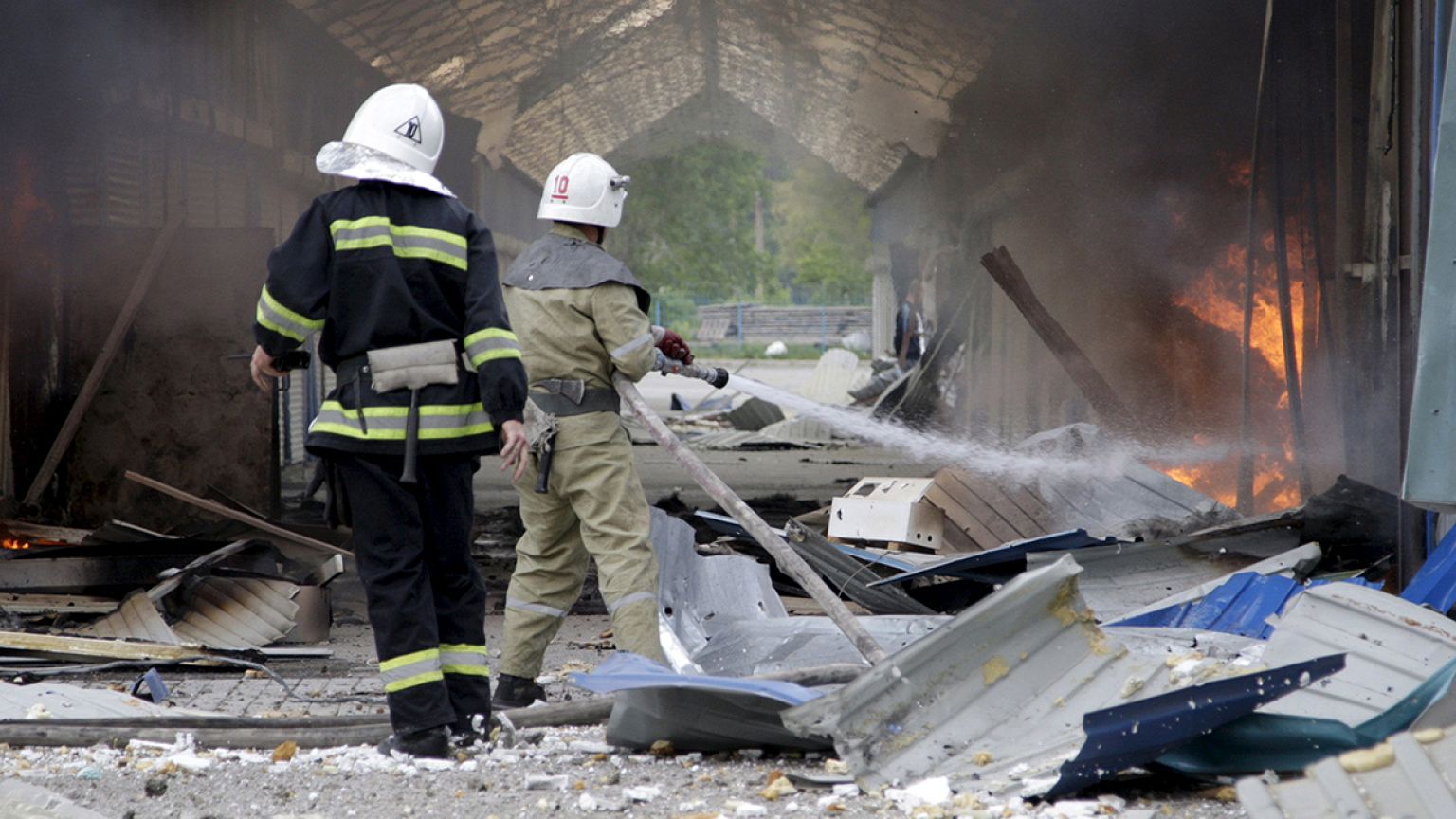














The EU denounces "the most serious violation of the ceasefire" in eastern Ukraine, as at least 24 people are killed in 24 hours of violence.
The European Union has denounced “most serious violation of the ceasefire” in eastern Ukraine since February.
 ADVERTISEMENT
ADVERTISEMENT
ADVERTISEMENT
At least 24 people died in violence near to Donetsk over 24 hours between June 3 and 4, 2015, officials report.
Ukrainian President Petro Poroshenko has warned the threat of pro-Russian rebels resuming large scale attacks remains “huge.”
He said:
“At this moment, there are fourteen Russian tactical battalions, with nine thousand troops on Ukrainian territory. The concentration of Russian troops on the Ukrainian border is one point five times bigger than one year ago.”
The EU’s executive Commission has called on all sides involved to respect the Minsk peace accord, recalling that the easing or tightening of sanctions against Russia depends on the deal being respected.
But Moscow claims Kyiv is at fault.
Russian Foreign Minister, Sergei Lavrov said:
“The Minsk agreements from February 12 are under constant threat of being violated because of the Kyiv authorities, which are trying to avoid fulfilling their obligations to establish a direct dialogue with Donbass.”
Ukraine, however, claims an attack on the eastern town of Maryinka was carried out by pro-Russian separatists, leaving the Minsk deal at the point of collapse.