




























Kuwait suspended commercial flights after drones heavily damaged its international airport, hours after Iran fired missiles at Kuwait and Bahrain and the US struck an Iranian military facility on Qeshm Island. Iran's IRGC said it had targeted the US Navy's 5th Fleet headquarters in Bahrain.
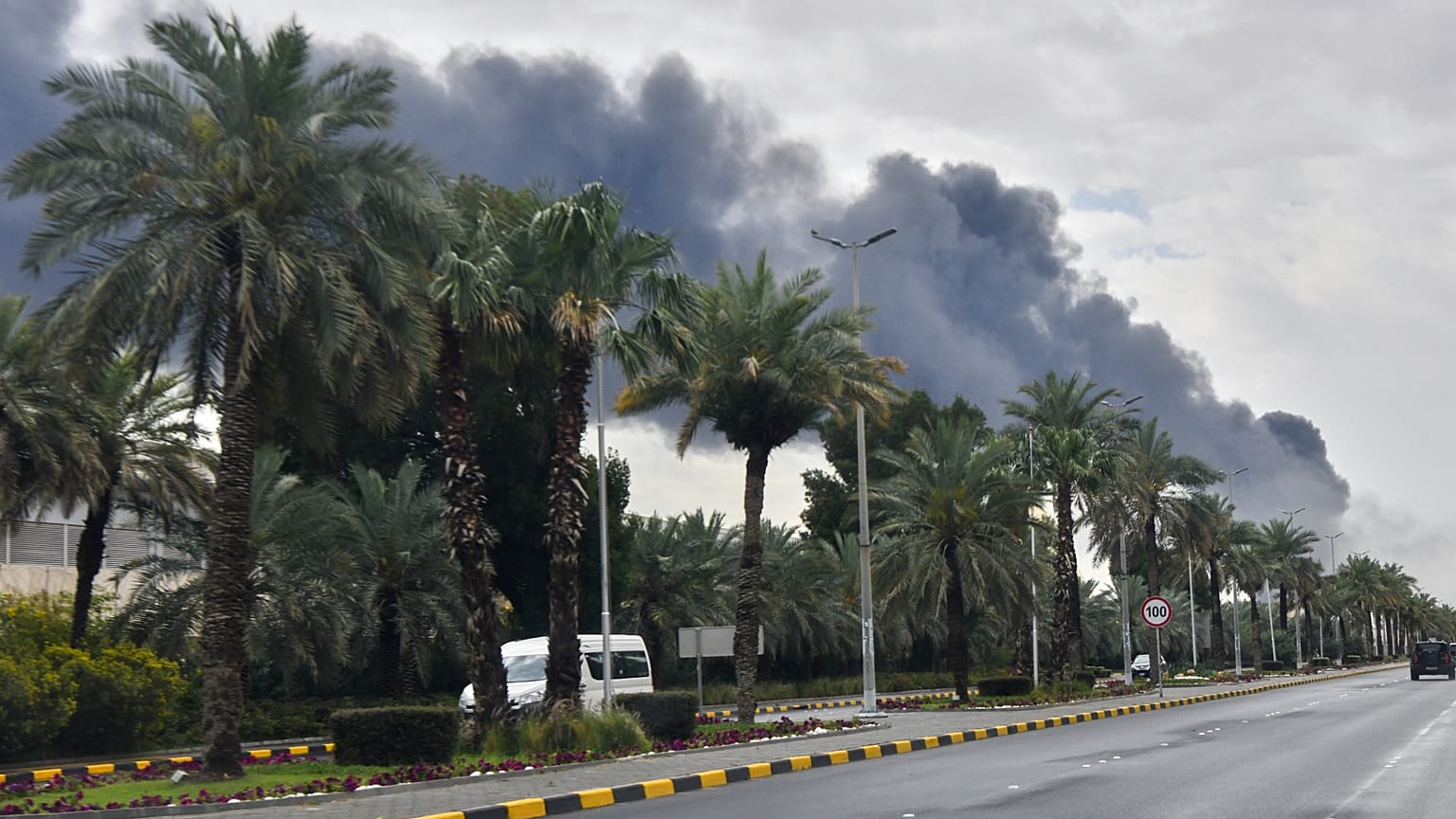
Kuwait said on Wednesday it had suspended commercial flights after an Iranian drone attack heavily damaged the country's airport and caused injuries, as Iran and the US traded missile strikes in the latest escalation of hostilities between the two sides.
 ADVERTISEMENT
ADVERTISEMENT
ADVERTISEMENT
Kuwait Defence Ministry spokesperson Brigadier General Saud Abdulaziz Al-Otaibi said that "a number of hostile drones" had targeted Kuwait International Airport's passenger building, severely damaging the building and injuring "a number of individuals".
Kuwaiti authorities later confirmed that at least one person was killed in the attack.
The airport reopened on Monday after closing in February due to the Iran war. Domestic media reported that Kuwait Airways was suspending its operations until further notice.
Kuwait has come under Iranian fire repeatedly since the war began on 28 February. On 1 March, an Iranian drone struck a US tactical operations centre at Port Shuaiba, killing six American soldiers and wounding more than 30. Iranian drones also damaged a government building in Kuwait City on 5 April.
Late Tuesday, the US military said it had launched strikes on an Iranian military facility in retaliation for Iranian missiles fired at Kuwait and Bahrain.
It said Iran had fired two missiles at Kuwait that fell apart en route, while US and Bahraini forces intercepted missiles aimed at Bahrain.
Bahrain's defence ministry said its military had intercepted and destroyed three missiles and a number of drones fired by Iran at the Gulf island country. US Central Command also said it had "downed multiple drones" targeting American forces in Kuwait.
Iran's IRGC said it had targeted the headquarters of the US Navy's 5th Fleet in Bahrain and another country in its attack, without naming Kuwait.
The 5th Fleet, headquartered at Naval Support Activity Bahrain in Manama, oversees US naval operations across the Persian Gulf, Red Sea and Arabian Sea and is the principal command coordinating the US naval blockade of Iranian ports.
It said it launched its attack in response to the US firing a missile into the engine room of an oil tanker that was trying to reach Iran despite the US blockade.
"We had previously warned that in case of aggression, the response would be different and more severe, and we acted accordingly," the Guard said in its statement.
Central Command said it responded with strikes on an Iranian military ground control station on Qeshm Island in the Strait of Hormuz.
Conflicting claims
The strikes came as Iranian state-linked news agencies said the country had stopped communicating with mediators about extending a ceasefire in the war as tensions flared over Israel’s war against the Tehran-backed Hezbollah militia in Lebanon — a claim US President Donald Trump disputed, stating talks were continuing.
A regional official involved in the mediation, speaking on condition of anonymity to discuss the talks, told AP that Tehran had not communicated at all on Tuesday after saying that a ceasefire needed to be enforced in Lebanon for negotiations to continue.
Trump called reports of a cessation in talks "false and erroneous".
"The conversations between us have been going on continuously, including four days ago, three days ago, two days ago, one day ago and today," Trump said in a social media post. "Where they lead, one never knows, but as I told Iran, 'It's time, one way or another, for you to make a Deal."
In ongoing talks to find an end to the war, the US has so far attempted to loosen the Islamic Republic's chokehold on the Strait of Hormuz and the oil, gas and other commodities that normally pass through it.
The US has also demanded talks about the future of its uranium stockpile, which Washington claims Tehran plans to use to build a nuclear weapon. Iran has denied any desire to do so.
The Iran war has become increasingly conjoined to Israel's war against Hezbollah in Lebanon, as Tehran insists that any potential truce must also stop the fighting in the Mediterranean country.
Hezbollah is Iran's most powerful regional proxy, an armed political movement that controls large swaths of Lebanese territory and has been embroiled in several armed conflicts with Israel. Tehran supplies it with weapons, funding and training, and regards its armed capability as a central pillar of its regional proxy strategy.
Israeli forces now occupy approximately 2,000 square kilometres — roughly one-fifth of Lebanese territory — and have advanced past the Litani River, deeper into Lebanon than at any point since Israel withdrew from its 18-year occupation of the south in May 2000.
Trump could potentially push Israeli Prime Minister Benjamin Netanyahu to halt or slow the advance of his forces, but Israel and the US maintain that the fighting in Lebanon is a separate matter from the war in Iran.
Lebanese President Joseph Aoun on Wednesday condemned Iranian strikes on "civilian targets" in Kuwait and Bahrain, domestic press reported, one day after he said "there is no option but negotiation" with Israel.
Aoun earlier said Israel's withdrawal from Lebanon was "non-negotiable". He has also traded barbs with Hezbollah, stating in April that the militant group was committing "treason" after it accused the government of "surrender".