



























At least 16 police were injured and 13 people arrested as opposition leader Sali Berisha’s supporters clashed with security forces in Tirana over corruption claims.
At least 16 police officers were injured and 13 people arrested when opposition protesters clashed with security forces in Albania's capital on Tuesday, authorities said.
 ADVERTISEMENT
ADVERTISEMENT
ADVERTISEMENT
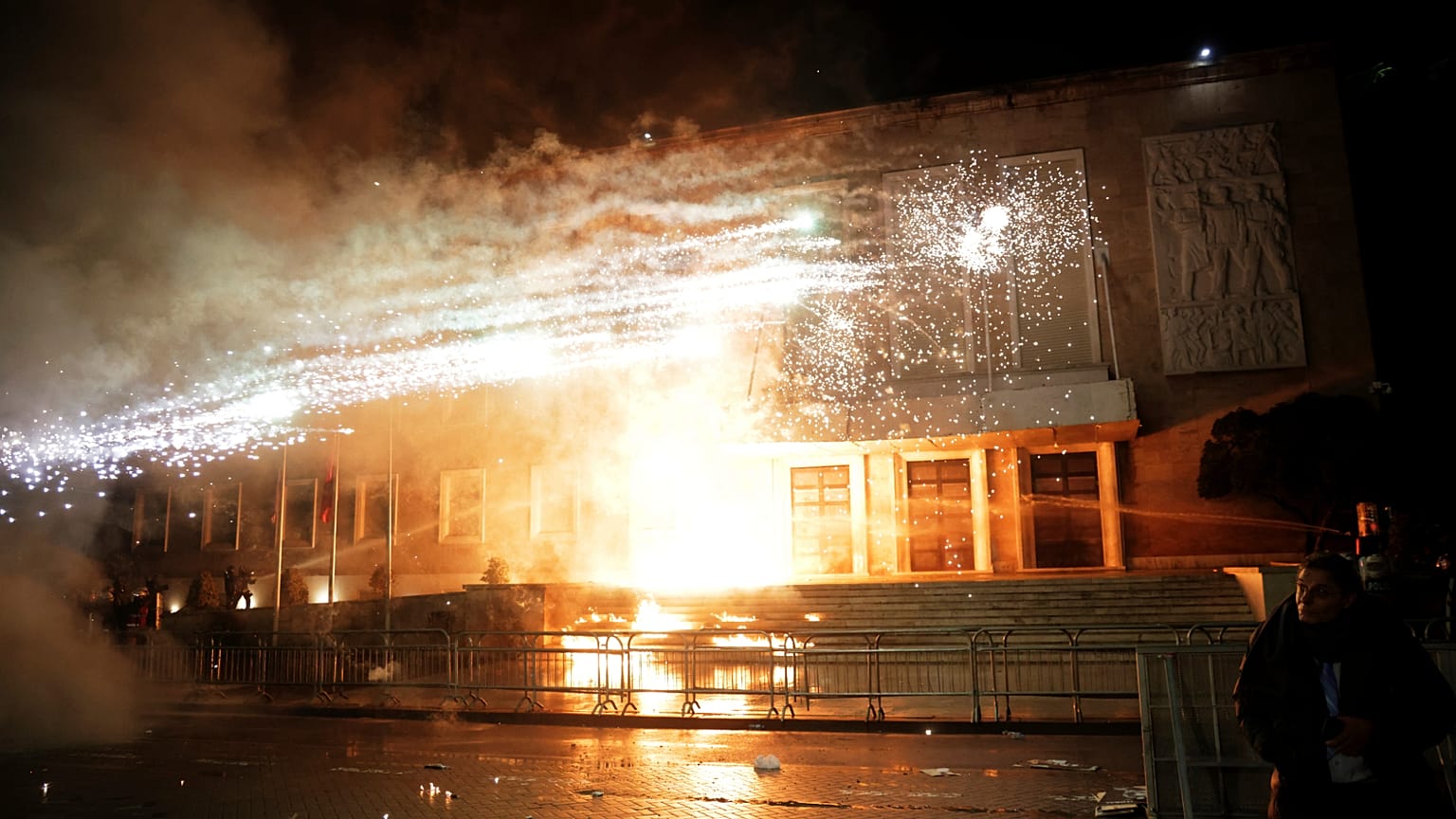
Protesters hurled Molotov cocktails and stones at government buildings in Tirana, with police responding with tear gas and water cannons.
Both parliament and the prime minister's office were targeted in the demonstration called by opposition leader Sali Berisha.
Berisha, a former premier and bitter rival of current Prime Minister Edi Rama, said a deputy from his centre-right party had been taken to hospital with injuries.
The protest is the latest in a series of anti-government rallies organised by Berisha's Democratic Party, which has accused Rama's government of corruption.
In November 2025, the Special Court Against Corruption and Organised Crime ordered the suspension of Deputy Prime Minister Belinda Balluku from her governmental duties following corruption charges related to public procurement.
Balluku was charged in connection with the Llogara Tunnel affair, including alleged violations of equality in public procurement related to the tunnel project and the fourth lot of Tirana's Outer Ring Road.
Rama took the court decision to the Constitutional Court, asking it to restore Balluku to duty. The Constitutional Court agreed to do so temporarily until there is a final decision.
However, the Constitutional Court's decision to maintain the suspension of Balluku has reopened a deep institutional conflict in Albania, with prosecutors awaiting a parliamentary vote to lift her immunity.
'Citizens are distrustful'
Berisha himself faces corruption allegations. He is suspected of having handed lucrative public contracts to his inner circle, which he firmly denies.
Berisha urged the crowd to "unite to overthrow this government and to put in place a technical government to prepare early, free and fair elections" at a previous rally in January.
He has called for another demonstration on 20 February.
The protests took place against a backdrop of parties exchanging accusations of corruption and links to organised crime.
Political analyst Mentor Kikia said Albania's leadership and opposition offered similar disadvantages. "Citizens are distrustful, having consistently voted for the lesser evil to remove the greater evil from power", he told AP.
Albania's political scene has been marked by volatile protests for years, with politicians across the spectrum trading accusations of ties to organised crime.