



























In March 2025, Ahmad Naghibzadeh told Euronews that much of what he foresaw for 2025 would come to pass. Now, he predicts a "big storm coming" Tehran's way.
The retired professor of political science at the University of Tehran predicted Israeli strikes on Iran, the targeting of military commanders, further weakening of the Islamic Republic’s regional position, and the government becoming entangled in domestic unrest — developments that have largely materialised.
 ADVERTISEMENT
ADVERTISEMENT
ADVERTISEMENT
Now, some nine months later, Euronews has once again spoken with Ahmad Naghibzadeh, author, translator and former department director at Science Po.
In the interview, Naghibzadeh compared Iran’s current situation to 19th-century Sicily, where, in his words, the mafia controlled the city and argued that the only remaining chance to remain in power for the ayatollah is to remove the “sycophants” surrounding him and replace them with competent, patriotic figures.
Otherwise, he believes, the end of the Islamic Republic is inevitable, as people know conditions will not improve immediately after the current regime is gone, but feel they have no alternative.
Naghibzadeh also warned that unless opposition groups unite and respect the agreed rules of political competition, Iran faces a turbulent future that could be even worse than the present.
He further predicted that before Nowruz — 20 March 2026 — Israel in coordination with the US will carry out another attack on Iran, after which, in his words, “the end of the tunnel will become more visible”.
Read the full Euronews interview with Dr Naqibzadeh below.
Euronews: In an interview about nine months ago, you presented a picture of Iran's future, surprisingly almost all of which came true. Where do we stand today, and given the challenges that the Islamic Republic is facing, both internally and externally, what are the prospects ahead?
Ahmad Naghibzadeh: Fundamentally, in third world countries — of which we (Iran) are one — since the early 20th century, when internal developments and international pressures converge, they reach a single critical point. When the path to reform is blocked, the doors to revolution open.
When (former President) Mahmoud Ahmadinejad came to power in 2005, those in charge were delighted and felt victorious.
Four years later, when the Green Movement was crushed, they saw it as further proof of their legitimacy. But we knew they were heading toward a dead end.
At that point, the international community had not yet decided how to deal with this regime.
Over time, accumulated domestic discontent combined with foreign policy challenges brought these two trajectories together. Internal dissatisfaction reached its peak, while the international community concluded it could not engage with this regime.
We are now approaching a moment where a spark ignites a fire. What happens after that fire, no one knows — but the position the ruling system is in today resembles the final days of Shah (Reza Pahlavi’s) rule.
If we examine it more closely, we must compare it with the period when the shah appointed an unpopular and unworthy figure, Sharif Imami, as prime minister.
While the shah had the opportunity to consider some recommendations and choose someone who could improve the situation, to announce that free elections would be held, he himself delegated part of his authority, he did not, and gave in to real changes when it was too late.
These are the conditions today as well; instead of turning to the people after the 12-day war to improve the situation, the gentlemen showed their iron fist by appointing unpopular figures and returning to factory settings.
Euronews: So you believe that the Islamic Republic is finished and there is no longer any hope that it can come out of these crises safely?
Naghibzadeh: The only possible solution — if any — would be for the Supreme Leader to sweep away the flatterers around him, send them to the Lut desert, and replace them with capable, Iran-loving individuals.
They would need to announce free elections next June with the participation of all political currents and parties. This is the only path that might change the atmosphere.
This was the mistake the shah also made. If in September 1978 he had announced free elections and political freedoms, the country would not have descended into chaos. But he acted too late.
In the Islamic Republic, those in power take actions that backfire, only fueling their own fire. After the war, they appointed individuals who were widely despised. Instead of arresting and prosecuting thieves, they attack hospitals.
Therefore, the outcome of this trajectory is entirely clear: a storm is coming—one that will sweep many things away.
This storm will also mark the end of Safavidism in Iran. Ultimately, there will be no alternative but to repeat what happened in Europe: resolving the conflict between religion and the state in favour of the state.
This process began during the era of Shah Reza but was never completed. This time, however, it will reach its final conclusion, and I am confident that the country’s youth will declare the end of Safavidism in Iran.
Euronews: How likely is an internal transformation from within the system — for example, a military coup or a “Napoleonic” figure emerging from the armed forces?
Ahmad Naghibzadeh: The likelihood of such a scenario is extremely low. They have neither left anyone with that kind of capacity, nor does such a will fundamentally exist. More importantly, the people themselves would not accept such a figure; they are one side of the equation, and they would have to accept him.
So who exactly are they supposed to bring forward? Regimes of this kind are surrounded by nothing but sycophants.
That is why I say the leader would have to pick up a bucket and a broom and dump all the riffraff he has gathered around himself into the trash and throw them into the Lut desert.
If there had been even one person who genuinely cared about Iran, Islam, and this very system, they would have either been immediately removed or sidelined and prevented from doing their job. As a result, they have ensured that no such capable figure remains anywhere near them.
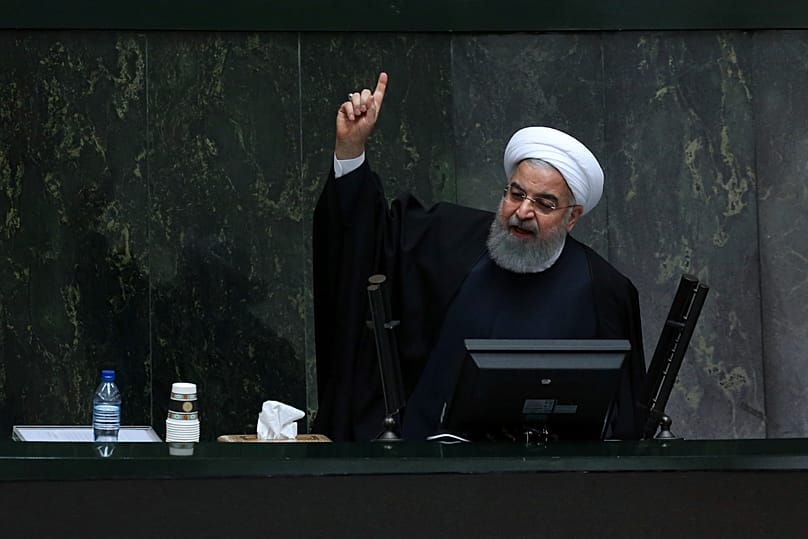
Euronews: Former president Hassan Rouhani has become more vocal since the 12-day war. Could he, or similar moderate figures, be a viable option in a moment of deadlock?
Naghibzadeh: If he steps forward, security forces will kill him within the first week. I say "the system," but in reality there is no coherent system left. Hardliners would eliminate Rouhani immediately.
These strongmen themselves brought foreigners into the country and armed them to stage a coup d'état in the country after the leadership died. These are such evil people that they won't let Rouhani come and they remove him on the very first day.
Euronews: What about opposition figures abroad? Some point to Reza Pahlavi as an alternative, while others express serious doubts.
Naghibzadeh: Yes, the lack of unity reflects the absence of a clear future vision. Leadership often emerges during struggle.
Consider, of course, that the leader takes shape on the campaign trail. It does not necessarily have to be one person — it could be a collective leadership that forms parties and advances governance.
Euronews: What do you think the international community's view of these developments will be? You made the point that the international community has come to the conclusion that it is impossible to work with the Islamic Republic.
Naghibzadeh: I hope that the international community and major powers have not made dangerous decisions about Iran’s future. Iranians have shown for three thousand years that they know how to manage their own affairs.
But if, God forbid, the international community were to opt for the fragmentation of Iran, or for the emergence of civil war and chaos, it would be deeply frightening and alarming — even imagining such a scenario makes one shudder and robs us of sleep.
Even an approach similar to that used in Afghanistan—simply walking away and leaving the country behind—would make such an outcome plausible.
That said, it must be repeated that responsibility for all of this lies with those who had the opportunity to make the right decisions at the right time and failed to do so. The ultimate responsibility for these consequences rests with the Islamic Republic.
Euronews: Did the 12-day conflict alter the Islamic Republic's approach? At first, it seemed that a bit of space was opening up, but eventually the economic problems, as well as the blockages in the political and civil spheres, recurred.
Naghibzadeh: These gentlemen, through sheer stubbornness and obstinacy, they are inflicting damage on the country. It is astonishing.
While it is obvious to everyone that during the 12-day war they suffered serious blows, they still claimed that they ‘delivered a slap’ and emerged victorious. Even audacity has its limits. The world knows who actually won. What do they take the people for?
Historically speaking, posturing and threatening international powers have never produced results. We have never seen anyone succeed that way.
Even forces far greater than the Islamic Republic failed to emerge victorious from such confrontations. Napoleon and Hitler ultimately collapsed as well — because, fundamentally, it is not possible.
And that is without even considering the fact that you are now facing a Donald Trump who does not care about the United Nations, NATO, Congress, or any institutional constraint.
In a truly extraordinary move, he sends in forces, abducts the president of a country from his own home, and puts him on trial.
Euronews: After the arrest of Nicolás Maduro, some raised the possibility that perhaps it would be Ali Khamenei's turn.
Naghibzadeh: I don’t think a similar arrest would occur in Iran. The situation in Iran and Venezuela is different, but everyone can see this regime approaching its end.
Euronews: How did the Islamic Republic get to this point? What path led us to this situation in which everyone is discussing the government being close to its end?
Naghibzadeh: These self-satisfied clerics, who seem incapable of even conceiving defeat, have always acted as if God is permanently guaranteeing them victory. It is precisely these apocalyptic beliefs that have brought the country to its current state.
This was entirely avoidable. They could have continued governing without precipitating the system's collapse.
During the era of (former President) Hashemi Rafsanjani, despite serious political and civil restrictions — including human rights violations, political killings, and harsh conditions for prisoners — there was at least reconstruction underway and a sense that things were moving forward.
But they gradually sealed off every outlet for Iranians. They left no space open. Wherever there was even the smallest source of wealth, they claimed it for themselves.
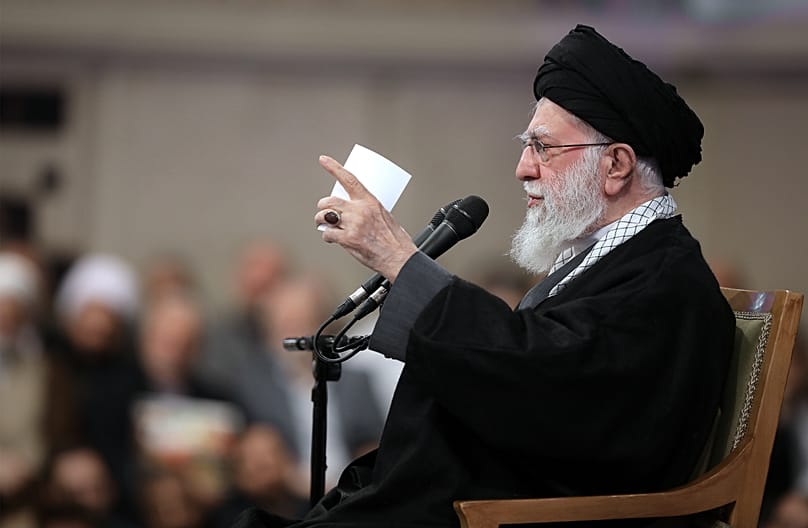
The country has been turned into a mafia-style system, where everything operates through rent-seeking and monopolies — from cigarettes to milk, yoghurt and basic dairy products.
This is the same population that endured eight years of war with Iraq without widespread protest, despite immense hardship.
So why can they no longer tolerate the situation today? Because the theft has become visible, and the scandals are now impossible to deny.
Euronews: Will conditions improve after the Islamic Republic? Do we have a clear picture of what will happen afterwards?
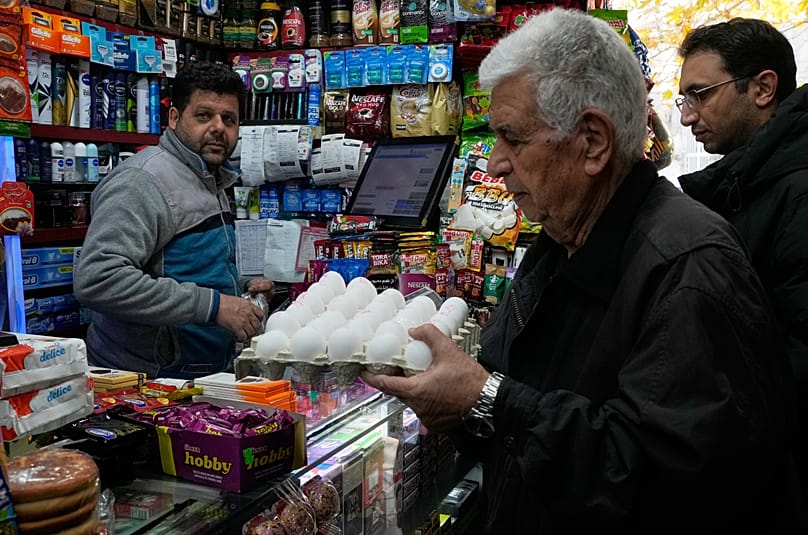
Naghibzadeh: No, everyone knows that difficulties will come, but what will people do? What will they wait for? To starve to death, will their purchasing power decrease every day and suffer a gradual death?
People are well aware that, after this government leaves, the situation will not be easy either, and many problems will follow, but they have no choice.
Incidentally, they're not naive optimists to say that after the Islamic Republic, all will be OK.
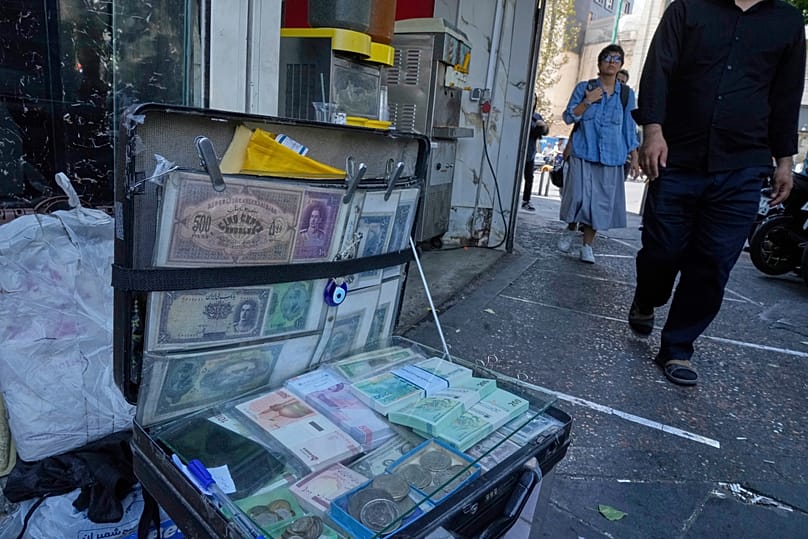
Euronews: In such a situation, what can opposition groups do to lessen the problems of that transition period?
Naghibzadeh: There is nothing else they can do but unite with each other. They must accept the rule of the game and set the tone that we accept the people's vote on the new government and the constitution. If it doesn't, there will be civil war and turmoil in the country, where conditions will be even blacker than what is seen in the country today.
I repeat: all of this will ultimately be attributed to the Islamic Republic, just as the 1979 revolution was ultimately attributed to the shah.
Euronews: In light of what happened in Venezuela, some have suggested that perhaps because of concerns about the high costs of regime change and the experiences that took place in Iraq and Afghanistan, the US government is thinking of just taking the helm of the system and replacing someone from the same body, provided that it changes the overall approach. How likely is this for Iran?
Naghibzadeh: Absolutely not. The moment the supreme leader disappears, they will tear each other apart.
He is the hook holding them together. Once it breaks, internal conflict will explode. Iran today resembles 19th-century Sicily — surrounded by mafia networks.
I don't think that's the case in Venezuela, and that's how mafia gangs hold power. Strange circumstances have arisen in the country, where we cannot say that there is no government, nor that there is a government.
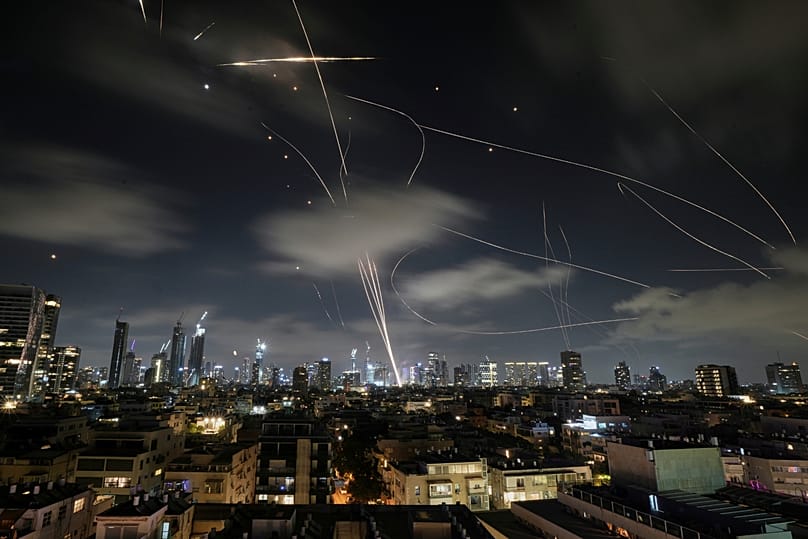
Euronews: Right now, reports about a possible Israeli attack are also increasing. Does Israel have a benefit to carry out a repeat attack, or would it rather sit aside and watch the Islamic Republic tear itself down?
Naghibzadeh: First of all, the United States and Israel are not separate actors. In my view, Iran will be attacked once again before Nowruz. By then, many things will become clearer, and the end of the tunnel will gradually come into view.
I do believe another strike will take place — aimed at eliminating the remaining elements perceived as threats to Israel, while at the same time accelerating a political transition.
Euronews: Could the ayatollah himself be targeted?
Naghibzadeh: Whether he is directly targeted would not make a material difference. He is not immortal, and his voice already sounds like that of someone seriously ill. That said, I cannot rule out the possibility that he could be targeted.
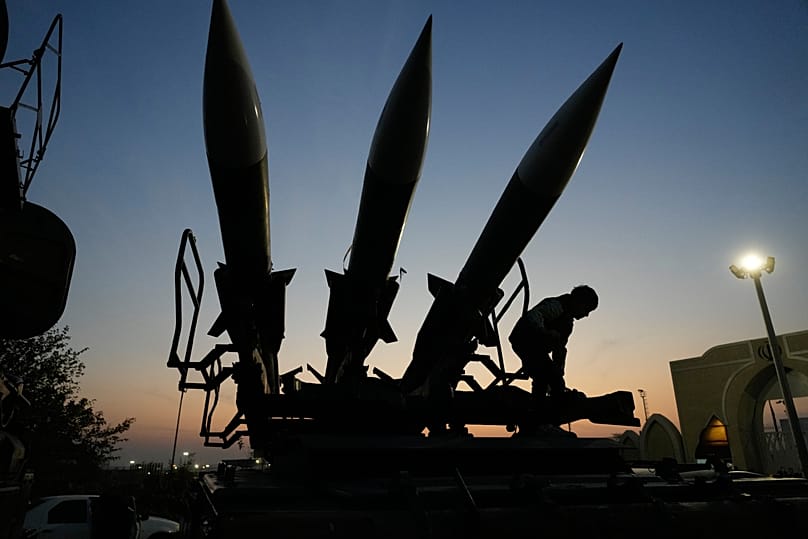
Euronews: Do you think that after this attack takes place, much of Iran's future will depend on what the world powers decide on Iran?
Naghibzadeh: That is certainly the case. Moreover, we Iranians must recognise that this is a decisive indicator.
Do you think that, if world leaders had not decided at the Guadeloupe Conference that the shah should step down and Mr Khomeini should come to power, this transition would have occurred? It certainly would not have.
We should not fall into misinterpretations. Iranians need to recognise that, precisely after this phase, maintaining close relations with global powers will be essential.
Didn’t the United States intervene in Germany after World War II? West Germany was established, and the country was eventually returned to the Germans.
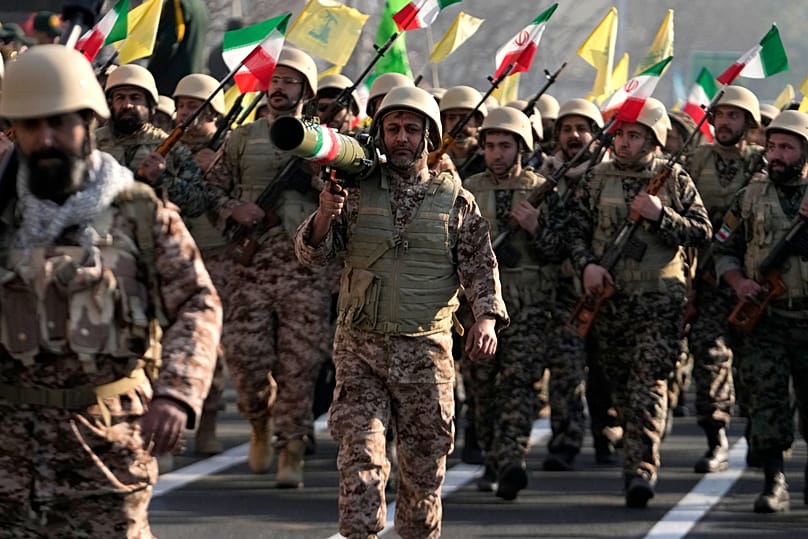
Euronews: In our previous interview, you pointed to Russia’s role and said that Moscow has significant influence in Iran and is unlikely to simply walk away from it. If a major transformation were to occur in Iran, would Russia permit it so readily? Some Iranian officials also believe they can survive the remaining three years of a Trump presidency by pursuing a policy of “strategic patience,” with support from China and Russia. How realistic is this idea?
Naghibzadeh: First, the assumption that they can simply make it through three more years is wishful thinking. Second, in my view, the issue of Russia will be resolved at the highest level.
That is to say, the United States will offer concessions to Russia in exchange for Russia's withdrawal from Iran. At that point, Russia’s role would be largely neutralised, and these changes could take place.
That said, Russia will never completely abandon Iran and will later try to re-enter through other channels. However, I believe that in the course of such developments, the Americans would first inform the Russians and only then proceed with any concrete action.