
















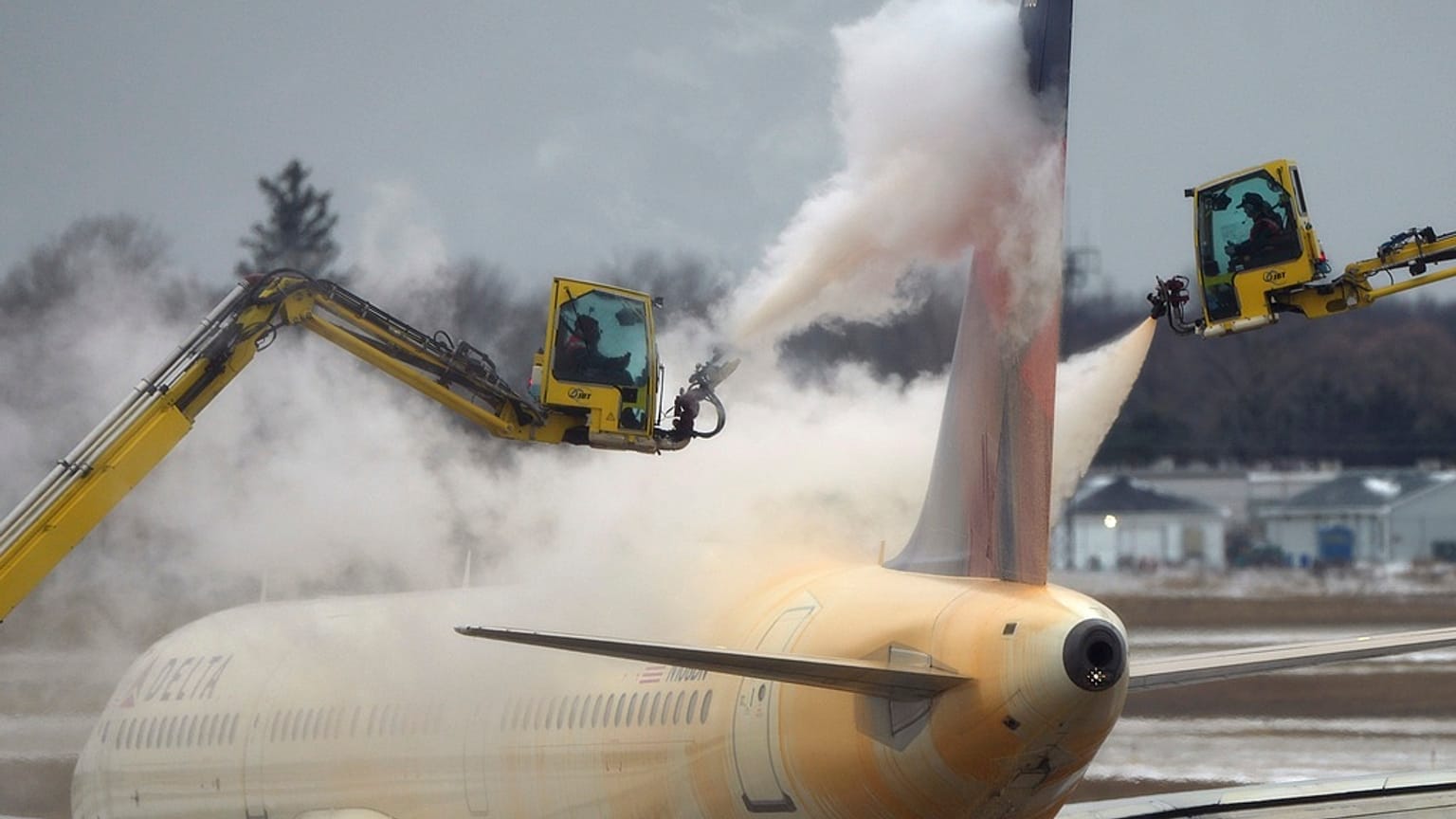













Aviation experts explain that grounding flights is more complex than just clearing a runway of snow and ice.
Last week, thousands of tourists were stranded in northern Finland after flights at Kittilä airport were cancelled due to severe cold.
 ADVERTISEMENT
ADVERTISEMENT
ADVERTISEMENT
The Nordic country is known for its expertise in dealing with winter weather, with air traffic disrupted much less frequently than other European nations further south.
So what crippled airport operations? Aviation experts explain that grounding flights is more complex than just clearing a runway of snow and ice.
Why do Finland’s airports deal so well with winter weather?
In Finland, plunging temperatures and heavy snow are the order of the day in winter, so airports have well-established maintenance programmes in place.
Helsinki Airport, for example, conducts both daily maintenance and targeted snow removal.
“The term ‘target snow removal’ refers to the operating model for abnormal snowfall days on the aprons [where aircraft park]," Anssi Väisänen, Finavia’s Apron Operations Manager for Helsinki Airport, said in a press release.
“The aircraft parking plan is drawn up about 12 hours in advance so that there will be several vacant aircraft stands on the apron next to each other.
“This allows our maintenance to focus its resources and plough the area. After that, the aircraft turnaround process can begin.”
Aircraft stands are freed up in sections to allow maintenance professionals to sweep and plough as large an area as possible in one go.
Runways and taxiways must also be kept free of snow. At Helsinki airport, a fleet of 200 vehicles and machines, ranging from ploughs to chemical sprayers, is on standby to clear its three runways.
The behemoths of this fleet are the Vammas PSB 5500 sweeper blowers. These 31-tonne machines can clear a 5.5 metre span of runway in just 11 minutes, thanks to their unique trifecta of snow-clearing features.
“Sweeper blowers are used [to clear snow] for up to 800 hours during the winterseason,” Pyry Pennanen, Finavia’s Head of Airfield Maintenance for Helsinki Airport, added in the press release.
Machinery is operated by 135 skilled and trained maintenance employees, 75 of whom are only recruited to work during the winter season.
Helsinki’s window for clearing its 3,500-metre-long, 60-metre-wide runways is 13 minutes.
They are usually able to carry out the task in 11 minutes, however, with the help of anti-icing agents and carefully planned and practised sweeping patterns for snow removal.
While one of the airport’s three runways is being cleared, the other two are kept running.
Why were flights grounded at Kittilä airport?
Even airports further north, beyond the Arctic Circle, rarely close for winter weather.
At Ivalo Airport, the most recent extreme temperature event in 2023 saw the mercury drop to minus 35. Even then, the airport cancelled just one solitary flight, maintaining all other operations as normal.
At Kittilä airport, the temperature dropped to minus 37 degrees Celsius on 11 January, after several days of similar frigid weather. But operations were much more severely disrupted than at Ivalo.
When snow and icy conditions hit at the same time, resources are pushed to capacity. But the bigger culprit was the ice coating the exterior of the aircraft, which can freeze mechanical parts and flaps on an aircraft’s wings solid.
“It is extremely dangerous to fly with ice on the wings. The airflow around the wing is disrupted. The aircraft then stalls and crashes,” Joris Melkert, a lecturer in aerospace engineering at Delft University of Technology, told Dutch newspaper De Telegraaf.
To prevent this from happening, the ice must first be cleared using warm water and then the aircraft sprayed with a layer of antifreeze. The process takes between 10 minutes and half an hour.
While during severe but dry frost, de-icing may not be required, if there is moisture in the air, the need for de-icing usually increases, said a spokesperson for Finavia, which manages Finland’s airport network.
“Due to the extremely challenging conditions, airlines were forced to cancel flights to Kittilä on Friday, Saturday and Sunday,” they said.
Finavia also told public broadcaster Yle that ground equipment connectors and vehicle hatches had frozen over while refuelling, and de-icing had been made impossible.
The aircraft de-icing debacle at Schiphol airport
In early January, over 3,000 flights were cancelled at Amsterdam’s Schiphol airport as frigid weather rolled in.
Heavy snow meant a scramble to clear runways, but again, it was the critical de-icing of aircraft that scuppered operations.
De Telegraaf reports that Schiphol chose not to install de‑icing facilities at every runway due to their cost, forcing aircraft to taxi longer and creating bottlenecks when there is severe weather.
But the main issue was that the prolonged freezing conditions strained operator KLM, which handles most de‑icing operations for departing aircraft at the airport.
100 employees and 25 trucks are dedicated to de-icing operations, and all were deployed during the week of extreme temperatures.
After a few days of continuous use, their supply of de‑icing fluid was running low, the Dutch airline said, forcing it to cancel more flights.
KLM sent employees to Germany to collect additional stock - more than 100,000 litres of fluid - which meant operations were able to gradually resume after a few days.
“This domino effect causes Schiphol to completely seize up on days like these with snow. We are the laughingstock of Europe,” a KLM employee, speaking on condition of anonymity, told De Telegraaf.