












This summer, Dolomite landowners ask tourists to pay a fee on one scenic route after 8,000 visitors arrived in one day.
As Italy gears up to host the Winter Olympics next month, residents in Alpine communities are warning that a surge in visitors will strain an area already battling overtourism.
 ADVERTISEMENT
ADVERTISEMENT
ADVERTISEMENT
Events will take place in Milan and in Cortina d'Ampezzo, a UNESCO-designated town known as the 'Queen of the Dolomites', as well as in the nearby localities of Predazzo, Tesero and Anterselva.
Local authorities and environmental organisations say the Games will exacerbate a worrying tourism trend: the social media fame of scenic spots.
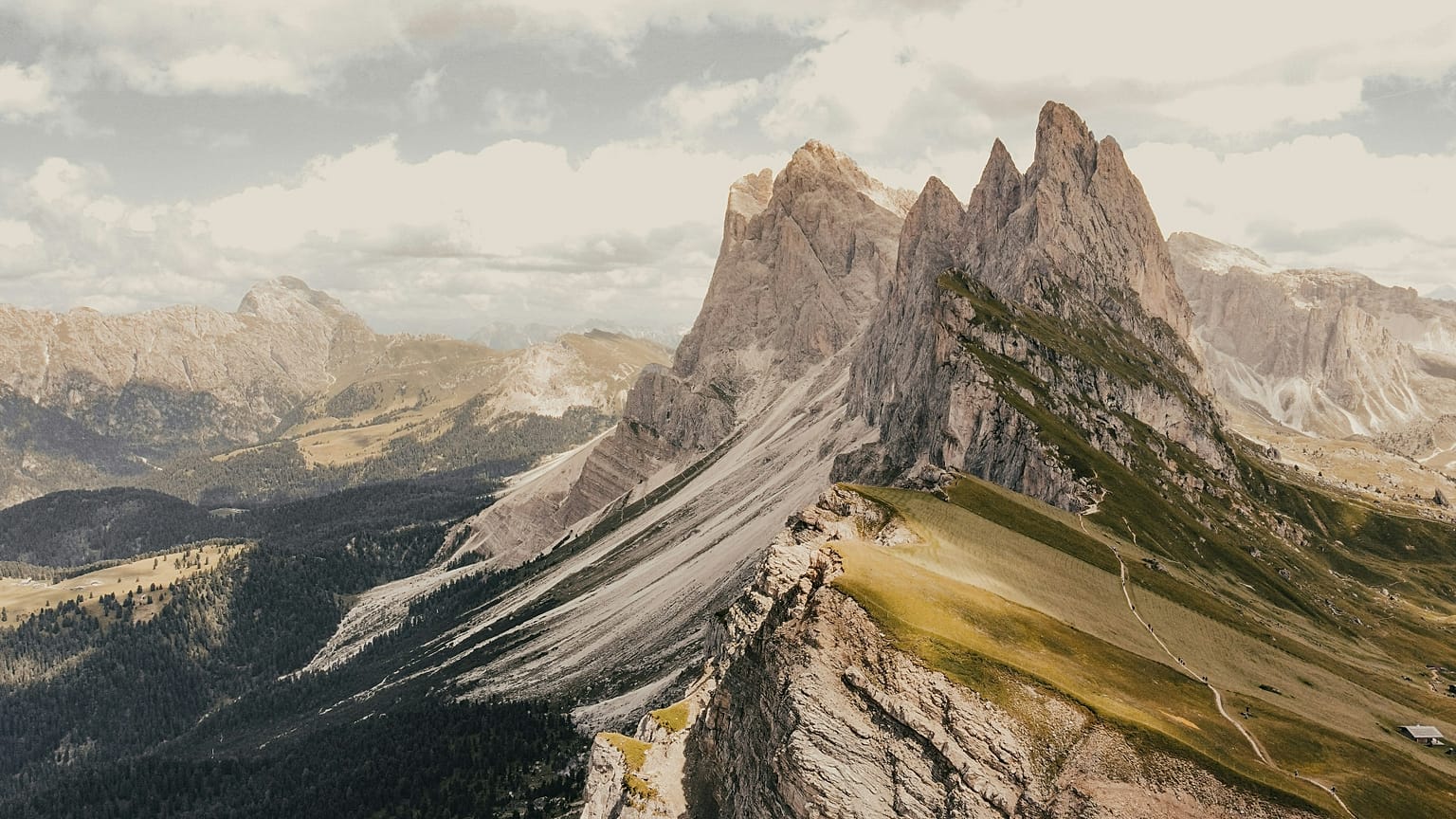
High in the Italian Dolomites, a hiking trail on Seceda mountain has become a renowned place for taking dramatic shots of the spiky Odle Peaks.
In summer, camera-wielding tourists become a nightmare for residents of the area in South Tyrol.
This winter, an acclaimed ski resort in the Dolomites became the country’s first to cap the number of visitors.
Madonna di Campiglio said it would curb the presence of skiers on the slopes by limiting daily passes purchased online to just 15,000.
The move highlights the wider, growing issue of overtourism, poor visitor behaviour, and environmental damage in Italy’s fragile mountain range.
Farmers ask tourists to pay fee to hike scenic route
This summer, walkers and locals shared images of the famed Odle trail leading to the Seceda summit jammed with queues of tourists waiting to take Instagram-worthy snaps.
Some 8,000 people reportedly walked the path on a single day last week.
Frustrations grew to the point that local landowners decided to take independent action.
At the beginning of July, a group of local farmers set up a turnstile with a toll on the Odle trail to protest against the constant passage of tourists who, they say, disrespect the area.
"The trails are abandoned and the meadows are full of rubbish," they said in a statement.
The turnstile was quickly deactivated by the Puez-Odle Nature Park authorities, but was reinstated by the farmers days later.
The landowners said in a statement that the initial installation of the turnstile was primarily intended as a provocation - or a ‘cry for help’ as local newspaper Il Dolomiti describes it.
However, since receiving no contact from “political representatives, associations, or organisations", they chose to reactivate the system.
Anyone who wished to hike along the route was asked to pay a €5 fee - children and residents excluded.
The landowners said they were obliged to charge a toll to compensate for the damage to their land and to fund their upkeep of the slopes.
Greater regulation of tourism is needed in the Dolomites
While many local tourism associations and mountain guides denounced the landowners’ move, others, including local residents, say the provocation was necessary.
Carlo Alberto Zanella, president of the South Tyrolean branch of the national hiking association Club Alpino Italia (CIA), told local newspaper Salto, “it serves to bring a real problem to public attention.”
He said visitors walk through or cycle across the meadows bordering the trail, spoiling the fields and their crops before the farmers can harvest.
“You need education about how to respect the environment. That’s the point.”
Local tourism groups also acknowledge that overcrowding is partly due to a lack of regulation by provincial authorities.
Mussner called for local farmers to be financially compensated for summer tourism, as is done in winter for owners of land crossed by ski slopes.
This is particularly urgent given the booming interest in mountain destinations amid boiling European summers.
According to research by the Demoskopika Institute, for the second consecutive year, South Tyrol is one of the destinations in Italy most exposed to tourist overcrowding, on a par with Venice.
Is Apple to blame for the Seceda mountain’s popularity?
Some say the culprit of this area’s popularity is the technology company Apple.
It used a photograph of the Seceda mountain as the official wallpaper for its iOS 7 operating system a decade ago.
Two years ago, it featured the Seceda again in a short promotional video during the iPhone 15 launch event.
Local groups say the result of that involuntary publicity was a huge increase in visitors, often driven by the desire to just take a few photos of the views and then leave.
They also say that the cable car from Ortisei that takes passengers to the summit is exacerbating the problem.
The route has also seen intense overcrowding, with local guides warning visitors to arrive early in the morning to avoid the lengthy queues.
Some tourism and environmental groups are now calling for a price increase in summer or even its complete closure in peak season to prevent the unsustainable influx of visitors.
The company that operates the cable car has instead proposed tripling its capacity amid much controversy and fears of stoking the overtourism problem.
Dolomite ski resort caps visitor numbers
Concerns are growing that the Winter Olympics will also ramp up interest in the Dolomites during the winter.
The Madonna di Campiglio ski resort has brought in a cap on visitor numbers, which was in place from 28 December, 2025, to 5 January, 2026, and will return during Italy’s annual Carnival (15-22 February, 2026).
Although the resort does not say the move was a measure to directly counter overtourism, it said limiting the number of daily pass holders to an “ideal number” will help improve the skiing experience as well as customer safety.
Madonna di Campiglio is also developing new “smart skipasses” to allow skiers to avoid crowded zones during the peak season by “dynamically distributing skier traffic across the 150km of slopes”.
‘A more holistic approach’
Catherine Warrilow, a tourism brand strategy expert at The Plot, tells Euronews Travel that overtourism can have a negative impact on guest experience, as well as on local residents and the environment.
“Limiting visitors per day to the slopes and lifts may reduce wider impacts but in my experience, it needs a far more holistic approach, coordinated with the local tourist association, businesses and residents,” she adds.
Warrilow argues that managing the flow of visitors to a region rather than just one resort or bottleneck would result in “wider accessibility and sustainability” - describing the resort’s move as a “visitor management adjustment” rather than a commitment to overtourism.
“I would speculate that this is designed more to even out visitor numbers through the ski season and avert the risk of someone being seriously hurt, as opposed to lessening the impact of tourism on the resort and local area,” she says.