













Seen as it was 8.5 billion years ago, the galaxy shows that the early universe was harsher than scientists previously thought.
Researchers have identified what could be the most distant jellyfish galaxy ever observed, using data from NASA's James Webb Space Telescope.
 ADVERTISEMENT
ADVERTISEMENT
ADVERTISEMENT
The discovery, published in the Astrophysical Journal, was made by a team at the University of Waterloo, who spotted the unusual object while analysing deep space observations.
Launched in 2021 through a collaboration between NASA, the European Space Agency (ESA), and the Canadian Space Agency (CSA), the JWST is the largest, most powerful and most sophisticated telescope ever sent into space.
What is a jellyfish galaxy?
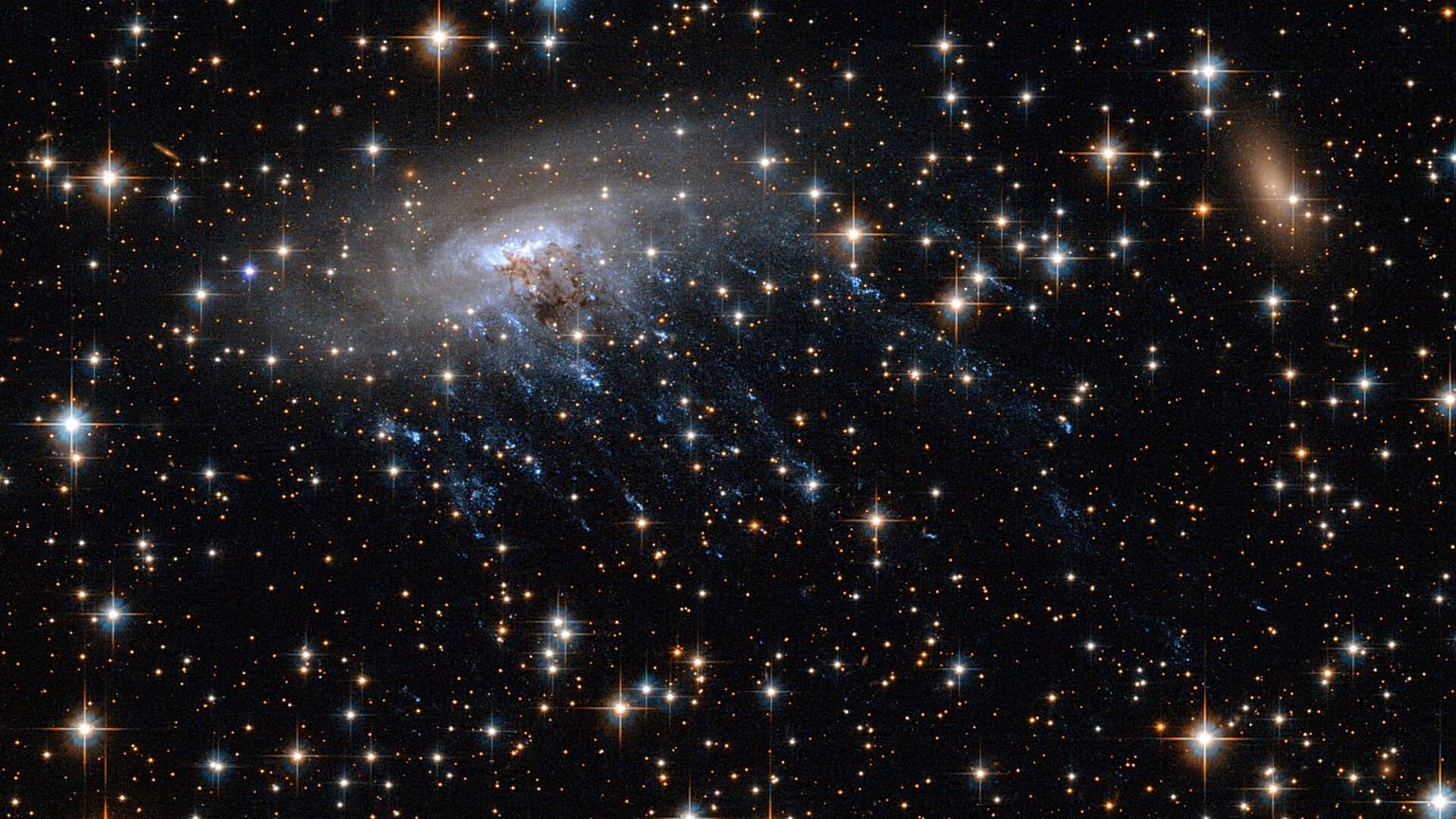
Jellyfish galaxies get their nickname from the long, flowing streams of gas that trail behind them like tentacles.
These galaxies move rapidly through crowded galaxy clusters filled with extremely hot gas.
As they travel, that surrounding gas acts like a headwind, sweeping material away from the galaxy and leaving behind flowing strands in a process known as ram-pressure stripping.
What we know about the new discovery
The newly identified galaxy sits at a redshift of z = 1.156. This means its light has taken around 8.5 billion years to reach Earth - so what we're seeing is a view of the galaxy when the universe was much younger.
The team found the galaxy while studying the COSMOS field - the Cosmic Evolution Survey Deep field - one of the most intensely studied patches of sky. Astronomers favour this region because it lies away from the busy plane of the Milky Way, which means less interference from nearby stars and dust.
"We were looking through a large amount of data from this well-studied region in the sky with the hopes of spotting jellyfish galaxies that haven't been studied before," said Dr. Ian Roberts, from the Waterloo Centre for Astrophysics in the Faculty of Science. "Early on in our search of the JWST data, we spotted a distant, undocumented jellyfish galaxy that sparked immediate interest."
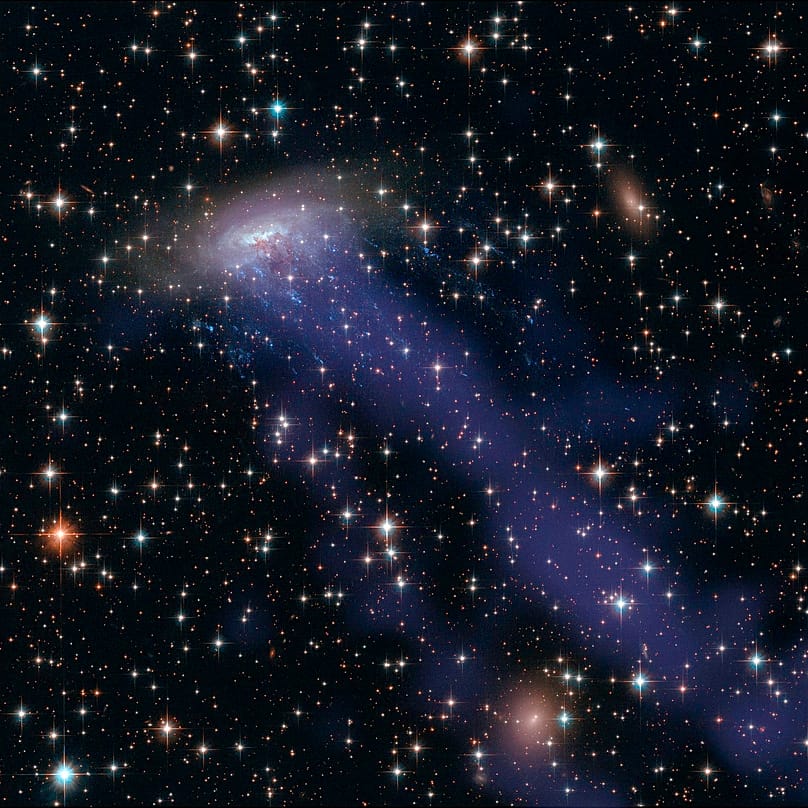
The galaxy itself has a relatively typical disk shape. What stands out are bright blue clumps scattered along its trailing streams. These glowing knots are extremely young stars.
Their ages suggest they formed outside the galaxy's main body, within gas that had been stripped away. That type of star formation is consistent with what astronomers expect in jellyfish galaxies undergoing ram-pressure stripping.
Significance of the find
The discovery is important because it pushes evidence of ram-pressure stripping much further back in time.
Many researchers had assumed that galaxy clusters 8.5 billion years ago were still developing and not yet dense or extreme enough to strip gas so effectively. This galaxy suggests that clusters were already harsh environments capable of reshaping galaxies.
"The first is that cluster environments were already harsh enough to strip galaxies, and the second is that galaxy clusters may strongly alter galaxy properties earlier than expected," Roberts said.
He continued: "Another is that all the challenges listed might have played a part in building the large population of dead galaxies we see in galaxy clusters today. This data provides us with rare insight into how galaxies were transformed in the early universe."
The researchers have now applied for additional observing time with the James Webb Space Telescope to take a closer look and provide further evidence.