












Euronews Next gives a rundown of what the universe has in store for us in 2026.
From a visiting comet from another starto the return of stranded NASA astronauts to a record number of satellite launches, 2025 was full of extraordinary space events.
 ADVERTISEMENT
ADVERTISEMENT
ADVERTISEMENT
That momentum carries straight into 2026, with some of the most ambitious exploration plans for decades, rare eclipses and continued chances to see the Northern Lights.
Here’s a rundown of what the universe has in store for us in 2026.
Lunar exploration looms in the new year
Interest in the Moon is growing again after decades of relative quiet, with several launches and tests planned for the year ahead. More than half a century after the Apollo missions first carried humans to the lunar surface, astronauts are once again preparing to venture deep into lunar space.
In April, NASA will send a crew of four astronauts - three Americans and one Canadian - on a 10-day mission that will skim past the Moon. Their spacecraft will loop behind the lunar far side before heading back to Earth.
Although they will not land, their flight is expected to offer fresh views of regions that even the Apollo missions never saw directly, information that could shape future landings under NASA’s Artemis programme, according to Reid Wiseman, the Chief of the Astronaut Office at NASA.
Uncrewed spacecraft will also be heading for the Moon in large numbers.
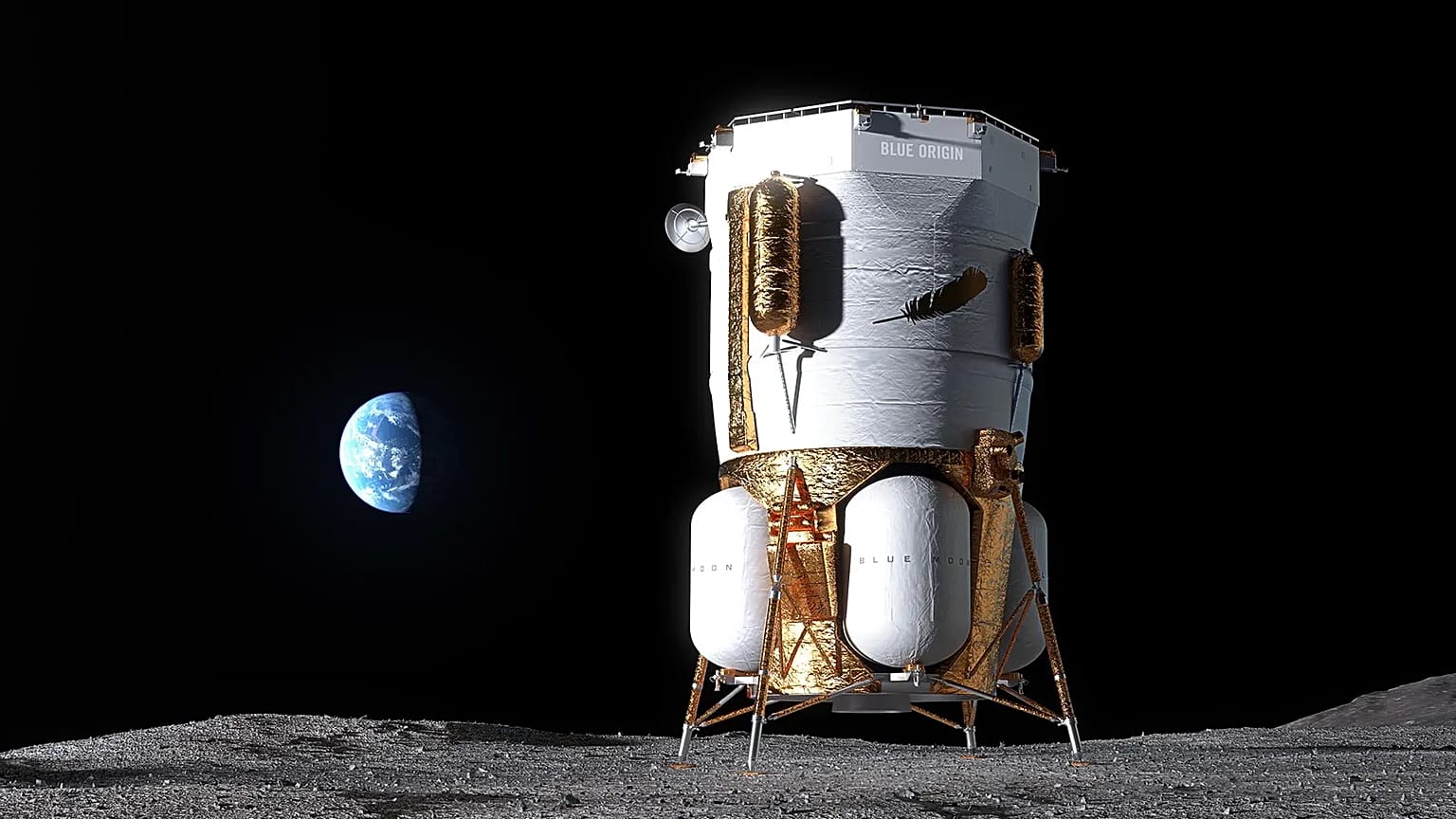
One of the most eye-catching projects is a new oversized lunar lander called Blue Moon, being developed by Blue Origin, the space company founded by Amazon’s Jeff Bezos.
The prototype lander, designed to carry NASA astronauts to the lunar surface, is scheduled to be tested in 2026. At about eight metres tall, it will be almost twice the height of the Apollo 12 lunar module that landed on the Moon in 1969.
Other US space companies, including Astrobotic Technology, Intuitive Machines and Firefly Aerospace, are also targeting lunar landings in 2026 as part of a growing commercial push to deliver payloads to the Moon.
China is planning its own lunar exploration as well. The Chang’e 7 probe is expected to target the Moon’s south pole, an area where frozen water may be hidden inside permanently shadowed craters, according to China Media Group.
Such ice could one day support human missions by providing drinking water and rocket fuel.
Eclipses and supermoons in 2026
Back on Earth, skywatchers will have plenty to look forward to.
In February, a 'ring of fire' solar eclipse will be visible over Antarctica, with partial views from parts of the southern hemisphere, including South Africa, Chile and Argentina.
A ring of fire eclipse, also known as an annular eclipse, occurs when the Moon passes in front of the Sun but appears slightly too small to completely cover it, leaving a bright ring of sunlight around its edge.
Europeans will have a particularly dramatic sight in August, when a total solar eclipse will sweep from the Arctic across Greenland and Iceland before reaching Spain, briefly turning day into night for those along its narrow path.
The Moon itself will look especially impressive at several points during the year.
Three supermoons are expected in 2026, when a full Moon coincides with its closest approach to Earth.
The year’s first supermoon in January will coincide with a meteor shower, although the bright moonlight is likely to obscure many of the fainter shooting stars. The second supermoon will arrive on 24 November, while the final one, falling on Christmas Eve, will be the largest and brightest of the year.
Where to see Northern and Southern Lights in 2026
The Sun is expected to continue producing eruptions in 2026 that could lead to geomagnetic storms on Earth, giving rise to displays of the aurora borealis in the north and aurora australis in the south.
After a peak that helped fuel the intense auroral displays of 2024 and 2025, the current solar cycle is, however, expected to slowly ease, due to the 11-year solar cycle finally on the downslide.
Even so, eruptions from the Sun may still trigger geomagnetic storms, meaning Northern and Southern Lights could continue to appear farther from the poles, though likely less often than in the previous year.
Space weather forecasters like Rob Steenburgh at the National Oceanic and Atmospheric Administration can’t wait to tap into all the solar wind measurements coming soon from an observatory launched in the fall.
“2026 will be an exciting year for space weather enthusiasts,” he said in an email, with this new spacecraft and others helping scientists “better understand our nearest star and forecast its impacts”.