





























The European Space Agency’s new Greenland base will provide an additional and more secure route for receiving satellite imagery, traffic monitoring and weather data.
A laser base is coming to Greenland for faster and safer space communication, as concerns grow over Russia’s electronic warfare capabilities.
 ADVERTISEMENT
ADVERTISEMENT
ADVERTISEMENT
The site, built by the European Space Agency (ESA) and Denmark, is being constructed near Kangerlussuaq in western Greenland, directly below the paths of many European polar orbit satellites. The location is a former US military base that was used during World War II.
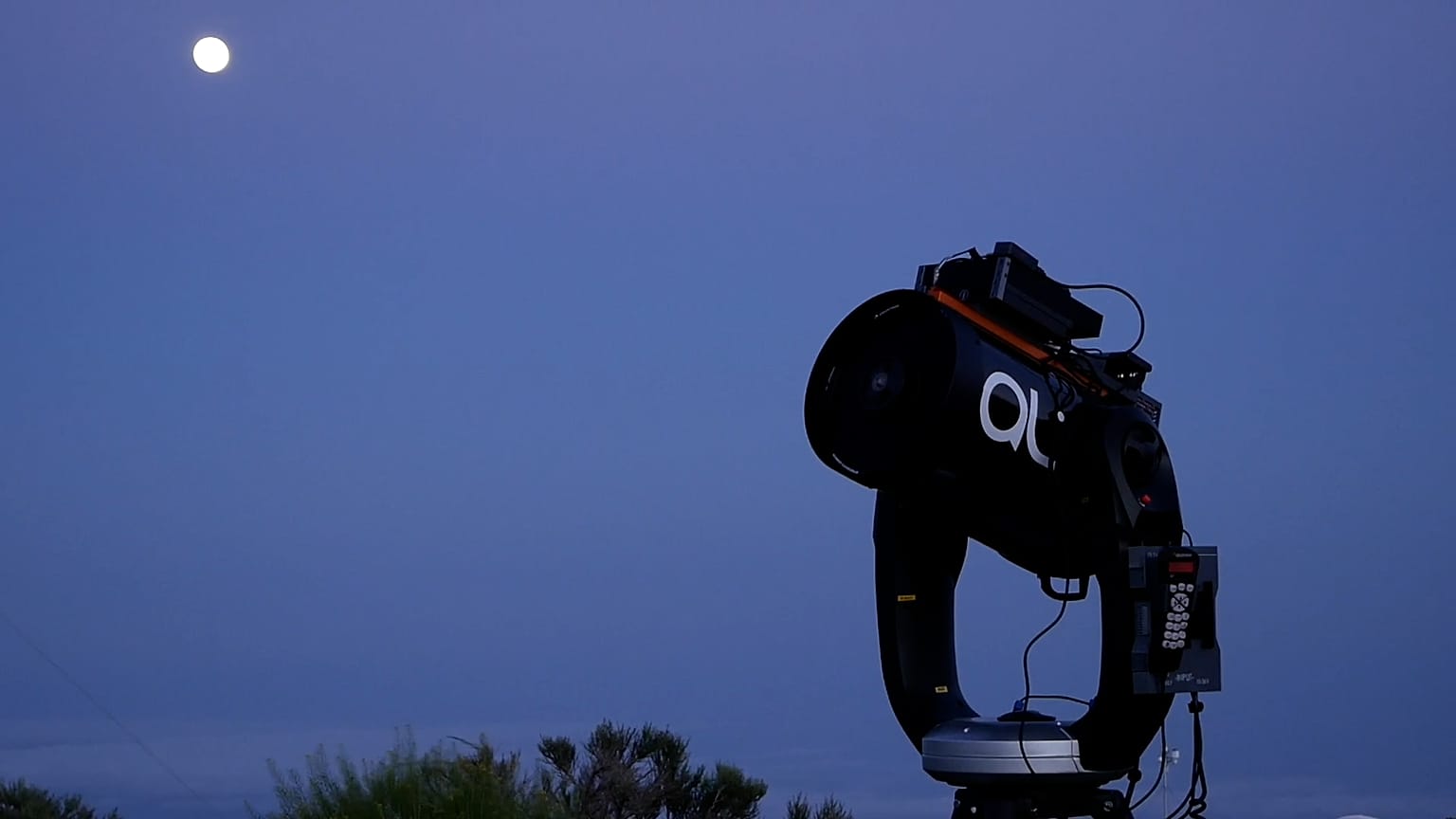
The facility, named Optical Ground Station, will use laser technology, developed by the Lithuanian company Astrolight, to communicate information with satellites as they pass overhead.
Its developers say the arctic desert climate in Kangerlussuaq makes a favourable weather condition for the novel technology to work well.
The narrow beams of light allow for faster communication than traditional radio methods and are far harder to jam or disrupt as they travel in very narrow, pinpoint beams.
Astrolight claims that the new laser base will be able to deliver more than 10 times faster and safer communications at a 70 per cent lower cost.
This means the download of terabytes of data can take place in less than a minute instead of being measured in hours.
The higher bandwidth also eliminates the usual bottleneck that forces satellites to compress or discard valuable material, allowing them to send down and preserve far more of what they collect.
“You don't necessarily want to get rid of the data which you think is not useful at the moment, because it might become useful at some point,” Laurynas Maciulis, Astrolight’s chief executive officer and co-founder, told Euronews Next.
He mentioned an example when satellite images first widely revealed war crimes in Ukraine in 2022.
“We would enable that kind of persistent monitoring of Earth daily,” Maciulis added.
Improving Europe’s autonomy
Astrolight said the new base helps Europe improve its defence sovereignty, which has become a priority for European authorities watching Russia expand electronic warfare capabilities, which include jamming communications and cutting undersea cables that carry data from ground stations.
In recent years, Europe has faced disruptions in the Arctic and Baltic Sea regions, including damage to undersea cables and repeated jamming of GPS systems aboard civilian flights.
In September, Germany and the United Kingdom warned that Russia was spying on their satellites.
Until now, Europe has relied heavily on radio-based stations in places such as Svalbard, a Norwegian archipelago, and northern Scandinavia.
The new laser station expands this system and reduces pressure on existing infrastructure.
ESA said the new station will also benefit search and rescue efforts thanks to its near-real-time and highly accurate information about environmental conditions, as well as scientific projects relying on large imaging sets with a high data footprint.
“With this project, we’re continuing to answer to European safety and security needs by transforming connectivity and secure communications from high latitudes,” Laurent Jaffart, ESA director of connectivity and secure communications, said in an announcement.
The number of satellites in low Earth orbit is expected to increase by 190 per cent within the next decade, according to a World Economic Forum report.
Due to the increasingly crowded satellite traffic, which makes the traditional radio communication tricky, the Lithuanian start-up aspires to expand its laser tech globally.
“This ground station in Greenland is just the first step for us. We want to build a global network,” Maciulis said.
Construction of the Arctic station is underway with plans to complete it in 2026.
For more on this story, watch the video in the media player above.