





























Also in this newsletter: European Commissioner for the Mediterranean Dubravka Šuica and Finnish Foreign Minister Elena Valtonen speak to Europe Today.
Good morning from Brussels. I’m Mared Gwyn.
 ADVERTISEMENT
ADVERTISEMENT
ADVERTISEMENT
European nations have resisted pressure from US President Donald Trump to join an international naval mission to force the reopening of the Strait of Hormuz – as they seek to distance themselves from the war that continues to rage in the Middle East.
The EU’s foreign policy chief Kaja Kallas said on Monday there was “no appetite” among EU foreign ministers to extend the mandate of the EU’s naval mission Aspides into the Strait, despite Trump directly appealing to European nations to secure the maritime artery in a bid to rein in global energy prices.
“Nobody wants to go actively in this war,” Kallas said after a ministerial gathering in Brussels. My colleagues Maïa de la Baume and Maria Tadeo have more.
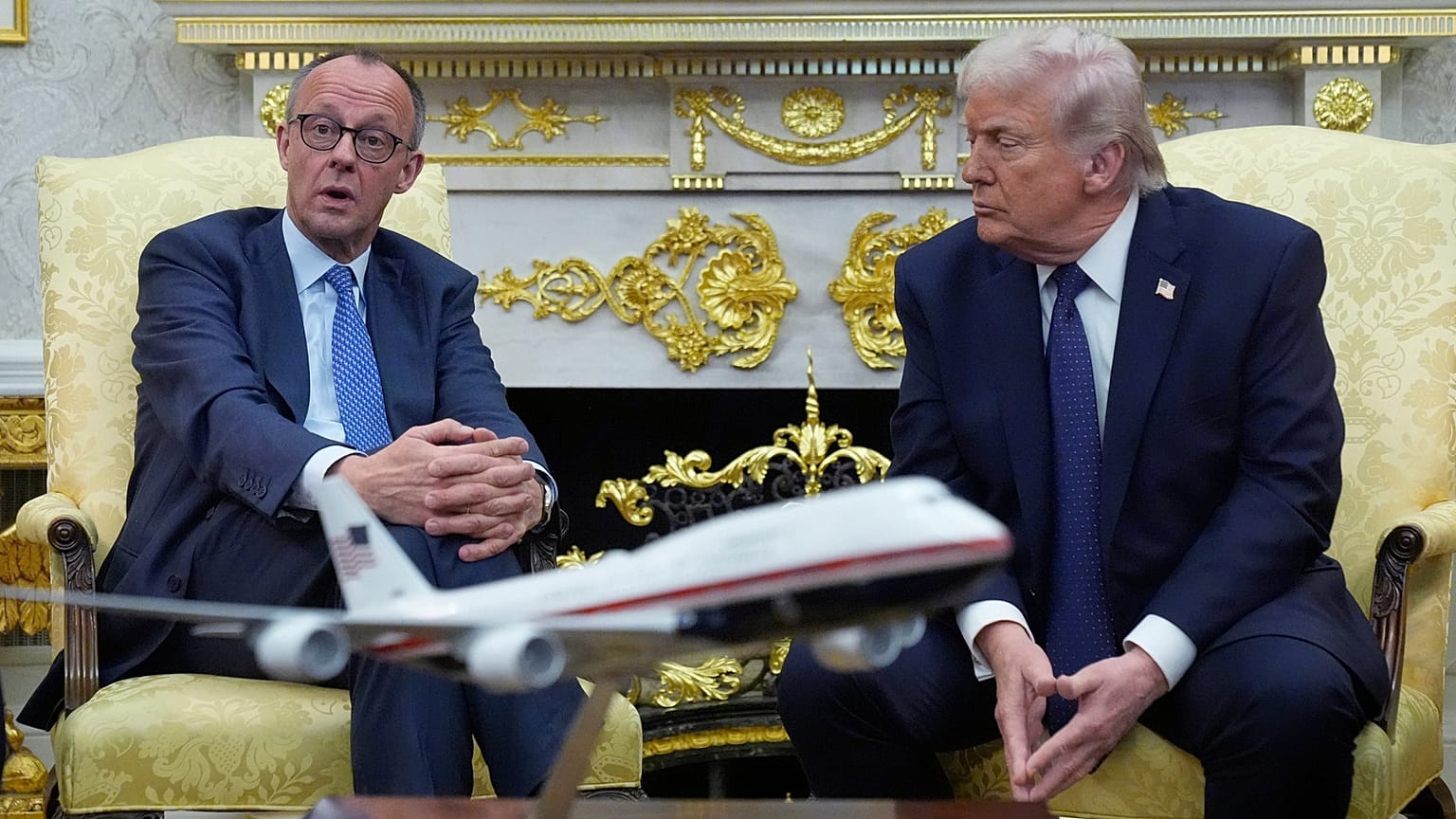
German Chancellor Friedrich Merz later rejected the naval mission, saying his government will “not participate in the war” and that the conflict has “nothing to do with NATO.” Last night, Trump repeated his threats of repercussions for the NATO Alliance if European allies fail to support his war against Iran.
Speaking to Euronews’ correspondent Shona Murray on Monday, Finnish Foreign Minister Elena Valtonen said NATO isn’t obliged to respond positively to Trump’s demand, saying the Alliance’s raison d'être is the defence of Europe and the North Atlantic.
"The North Atlantic Treaty is for the North Atlantic security and therefore that's our top priority", she told Shona in an interview, adding that NATO won’t be “dragged into a war” not of its choosing.
“NATO is indeed a defensive alliance, and we won't be dragged into any war of choice”, she said. Watch.
A similar message has been delivered from London, with UK Prime Minister Keir Starmer saying his country would not be drawn into “the wider war.”
Trump rebuked his allies’ response last night, saying: “For 40 years, we’re protecting you and you don’t want to get involved?”. He added that there were "some countries that greatly disappointed me.”
Asian countries have also expressed reluctance, with Trump now seeking to delay a planned trip to China to meet President Xi.
In other news this morning, Ukraine’s Deputy Prime Minister for European Integration Taras Kachka will meet the EU’s enlargement chief Marta Kos in Brussels this morning, as Kyiv continues to push for rapid accession into the EU despite capitals recently casting doubt over the Commission’s plans to grant the country so-called “reversed” membership.
Speaking to RBC Ukraine ahead of his visit, Minister Kachka said Ukraine is not demanding accession “in advance” but is “shortening the path in such a way that signing the accession treaty itself could become possible already in 2027.”
Brussels and Kyiv have drawn up an action plan to propel Ukraine on its path to EU membership despite official talks being blocked by Hungarian Prime Minister Viktor Orbán, framing the move as essential to provide Kyiv with future security
"This is not a question of doing something in advance. It is a question of whether we can do everything faster within a compressed timeframe," Kachka said.
Several EU diplomats have however rejected the notion that Ukraine could be ready to join the bloc next year.
EU has not ‘legitimised’ Trump’s Board of Peace, Commissioner Šuica says
European Commissioner for the Mediterranean Dubravka Šuica has responded to criticism of her presence at the first meeting of US President Donald Trump’s Board of Peace in February – just days before the US and Israel triggered the war with Iran – saying that the EU has “not legitimised” the controversial initiative.
Asked in an interview on Monday whether the Board was still credible amid the ongoing war which he triggered, Šuica said: “It’s hard to say whether it's credible or not.”
“At that moment, it was meant for the reconstruction of Gaza and I think, regardless of this situation developing in the Middle East, we shouldn't forget Gaza,” Šuica explained. “We have to concentrate on Gaza because the situation remains dire.”
Šuica sparked backlash among EU countries when she attended the meeting convened by Trump in Washington on 19 February as an observer, with France and Spain saying that her attendance was in breach of the EU treaties as the institution that she represents lacks the competence to set EU foreign policy.
A charter outlining the Board’s mandate, published before the first working meeting in February, makes no reference to Gaza or the Palestinian territories. It has been widely criticised for its global mandate that seemingly aims to supplant the United Nations, and for entrusting sweeping powers to Trump as lifelong chairman.
Pressed on the credibility of the Board in the wake of the war in Iran, Šuica said: “Just to clarify this situation, the invitation for the Board of Peace was received by President (Ursula) von der Leyen, and I was representing her at that meeting.”
"So it doesn't mean that we legitimised this board. We were there as we were just observing what was going on,” she said, adding that her institution is “not a member” of the Board and attended the first meeting “for courtesy reasons.”
Pressure mounts on Europe’s centre-right chief amid row over collaboration with AfD
German Chancellor Friedrich Merz has taken a firm stance on a brewing row over secret talks held between centre-right and far-right lawmakers in the European Parliament on key migration files.
An investigation by German news agency dpa found lawmakers belonging to the European People’s Party (EPP) were coordinating a draft deportation bill via a WhatsApp group with lawmakers belonging to Alternative for Germany (AfD).
"We do not cooperate with the far-right. We expect this to end, and we expect there will be consequences. This will be Manfred Weber's responsibility", Merz said, directly addressing the EPP chair Weber, who hails from the Bavarian sister party of Merz’s Christian Democratic Union (CDU).
Sources tell our European Parliament correspondent Vincenzo Genovese that such coordination between the centre-right and the far-right may not be an isolated case.
Speaking to Vincenzo from the European Parliament earlier this morning, MEP Tomasz Froelich of the AfD acknowledged there was a “certain form of cooperation at the technical level.”
Asked whether the cordon sanitaire, the firewall that prevents centrist groups from working with the far-right, had fallen in the European Parliament, Froelich said: “We don’t care about firewalls, because for us the interests of Germans and the Europeans come first,” calling on other groups to “respect the will of the people.”
More from our newsrooms
‘Iran must not be allowed to hold global economy hostage,' UAE minister tells Euronews. UAE Minister of State Lana Nusseibeh sent a clear message to EU governments in a Euronews interview, stating that stability in the region is closely tied to Europe’s own economic and security interests.Watch.
Why is the Strait of Hormuz critical to Europe? The closure of the Strait of Hormuz is affecting energy prices for industries and households, but the vital trade passage also accounts for a significant share of fertiliser shipments, threatening long-term food production. Marta Pacheco explains main issues affecting the Strait.
We're also keeping an eye on
- EU foreign policy chief Kaja Kallas gives a speech at a conference on Foreign Information Manipulation and Interference (FIMI)
- Kallas later addresses the European Parliament’s Foreign Affairs committee
- EU European affairs and environment ministers gather in Brussels
- European Parliament President Roberta Metsola meets German Chancellor Friedrich Merz in Berlin
That's it for today. Shona Murray and Vincenzo Genovese contributed to this newsletter. Remember to sign up to receive Europe Today in your inbox every weekday morning at 08.30.