




























Iran launched a salvo of missiles across the Middle East, just a few hours after US President Donald Trump claimed Washington and Tehran were "in negotiations right now".
Iran targeted countries across the Middle East with a fresh volley of missiles Wednesday, hours after US President Donald Trump signalled tentative progress in diplomatic efforts to end the war.
 ADVERTISEMENT
ADVERTISEMENT
ADVERTISEMENT
The war that began on 28 February expanded with Tehran's strikes throughout the Middle East, sending world energy markets into a tailspin.
Iran fired a salvo of "precision-guided" missiles and drones at Israel and bases hosting US forces in Kuwait, Jordan and Bahrain, the country's Revolutionary Guards (IRGC) said early Wednesday.
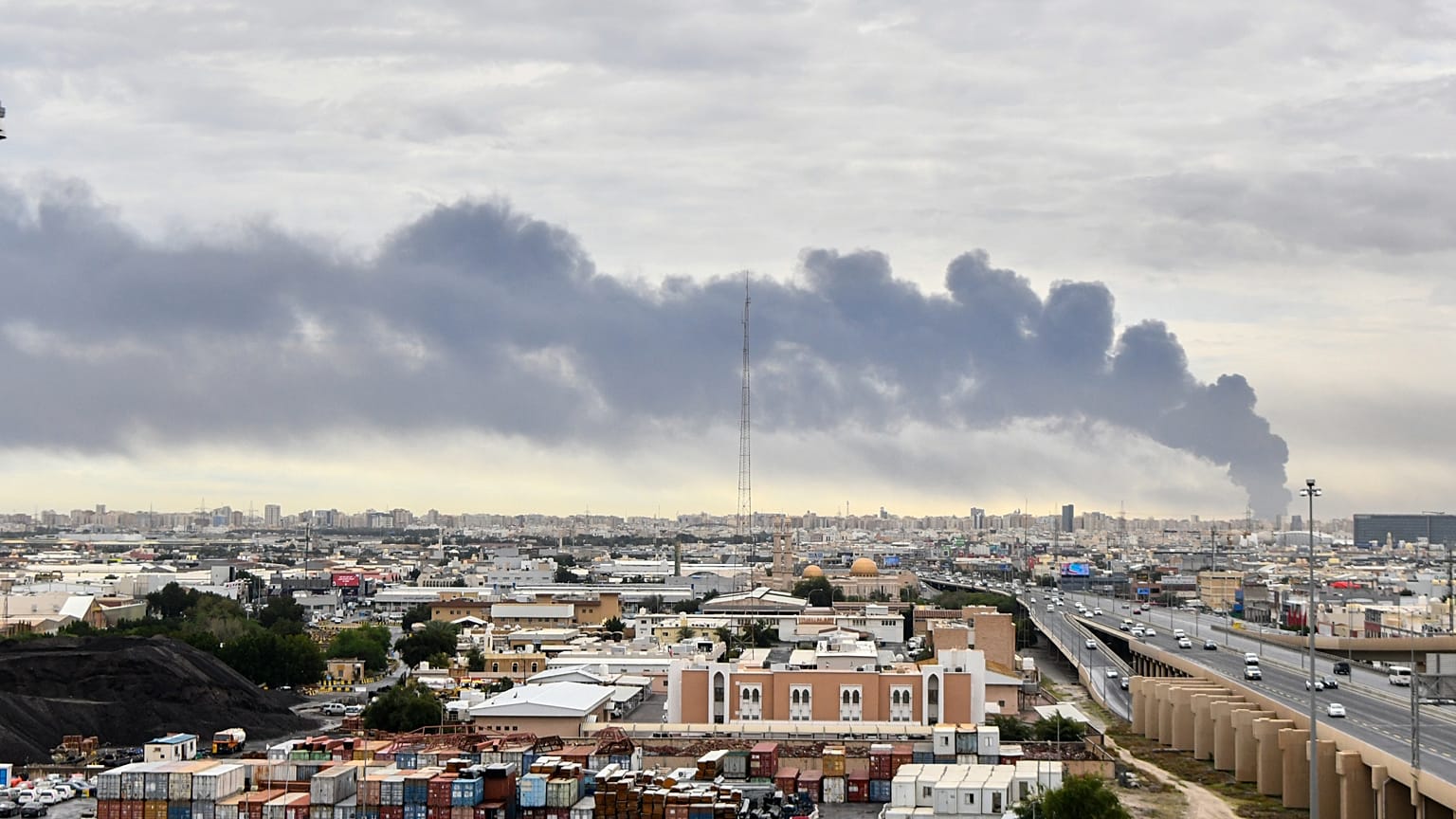
Drones hit a fuel tank at Kuwait International Airport sparking a fireball, while authorities in Jordan reported shrapnel falling near the capital Amman and air raid warnings rang out in Bahrain.
Iran has lashed out at Gulf nations, long seen as a relatively safe haven in a volatile region, hammering the tourism industry and crippling global air travel as their major hubs come under attack.
The war has also drawn in Lebanon, with Israeli forces aiming to take control of ground up to the Litani River, around 30 kilometres from the border, stepping up its campaign against Iran-backed Hezbollah militants.
Israel also said it was launching fresh missile strikes on the "infrastructure of the Iranian terror regime".
'Very big present'
As the missile and drone attacks showed little sign of respite, Trump appeared to be ramping up efforts to bring the war to an end.
The US president, whose daily statements on the war have swung from threatening to conciliatory, said Washington was "in negotiations right now" with Tehran.
He told reporters in the Oval Office that Iran had given him "a very big present worth a tremendous amount of money", which he said demonstrated that "we're dealing with the right people".
Trump did not elaborate further but said it related to the Strait of Hormuz, which Iran has largely blockaded after US and Israeli strikes, sending global energy prices soaring.
Several media reported Trump had sent a 15-point plan to Iran via Pakistan, which has offered to mediate a possible end to the war.
Trump's cryptic statements on his eagerness to talk with Iran included repeating a claim that Tehran has "agreed they will never have a nuclear weapon".
Iran had agreed in 2015 to broad restraints on its contested nuclear programme in a deal that the US abandoned during Trump's first term.
Despite the US president's stated hopes for a deal, The Wall Street Journal reported that Washington is planning to send a further 3,000 soldiers to the Middle East.
Iranian officials have yet to confirm any formal talks.
It remains unclear who — if anyone — is in control in Tehran, amid continued reports that the IRGC has been operating in a decentralised way following the death of Ayatollah Ali Khamenei and the lack of public appearances by his son and successor Mojtaba Khamenei.
Tehran to allow 'non-hostile' ships pass through Hormuz
As the warring parties traded strikes, focus remained on the strategic Strait of Hormuz, the key route through which one-fifth of the world's crude oil flows.
Tehran, in a message circulated by the International Maritime Organisation (IMO), assured safe passage through the strait to "non-hostile vessels".
However, the IMO cited a statement from Iran's foreign ministry as saying no passage would be granted to vessels belonging to the US and Israel.
The economic impact of the crisis has begun to bite around the world, with governments looking to cut energy consumption and airlines scaling back flights.
But Iran's pledge, along with Trump's more conciliatory tone, pushed stocks higher and sent oil prices lower in Asian trading.
The wider impact of the Strait of Hormuz's choking was highlighted by a warning from a top WTO official in an interview with AFP.
"Fertilisers are the number one issue of concern today. If there is no more fertiliser, there is an impact on quantities but also on prices," Jean-Marie Paugam told AFP in an interview.
"The effect compounds the following year: harvests shrink and prices rise."