





























President Donald Trump had told the agency it has until 2030 to build a permanent lunar base.
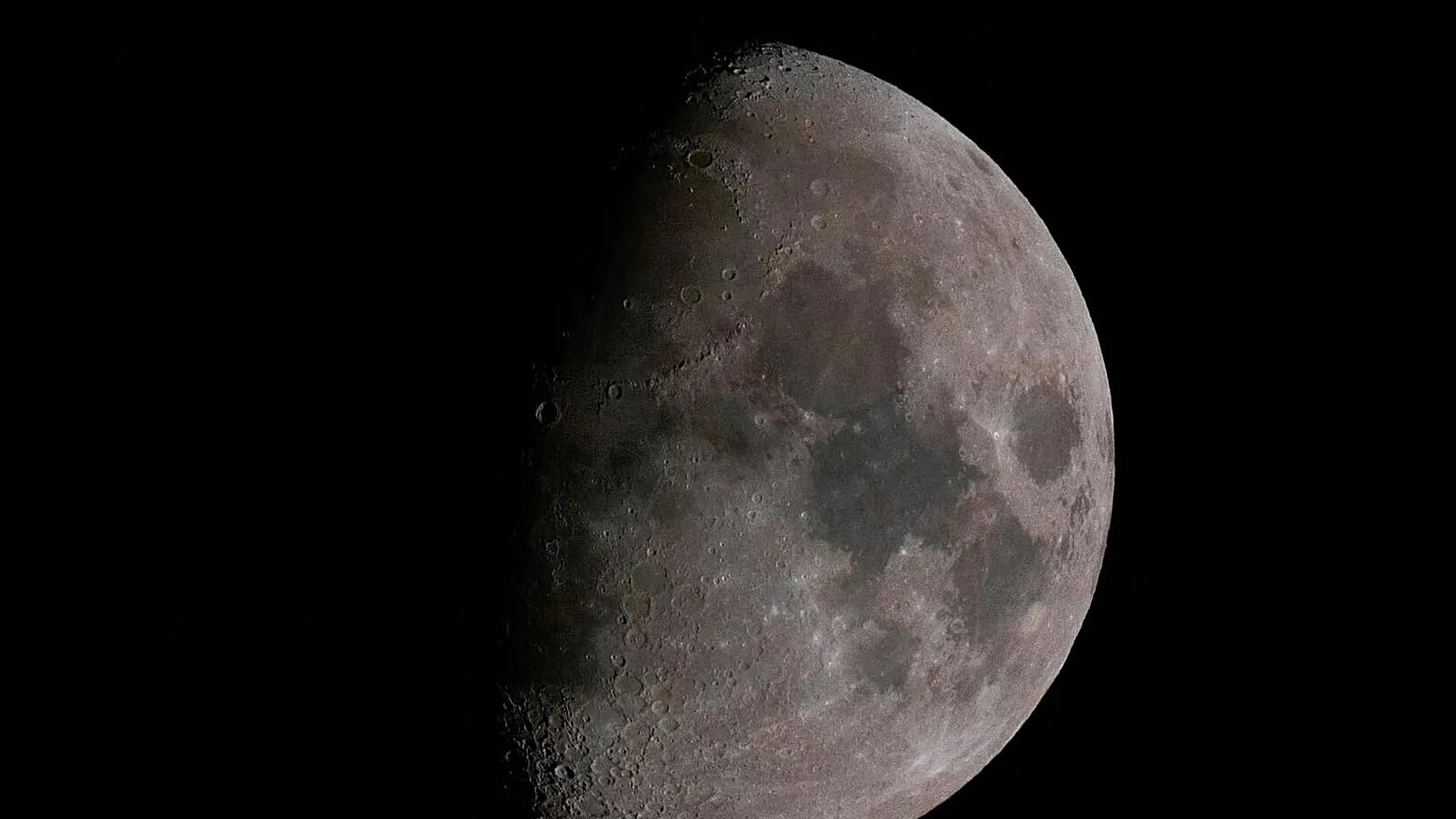
The United States’ National Aeronautics and Space Administration (NASA) is overhauling its space exploration strategy with new plans to return humans to the Moon and build a permanent base.
 ADVERTISEMENT
ADVERTISEMENT
ADVERTISEMENT
Speaking at NASA’s “Ignition” event, officials outlined plans to accelerate lunar missions, including testing nuclear-powered crafts in space and detailing some of their upcoming scientific missions as a way to maintain the United States' lead in the new Moon race.
“The clock is running in this great‑power competition, and success or failure will be measured in months, not years,” said NASA Administrator Jared Isaacman in a formal statement on Tuesday.
NASA announced the changes as a way to align the agency’s work with the US’ National Space Policy.
The policy released last December directed NASA to return astronauts to the Moon, reform the country’s role in commercial space operations, and lead the world in space exploration.
A phased plan for a Moon base
On Tuesday, NASA announced a phased plan to build a permanent base on the Moon.The initial missions will send rovers, instruments, and technology to the Moon’s surface, which will study how power can be generated on the satellite planet. Scientists will also examine how communications could work on the Moon and how to navigate its surface.
The next phase will be to build partially livable structures on the Moon and establish regular deliveries. This includes a collaboration with Japan’s Aerospace Exploration Agency (JAXA) by using their pressurised rover for deliveries.
The final phase will see larger equipment transfers and eventually send humans up to support a continuous human presence on the Moon, moving away from short visits to a permanent base.
To do this, the agency has already signed partnerships with Italy and Canada and will be signing additional contributions in “habitation, surface mobility, and logistics”.
An executive order from December directs NASA to build a permanent lunar outpost by 2030, which will support a sustained presence and will help future Mars missions.
NASA is instead pausing plans for the Gateway space station to focus on building its permanent Moon base.
Planned for 2027, Gateway was supposed to be a staging point for astronauts, research and cargo, which would help establish longer stays on the Moon and Mars.
The agency also changed the mission objectives for Artemis III. Scheduled for 2027, the mission that was initially scheduled as a Moon landing will now test spacecraft systems and operations in Earth orbit.
The subsequent Artemis IV mission aims to bring humans to the surface of the Moon in 2028.
After Artemis III, NASA said it will launch Moon missions every six months and will attempt at least one landing every year.
Nuclear-powered craft in space
Beyond the Moon, the agency will launch the first nuclear-powered interplanetary spacecraft that will fly to Mars before the end of 2028.
Called the “Space Reactor-1 Freedom,” the craft will test a technology called nuclear electric propulsion, which enables efficient, high-power travel in deep space where solar panels are ineffective.
When the craft arrives on Mars, it will release a group of small helicopters called the Skyfall payload, which will explore the planet’s surface.
The eventual launch of Space Reactor-1 will test the safety rules and launch procedures for additional launches, the agency said.
New scientific missions
NASA also announced some upcoming scientific missions.
The agency announced the Nancy Grace Roman Space Telescope, a research program that will advance the studies of dark energy, the matter that is thought to cause the expansion of the universe.
Dragonfly will launch a nuclear-powered octocopter in 2028, a type of drone that is powered by eight rotors that help it fly. The octocopter will arrive at Saturn’s moon Titan in 2034 to explore its complex, organic-rich environment.
In 2028, NASA will be launching the Dragonfly mission, which will send a nuclear-powered robot with eight rotors to Titan, Saturn’s largest Moon. When it arrives in 2034, it will fly across Titan’s surface and search for clues about the Moon’s chemistry and terrain that could support life.
NASA will send the Rosalind Franklin Rover, built by the European Space Agency (ESA), to Mars in 2028. Onboard the rover is a mass spectrometer, which will detect and analyse organic molecules.
Separately, a new Earth science mission launching next year will study the development of convective storms to improve forecasts of extreme weather events up to six hours in advance.