




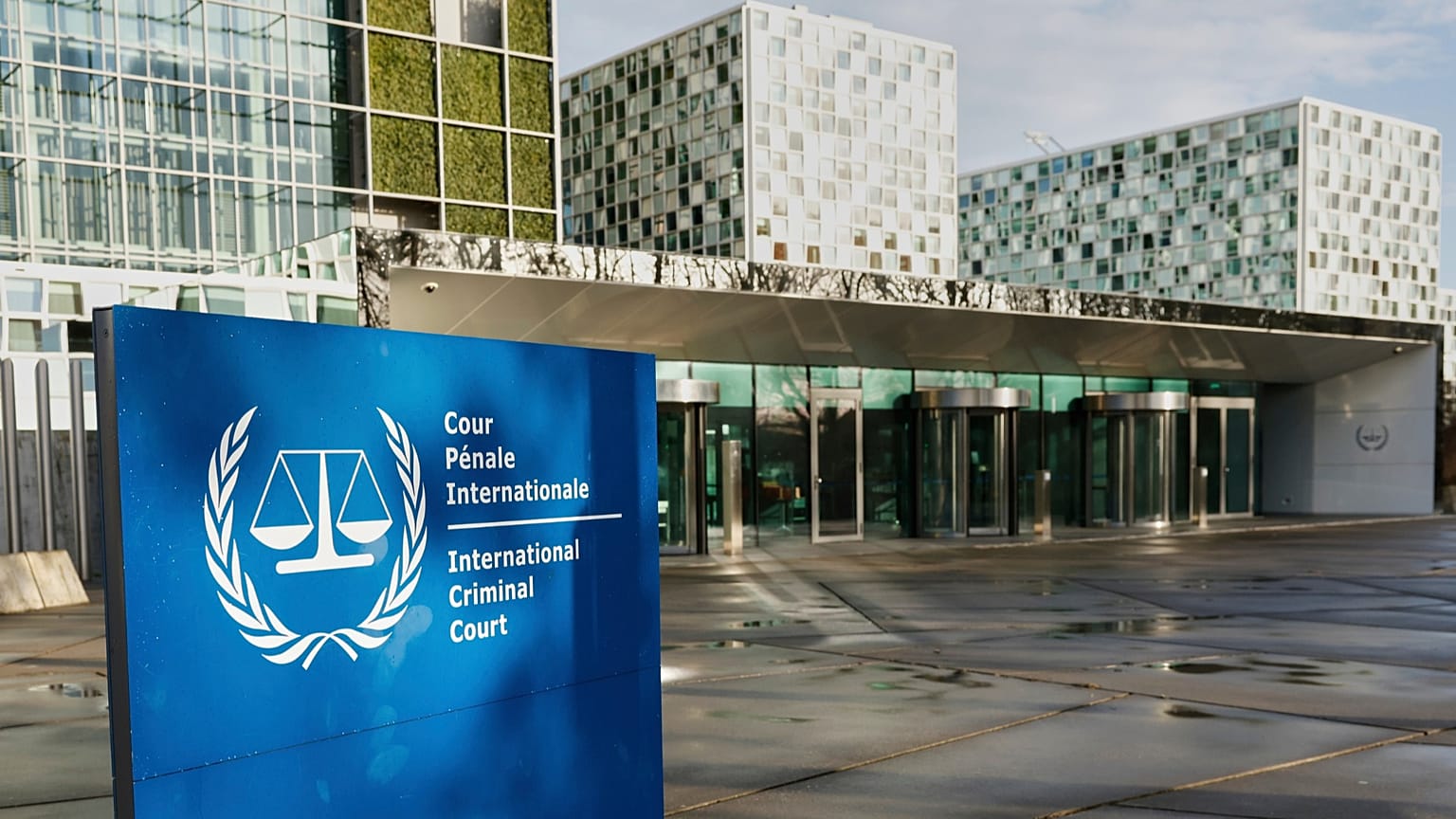













French ICC Judge Nicolas Guillou is living a nightmare after the US sanctioned him and other judges for issuing an arrest warrant against Israeli Prime Minister Benjamin Netanyahu, once again exposing the risk of Europeans' reliance on American services.
On 20 August 2025, International Criminal Court Justice Nicolas Guillou went from a respected judge to a pariah for American companies.
 ADVERTISEMENT
ADVERTISEMENT
ADVERTISEMENT
That day, US President Donald Trump put him under US sanctions for authorising the issuance of an arrest warrant against Israel's Prime Minister, Benjamin Netanyahu, and its Minister of Defence, Yoav Gallant, over their role in the destruction of the Gaza Strip.
Since then, Guillou’s life has become a nightmare – and his experience illustrates just how dependent Europeans are on US services as transatlantic tensions rise.
Gillou and his family are banned from US territory, but the sanctions have hit him hard at home, in Europe. He cannot use most credit cards, as Visa and Mastercard dominate the market; most digital services are off-limits, and even online orders can be blocked if an American intermediary – like the delivery service UPS – is involved.
“What is at the heart of the sanctions is the prohibition on any US individual or legal entity from providing services to, or receiving services from, a sanctioned person,” Guillou told journalists on Tuesday.
Some banks practice “over-compliance,” automatically rejecting payments from sanctioned individuals.
“This has happened to some of my colleagues, whose transfers or purchases were refused because the bank on the other side of the transaction declined the transfer from a sanctioned person,” the French judge said.
“The most problematic situation is when it affects services for which there is actually no European alternative.”
Guillou recounted how he booked a hotel in France through the US travel company Expedia, only for the reservation to be cancelled hours later because he was under sanctions.
Currently, 11 judges at the International Criminal Court are in the same situation.
'Sovereignty shield'
The judge is calling on the EU to develop sovereign tools, including the digital euro, to shield Europeans from extra-territorial US measures.
“The only way to effectively respond to these sanctions is to build a response at the European level, because it needs to be economically strong, with a sufficiently powerful political and economic scope,” he said.
The EU, according to Guillou, must legislate “to create a true European sovereignty shield” that guarantees the continuity of European services for actors in Europe.
He warned on Tuesday that US sanctions can erase civil life for those who live entirely online.
“I’m 50 years old; I’ve already lived through the ’90s. It’s not easy, but I know how to handle it. But if sanctions were to hit young people today, who are 25 and have their entire lives online, I think the sanctions I’m experiencing would be a true civil death for them.”
He sounds the alarm for other judges, politicians, or officials at risk of sanctions, highlighting a potential chilling effect in their work.
Several EU civil servants have been publicly named in US reports for working on digital regulations targeted by the White House.
Even former EU Commissioner Thierry Breton was banned from obtaining a US visa for creating the Digital Services Act, which imposes fines and rules on content moderation for major platforms – in particular big tech corporations based in the US.