















If breaches are confirmed, Shein could face hefty fines, as the EU steps up enforcement of its digital rulebook against large tech companies.
The European Commission has launched a formal investigation into Chinese fast-fashion online giant Shein under its Digital Services Act (DSA).
 ADVERTISEMENT
ADVERTISEMENT
ADVERTISEMENT
In a statement on Tuesday, the Commission said the probe centres on three core concerns: the sale of illegal products on Shein's platform — including child sexual abuse material such as child-like sex dolls — the use of addictive design techniques to keep users engaged, and a lack of transparency around how the platform recommends products to consumers.
The Commission will examine whether the company has breached key obligations under the EU's flagship online content law, which has applied to major platforms since late 2023.
What is the investigation focusing on?
The investigation centres on three main areas:
Firstly, it will scrutinise addictive design and user wellbeing, meaning features that encourage excessive engagement on the platform, such as reward systems that offer points or incentives to users.
Under the DSA, very large online platforms must assess and mitigate risks linked to their services.
Secondly, the investigation will assess whether Shein has adequate systems in place to prevent the sale of illegal products within the EU. This includes content that could amount to child sexual abuse material (CSAM).
Shein already found itself in the Commission’s crosshairs in November last year, following reports of childlike sex dolls and other illegal products being sold in France.

A third strand of the probe concerns how Shein recommends products and content to users. Under EU rules, platforms must clearly explain the main parameters behind their recommender systems and offer at least one option that is not based on profiling.
What happens next?
The Commission will now carry out an in-depth investigation, which may include further requests for information, interviews and monitoring measures.
If breaches are confirmed, Brussels can impose interim measures, accept binding commitments from the company or adopt a non-compliance decision that could lead to hefty fines.
There is no fixed deadline under the DSA for concluding proceedings.
"The Digital Services Act keeps shoppers safe, protects their wellbeing and empowers them with information about the algorithms they are interacting with," Henna Virkkunen, executive vice-president for tech sovereignty, security and democracy, said in a statement.
"We will assess whether Shein is respecting these rules and their responsibility," she added.
Shein response
In a statement to Euronews Next, Shein said it takes its obligations under the DSA "seriously" and has "always cooperated fully" with the European Commission and Coimisiún na Meán.
"Over the last few months, we have continued to invest significantly in measures to strengthen our compliance with the DSA. These include comprehensive systemic-risk assessments and mitigation frameworks, enhanced protections for younger users, and ongoing work to design our services in ways that promote a safe and trusted user experience," reads the statement.
Following issues identified last year, Shein said it has "accelerated the rollout of additional safeguards" around age-restricted products and enhanced its detection tools.
The company added: "Protecting minors and reducing the risk of harmful content and behaviours are central to how we develop and operate our platform. We share the authorities' objective of ensuring a safe and trusted online environment and will continue to engage constructively."
Further controversy
The investigation comes amid growing controversy and backlash around the Chinese retailer's expansion into Europe.
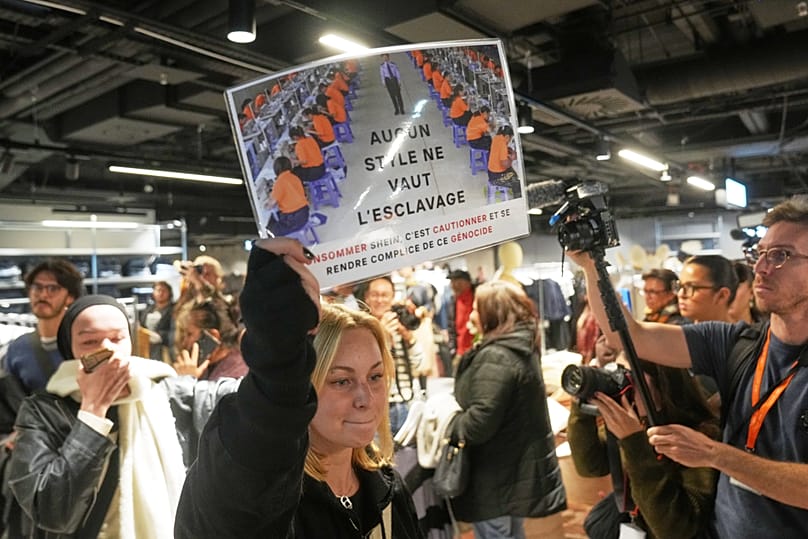
In November last year, Shein opened its first permanent store in Paris inside the historic BHV, one of the French capital's most iconic department stores.
The launch sparked major backlash, with an online petition against the opening gathering more than 120,000 signatures. Child-protection and environmental groups criticised the brand, and dozens of protesters gathered outside the store.
Founded in China in 2012 and now headquartered in Singapore, Shein has rapidly grown into a global fast-fashion powerhouse.
Selling mostly Chinese-made clothes and products at bargain prices, the retailer has drawn criticism over allegations that its supply chains may be tainted by forced labour, including from China’s far-west Xinjiang province, where rights groups say serious human rights abuses were committed by Beijing against members of the ethnic Uyghur group and other Muslim minorities.
This story was updated with Shein's response.