

















US President Trump’s threat of additional tariffs to force the acquisition of Greenland highlights a persistent concern: Europe is lagging in the global competition for rare earths and critical minerals. Has it already lost the race?
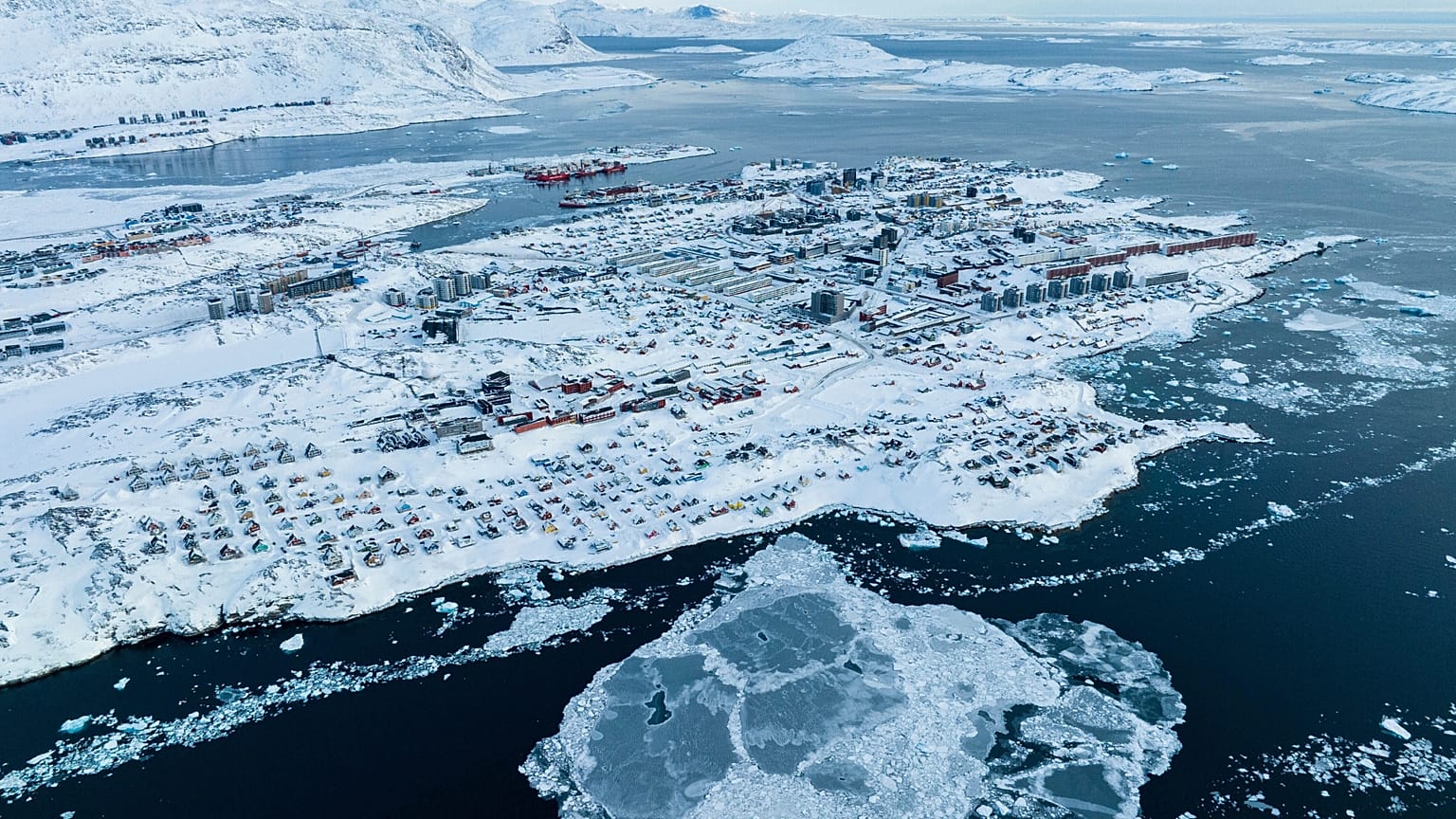
On Tuesday morning, Donald Trump shared a digitally edited image of himself planting a US flag on Greenland, showing he is still interested in buying the island. Greenland has large reserves of valuable raw materials, which is why it attracts attention.
 ADVERTISEMENT
ADVERTISEMENT
ADVERTISEMENT
This raises a larger issue: Europe depends heavily on external suppliers for these resources, while the US, China, and Russia are using them to strengthen their positions. Europe’s reliance on imports is becoming a real problem.
China dominates most of the global rare earth supply chain, controlling about 60-70% of mining and up to 90% of processing capacity. In contrast, Europe has remained stagnant.
According to the European Commission’s latest data (2024), the EU currently imports 95% of its rare earth materials, which are crucial for electric vehicles, daily technology and defence systems. Recycling rates remain below 1%, and although the bloc has set a series of goals for 2030, it is unlikely to meet them without major acceleration.
This means that the very technologies meant to enable Europe’s green transition depend on other countries, leaving the EU highly exposed to economies such as China and Russia.
Whilst global competitors are tightening their grip on supply chains, Europe is lagging in securing access to rare earths.
Still, EU policymakers maintain that the situation is not irreversible. Despite starting from a weak position and being in the early stages of reform, the bloc aims to increase independence, achieve leadership, and deliver an efficient clean energy transition.
What are rare earths, and why does everybody want them?
“Rare earth materials” are a group of 17 metallic elements (15 lanthanide elements, plus scandium and yttrium) with unique properties essential for clean energy and high-tech manufacturing.
As their name suggests, they are scarce, and their extraction and treatment are complex. Deposits only exist in a few locations worldwide, including Greenland, which has recently become the focus of geopolitical interest.
Rare earths have powerful magnetic, light-emitting, and chemically reactive properties. These characteristics make them critical for developing high-performance technologies across key sectors such as energy, electronics, and defence.
In clean energy and transport, rare-earth magnets are used in EVs to make them lighter, more powerful, and efficient. They also allow wind turbines to generate more energy from each rotation. High-efficiency generators, power electronics, and grid-balancing systems rely on rare-earth materials to help electricity networks handle growing levels of intermittent solar and wind power.
Beyond energy, they are key in lasers, photonics, fibre-optic networks, and semiconductor tools for data centres, telecom, and advanced computing.
The same high-performance magnets power industrial robots, CNC machines, and automated manufacturing equipment.
They also play a critical role in defence and aerospace, enabling radar, sonar, precision-guided munitions, jet engines, night-vision devices, satellites, and space-grade electronics that can withstand extreme environments.
And it’s not just about industrial use or geopolitics: rare earths are embedded in European’s everyday consumer products. Smartphones, laptops, headphones, speakers, and modern displays all rely on rare-earth phosphors, magnets, and polishing powders to deliver good sound quality, bright screens, compact designs, and long-lasting performance.
They are also vital in life-saving medical tools: they are used in MRI scanners and advanced medical imaging equipment, as well as for environmental tools like catalytic converters and industrial catalysts for pollution control and water treatment systems.
Why is Europe losing the race for rare earths?
So, given their importance, why is Europe so behind? One reason is that the continent never built an integrated industrial chain. China, in contrast, started treating rare earths as a strategic sector decades ago and invested across every step of the value chain, from mining and separation to refining, metals, alloys, magnets, and downstream manufacturing.
Europe took a different path. Over time, it allowed early processing and magnet-making capacity to fade, failed to develop domestic refining capability, and became increasingly reliant on cheaper imports. As a result, the EU now depends on foreign suppliers for nearly every critical stage of production
Structural barriers within Europe have severely widened this gap. The EU currently has lengthy permitting procedures, fragmented regulations, and strong local opposition that slows or blocks mining and refining projects.
Environmental restrictions are stringent, raising costs and extending timelines. At the same time, public financing is scattered across multiple national programmes, while investment incentives have been weaker than in competitor regions.
These frictions discourage the private sector from building the large-scale facilities needed to compete on the global stage. The EU only started treating rare earths as a strategic priority after 2020. China began doing so in the 1980s.
It is therefore no surprise that China now dominates nearly all segments of the chain and has built integrated clusters where miners, refiners, alloy makers, magnet factories, and end-product manufacturers operate side by side.
State-owned companies coordinate production, financing, and research and development (R&D), creating powerful economies of scale. Long-term strategies, low-cost production, and a willingness to use export controls to steer global supply have further strengthened Beijing’s position.
It’s a degree of integration that makes it extremely hard for late movers like Europe to catch up, and leaves the EU instead almost entirely dependent on Beijing. Today, 98% of the EU's rare-earth magnets come from China, along with 85% of its supply of rare-earth elements. And it’s not just China; the EU is up against a group of economies such as the United States, Australia, Japan, South Korea, and Canada, which have moved faster and more decisively.
The US is rapidly scaling mining, refining, and magnet production with large federal subsidies, tax credits, and guaranteed offtake agreements. Australia has strong upstream production and close partnerships with Japan and the US.
Japan, meanwhile, dedicated over a decade developing alternative supply routes after China's 2010 export restrictions and is now a global leader in magnet technology.
South Korea and Canada are also expanding aggressively, leveraging coordinated industrial policy and strong links to the US supply chain.
What is the EU doing to advance in the race?
The EU is rolling out a combination of new laws, funding tools, trade policy, and international partnerships to secure rare earth supplies by 2030, reduce dependence on China, and maintain high environmental standards. The centrepiece of this strategy is the Critical Raw Materials Act (CRMA), announced by Commission president Ursula von der Leyen in 2023 and now in force. Alongside it is the newer RESourceEU package, along with strategic projects, recycling efforts, and international supply deals, implemented in 2025.
The CRMA sets clear targets for 2030 targets. At least 10% of demand for strategic raw materials demand should be extracted within the bloc, 40% processed domestically, and 25% sourced from recycling. At the same time, imports from any single non-EU country are capped at 65%. These targets aim to boost resilience, promote domestic industries, and reduce the risks of over-dependence on third countries.
Under the CRMA framework, the Commission designates "Strategic Projects" across extraction, processing, magnet manufacturing, and recycling that receive priority permitting, a single administrative contact, and structured access to EU financing. This accelerates project timelines and improves access to funding and regulatory support.
In 2025, the Commission launched the RESourceEU initiative and Action Plan to close the gap between CRMA ambitions and on-the-ground projects, focusing on a few value chains, including rare earth elements and rare-earth magnets.
RESourceEU aims to mobilise about €3 billion for mature projects starting by 2029. By supporting projects such as Vulcan Energy’s lithium venture and Greenland Resources’ molybdenum mine, the policy hopes to catalyse private investment and demonstrate EU commitment, with similar support planned for rare-earth projects to speed their market entry. away from China
At the same time, the EU is negotiating and deepening strategic partnerships on critical raw materials with countries such as Canada, Chile, Kazakhstan, Namibia, and Ukraine to secure access to non-Chinese supplies of rare earths and related materials.
New trade and export-control tools are being developed, partly in response to China’s export restrictions on rare earths and magnet-making equipment. Measures such as joint purchasing and stockpiling are intended to strengthen supply security and help the EU better manage and anticipate supply disruptions.
Policy packages encourage recycling rare earths from wind turbines, EV motors, and electronics, supported by the CRMA’s 25% target and R&D funding. The goal is to reduce primary extraction demand, create a circular economy, and ensure the long-term sustainability of EU supply.
The EU is investing in research on substitution, such as motors with fewer or no rare earths, and more efficient magnet technologies to lower reliance on mined rare earths. This makes supply chains less vulnerable to external shocks over time.
For Strategic Projects, the CRMA has set indicative permitting timelines: about 27 months for extraction and 15 months for processing or recycling and coordinates financial and regulatory support through a Raw Materials Mechanism. These steps aim to minimize bureaucratic delays and improve project delivery speed without compromising oversight.
The European Commission has stressed that environmental directives and public participation rights remain in force, ensuring the push for rare earths aligns with EU nature protection, water, and climate laws. This approach aims to balance urgent supply needs with existing legal and environmental safeguards.
What does the future hold for rare earths in Europe?
Demand for rare earths in Europe is expected to rise sharply in the coming decade. Even with expanded processing and recycling capacity, the EU is unlikely to achieve self-sufficiency by 2030 and will remain reliant on imports.
The future of rare earths in Europe will likely see rising demand, only partial self‑sufficiency by 2030, and continued reliance on imports even if EU mining, processing and recycling expand.
Policy is moving fast, but many experts, including members of the European Parliament, say Europe will struggle to meet its 2030 rare‑earth targets without a stronger push on projects and public support.
The EU wants to mine at least 10% of its key raw materials, including rare earths, in Europe by 2030. The rest should come from recycling and partners outside China.
Projects like LKAB in Sweden and more refining and magnet production could eventually supply about 20% of the EU’s rare earth demands by the end of the decade.
However, slow permits and local resistance mean much of this production will not arrive until the 2030s.
Recycling and circular economy efforts will grow and supply more after 2030, but Europe will still need to import rare earths.