

















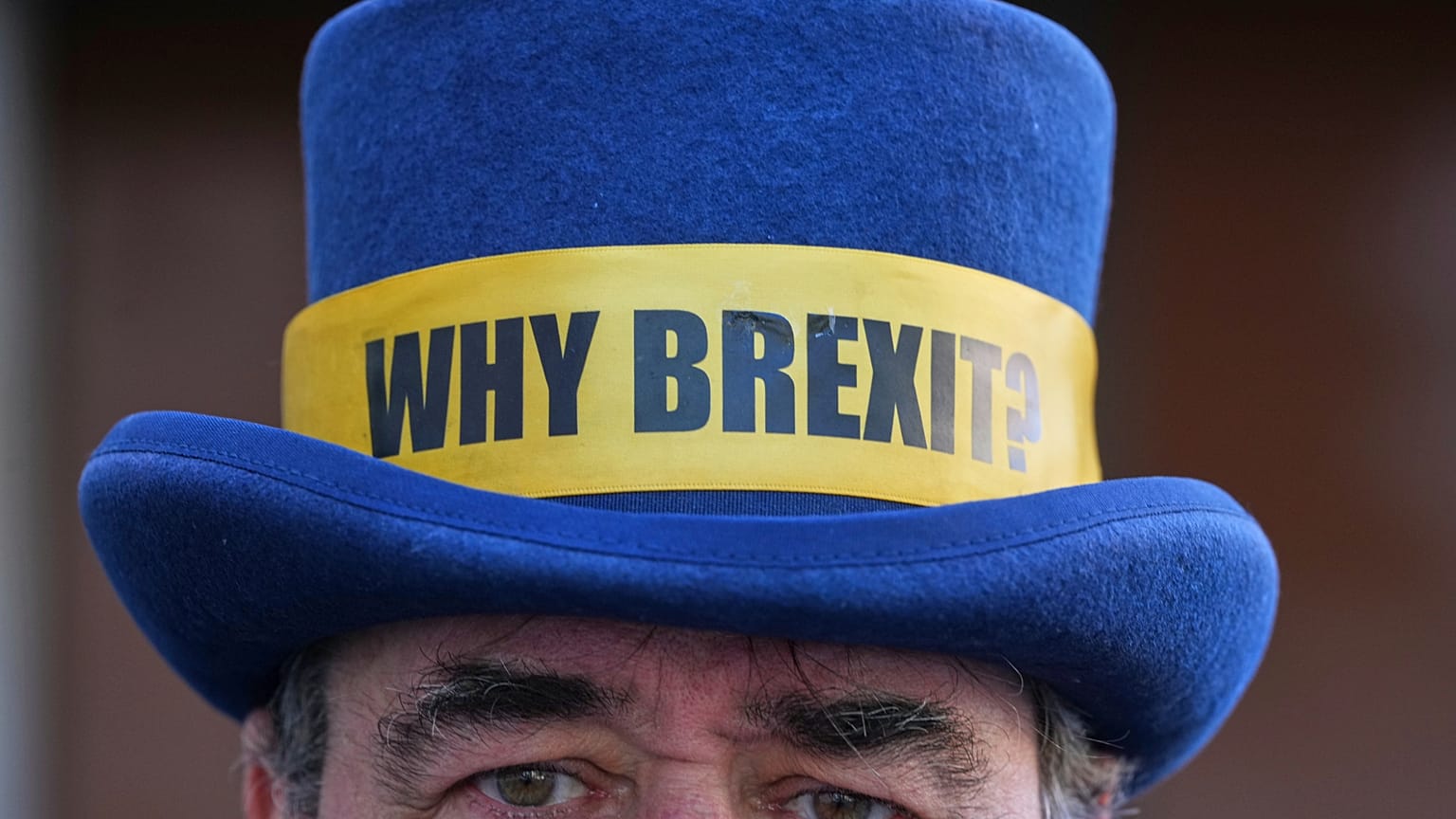














Brexit is back making headlines in the UK after the Liberal Democrats received support for creating a bespoke customs union. Where does the UK currently stand, and what benefits would such an agreement bring?
The Brexit debate has been revived in Britain, after more than 100 MPs backed a bill tabled by the centrist Liberal Democrats party — which holds the third most seats in the UK Parliament — calling for a bespoke UK-EU customs union.
 ADVERTISEMENT
ADVERTISEMENT
ADVERTISEMENT
Such a deal, according to the Liberal Democrats, would cut down on red tape and trade barriers between the EU and UK by aligning customs procedures.
But to be enshrined into law, the bill would need government backing, which, despite receiving support from a dozen MPs from the ruling centre-left Labour Party, remains unlikely.
Starmer has ruled out re-entering a customs union — whether bespoke or official — arguing that doing so would "unravel" trade deals the UK has already made with other countries, such as the US.
What does the current UK-EU free trade agreement look like?
The UK formally exited the EU's customs union, along with the single market, at the end of December 2020 — signing the Trade and Cooperation Agreement — more than four years after the Brexit referendum in 2016.
Under the agreement, goods moving between the EU and UK qualify for zero tariffs should they meet the rules of origin criteria, meaning they must be made with primarily local components. Despite this, a number of regulatory and customs checks remain in place.
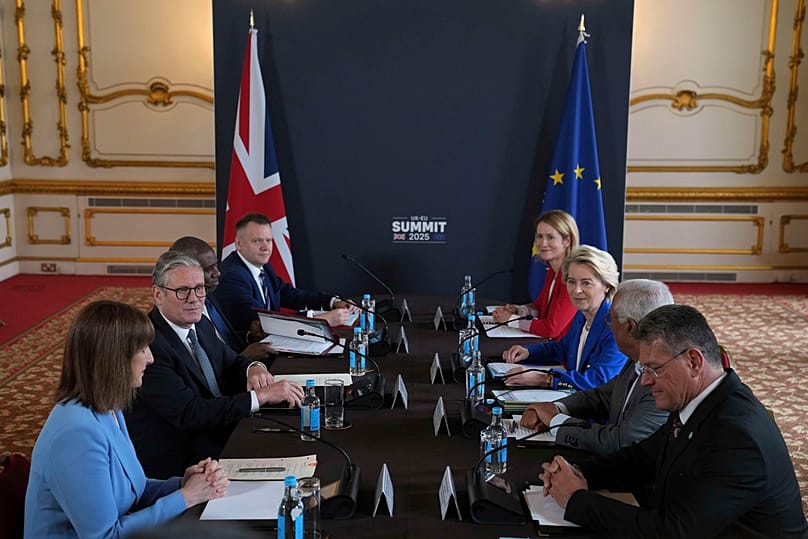
As part of Starmer’s push to strengthen ties with the EU, after relations severely deteriorated under successive right-wing Conservative governments, the UK-EU reset meeting in May committed to a range of plans, including a phytosanitary deal, which is set to reduce checks on food products.
Liberal Democrat MP Al Pinkerton, who tabled the bill on Tuesday, believes his proposal would relieve British businesses from an onslaught of additional paperwork triggered by Brexit. "British businesses are begging for this," Pinkerton told Euronews' fact-checking team, The Cube.
"Two billion pieces of paperwork have been added since 2021, that’s adding millions of pounds worth of costs to British businesses," he said.
Pinkerton added he had received "hugely positive" feedback from European businesses, who have on their end been dealing with an uptick in costs triggered by post-Brexit border checks.
For Pinkerton, his proposal aims to "compel the government to start a process of negotiation" on the idea that the UK could arrange a new, tailored agreement with Brussels.
"I struck a match, and it cast a little bit of light, and it shed a little bit of heat," he said. "But the truth is that it will only go anywhere if something else catches light as a consequence. Now, one of the things I've been really encouraged by over the last few days is the level of public debate that has been created by this."
Is a customs union economically advantageous, and to whom?
Economists are divided on what a hypothetical new customs union would deliver, with it being unclear what specific type of settlement the Liberal Democrats would back.
The Liberal Democrats claim their proposal would boost UK GDP by 2.2%, bringing in £25 billion (€28.5 billion) in extra tax revenue. They acknowledged that this number is approximate, with the details of the proposed framework unknown.
According to Jonathan Portes, professor of economics and public policy at King's College London and senior fellow for the research institute UK in a changing Europe, the £25 billion figure is "not completely unreasonable", as it is based on pre-Brexit modelling, which forecast that leaving the customs union would cost the UK "in the region of one percent of GDP".
"On the other hand, it does assume that we could negotiate a customs union that was broadly favourable to us and relatively easily," Portes told The Cube. "I think that part of it is fantasy."
The benefits of the deal for both sides depend on its details.
If the agreement resembled one between the EU and Turkey, which removes tariffs on most industrial goods and removes customs duties, Portes argues it could bring both advantages and disadvantages for the UK.
Turkey, for example, must align its rules with the EU but doesn't automatically benefit from EU free trade agreements. Under the 1995 EU-Turkey customs union, goods can travel between both territories without customs restrictions, but the agreement leaves out areas such as agriculture.
A similar arrangement would, according to Portes, leave the UK vulnerable to political backlash. "For the UK, accepting that we are a significant but third country, that we’re maybe significant in the EU but we have to follow their rules for most things, is likely not going to be politically acceptable," he said.
On the other side, there is evidence to suggest that the benefits of arranging such an agreement would be marginal, particularly for the EU.
"A customs union can be helpful. But EU-UK trade is already very integrated. We don't really have the kind of internal barriers, which will make the customs union really that effective," Fabian Zuleeg, chief executive of the European Policy Centre, told The Cube.
He added that although the EU would see some benefits, the UK would ultimately gain more from such an agreement, potentially limiting the EU’s appetite for it.
According to Zuleeg, in practice, while the EU has applied checks to most goods, the UK has not applied the full extent of checks possible. "These costs, from a European perspective, are more theoretical than real."
"For UK businesses, it's absolutely crucial to be able to have as free access as possible to the European market, whereas the other way around, the need is more marginal," he said.
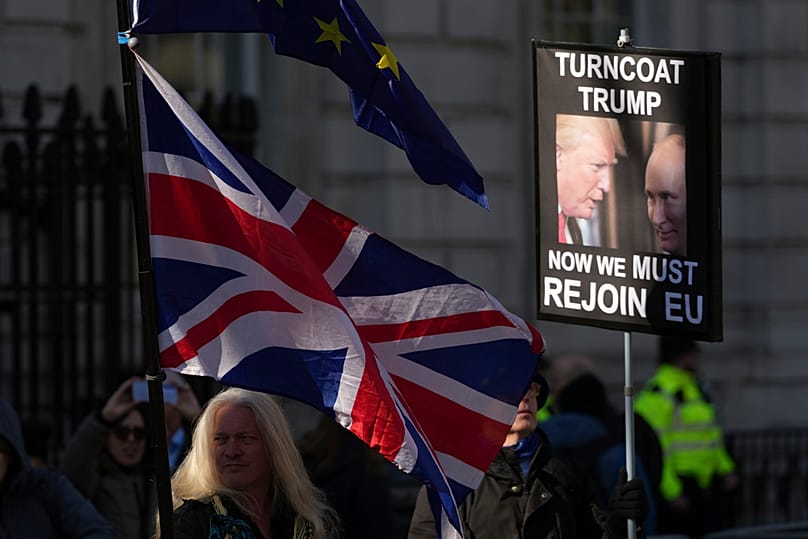
Would the EU agree to it?
At the height of Brexit negotiations between 2017 and 2019 under then-Prime Minister Theresa May and the EU's chief negotiator Michel Barnier, EU officials insisted that the UK could not "cherry-pick" favourable conditions in a pact with the EU that a non-member state would not typically have access to.
However, relations between the two sides have become warmer in recent years, which German Social Democratic MEP René Repasi attributes to Keir Starmer’s Labour government taking power in the UK.
"The Starmer administration is much more serious, and that, of course, has had a positive impact on the EU side, that they see a government on the UK side that they can have serious negotiations with," Repasi told The Cube.
"I do believe the EU is open for any pathway towards full integration of the UK back into the European Union, but that special status is hard to justify," he said. "Therefore, it would depend on the details. We must be politically realistic."
A spokesperson for the European Commission declined to comment on a hypothetical agreement.