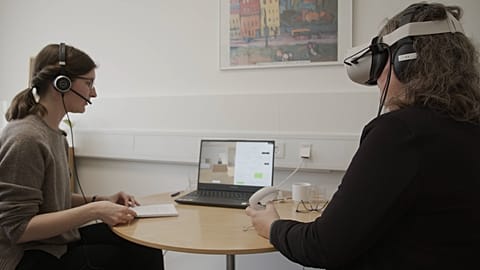






























Scientists noted that the findings show conscious experience and physical health are intertwined, and can be harnassed to promote well-being in new ways.
Spending seven days practising meditation and mind-body techniques may do more than help you relax. It could measurably change how your brain and body function, according to new research from the University of California San Diego.
 ADVERTISEMENT
ADVERTISEMENT
ADVERTISEMENT
The findings, published in Communications Biology, suggest that repeated mental practices can activate biological pathways linked to brain flexibility, immune function, metabolism, and natural pain relief, effects that researchers compared to those associated with psychedelic experiences.
"We've known for years that practices like meditation can influence health, but what's striking is that combining multiple mind-body practices into a single retreat produced changes across so many biological systems that we could measure directly in the brain and blood," said Hemal H. Patel, a professor of anesthesiology at UC San Diego School of Medicine, who was involved in the study.
"This isn't about just stress relief or relaxation; this is about fundamentally changing how the brain engages with reality and quantifying these changes biologically."
How the study was carried out
The study followed 20 healthy adults who attended a seven-day residential retreat led by neuroscience educator and author Joe Dispenza. While there, they completed roughly 33 hours of guided meditation alongside lectures and group-based healing activities.
The sessions used an "open-label placebo" approach, meaning participants knew that some practices were presented as placebos.
Even so, past research shows these exercises can still have real effects through things like expectation, social connection, and the shared group experience.
To see how the retreat affected participants’ bodies, researchers scanned their brains using functional magnetic resonance imaging (fMRI) and took blood samples before and after the week to track changes in brain activity, metabolism, immune responses, and other biological markers.
What changes were seen after the seven-day retreat?
After the retreat, brain scans showed reduced activity in regions linked to constant inner chatter or mental "background noise", which many people experience, suggesting it made brain functioning more efficient.
Blood plasma collected from participants also appeared to promote neuroplasticity, encouraging lab-grown neurons to extend and form new connections.
The team observed metabolic changes as well, with cells exposed to post-retreat plasma showing increased glycolytic activity, an indicator of improved metabolic flexibility. Levels of endogenous opioids — the body’s natural painkillers — also increased, pointing to enhanced natural pain regulation.
At the same time, immune signalling — the network of molecular interactions allowing immune cells to detect threats to the body — shifted in a way researchers described as balanced and adaptive. Both inflammatory and anti-inflammatory responses increased.
Participants also filled out the Mystical Experience Questionnaire (MEQ-30), which measures feelings such as unity, transcendence, and altered awareness during meditation. Average scores rose from 2.37 out of five before the retreat to 3.02 after it.
Meditation and psychedelic-like brain states
Researchers said patterns of brain connectivity observed after the retreat resembled those previously associated with psychedelic substances.
"We're seeing the same mystical experiences and neural connectivity patterns that typically require psilocybin, now achieved through meditation practice alone," the anesthesiology professor Patel said.
"Seeing both central nervous system changes in brain scans and systemic changes in blood chemistry underscores that these mind-body practices are acting on a whole-body scale."
However, researchers say that the study involved healthy participants and that further research is needed to determine whether similar benefits extend to wider clinical populations.
Furthermore, the study used an observational design without a control group, so its researchers cannot definitively say whether meditation alone caused the biological changes.
The small sample size also makes it difficult to define whether results can be projected on a wider scale. Larger and more diverse groups are needed to understand if similar effects happen across the general population.
Even so, the findings are significant, as it provides rare biological evidence connecting what people feel mentally with measurable changes in the brain and body.
"This study shows that our minds and bodies are deeply interconnected," said study author Alex Jinich-Diamant, a doctoral student in the Departments of Cognitive Science and Anesthesiology at UC San Diego.
"What we believe, how we focus our attention, and the practices we participate in can leave measurable fingerprints on our biology.
"It's an exciting step toward understanding how conscious experience and physical health are intertwined, and how we might harness that connection to promote well-being in new ways."