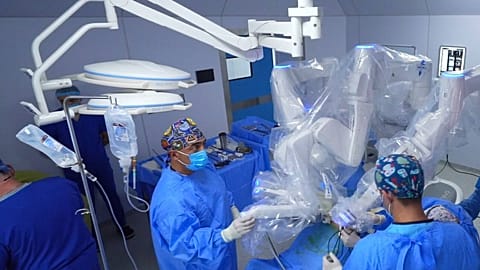






























The reform will introduce digital referrals, a national health insurance fund and a guaranteed package of medical services funded through the state budget. Officials say the changes aim to improve efficiency, expand access and reduce informal payments.
Uzbekistan will begin introducing a nationwide state medical insurance system from 2026, part of a broader overhaul of the country’s healthcare financing and service delivery.
 ADVERTISEMENT
ADVERTISEMENT
ADVERTISEMENT
The reform will introduce p;amea national purchaser of medical services, digital referral systems and a guaranteed package of essential healthcare funded through the state budget.
“State health insurance is a social protection system designed to guarantee access to quality healthcare services,” said Zokhid Ermatov, executive director of the State Health Insurance Fund.
From pilot project to nationwide reform
Discussions about introducing state medical insurance in Uzbekistan began in 2017. But implementing such a system required years of preparation.
The State Health Insurance Fund was formally established in December 2020, and pilot programmes were launched in the Syrdarya region in 2021. These pilots helped test new financing mechanisms, regulatory frameworks and digital health systems.
In November 2025, the Cabinet of Ministers approved new regulations governing how medical care funded through the state budget will be provided in both public and private medical institutions. The rules are set to come into force on 1 January 2026.
“The key question today is not ‘Why now?’ but rather ‘Is the system ready?’,” Ermatov said. “The answer is increasingly yes.”
According to him, the experience gained in pilot regions and the rapid digitalisation of the healthcare system, including electronic medical records, digital referral systems and financial monitoring tools, have created the foundations needed to expand the reform nationwide.
A healthcare system built around family doctors
At the centre of the new model is stronger primary healthcare.
Patients will first visit their assigned family clinic, where family doctors will provide consultations, prescribe tests and determine whether specialist care is required. If necessary, patients will receive an electronic referral to specialists or hospitals.
Emergency and urgent care will remain available without referrals.
The system introduces a new financing principle: funding follows the patient. Healthcare providers receive payment from the State Health Insurance Fund based on the services they deliver.
Medical institutions will be financed through different mechanisms depending on the level of care – capitation payments for primary healthcare and case-based payments for hospital treatment. The approach is designed to encourage efficiency and improve treatment outcomes.
Digital referrals and patient choice
A key feature of the reform is the introduction of a fully digital referral system.
Patients who require planned hospital treatment will receive an electronic referral with a QR code. Using the government portal my.gov.uz or a mobile application, they will be able to choose a hospital from a list of medical institutions that have contracts with the State Health Insurance Fund.
The referral remains valid for 60 days, while patients have up to 30 days to select a clinic.
All referrals, waiting lists and hospitalisations will be managed through a unified electronic health information system. Special medical commissions will review hospitalisation requests and determine whether treatment should take place at the regional or national level.
Authorities say the system is designed to increase transparency, reduce informal payments and improve the allocation of healthcare resources.
What services will be covered?
The national insurance system guarantees a package of essential healthcare services financed through the state budget.
At the primary care level, this includes consultations with family doctors, laboratory and diagnostic tests, outpatient treatment, preventive screening programmes and certain reimbursed medicines and medical supplies.
Hospital treatment included in the guaranteed package will also be covered, along with some rehabilitation services.
Medical institutions providing services under the system are not allowed to charge patients additional fees for diagnostics, treatment, medicines or medical supplies included in the approved list of services.
Funded through the state budget
Under the current model, citizens will not pay direct insurance contributions.
Instead, the system will be financed mainly through the state budget, which is funded through general taxation paid by individuals and businesses.
Officials say this approach reflects the socially oriented nature of Uzbekistan’s healthcare policy and ensures that financial barriers do not prevent people from accessing medical care.
The reform also aims to make healthcare financing more transparent and sustainable, while protecting households from high medical costs.
Protecting vulnerable groups
The system includes specific provisions to support socially vulnerable groups.
Children with disabilities, orphans, people with severe disabilities, pensioners, pregnant women, unemployed citizens and families recognised as low-income will receive priority access to publicly funded treatment.
For families included in the national register of low-income households, treatment costs will be covered through the State Health Insurance Fund and, in some cases, additional social support funds.
A single national purchaser, the State Health Insurance Fund, will also allocate healthcare resources across regions based on population health needs. Officials say this will help strengthen medical services in rural areas and reduce regional inequalities in healthcare access.
International perspective
International organisations say Uzbekistan’s reform reflects a broader global trend toward universal health coverage.
According to Jessika Yin, Health Policy Adviser at the World Health Organization in Uzbekistan, the country has made steady progress in modernising its healthcare financing system.
“Uzbekistan has piloted key elements of a state health insurance model and has begun strengthening the role of the national purchaser, the State Health Insurance Fund,” she said.
WHO supports Uzbekistan’s decision to pursue a model based on general tax financing and universal population coverage, an approach that international evidence suggests works well in countries with large informal labour markets.
Such systems can improve financial protection for patients while making healthcare financing more predictable.
Toward universal healthcare coverage
Experts say several factors will determine whether the reform succeeds: sustained political commitment, a sustainable financing model and strong institutional capacity.
Digital systems, national pooling of funds and strategic purchasing of medical services are expected to improve transparency and efficiency across the health system.
If implemented successfully, Uzbekistan’s medical insurance reform could mark a major step toward universal health coverage, ensuring that people can receive the care they need without facing financial hardship.