

















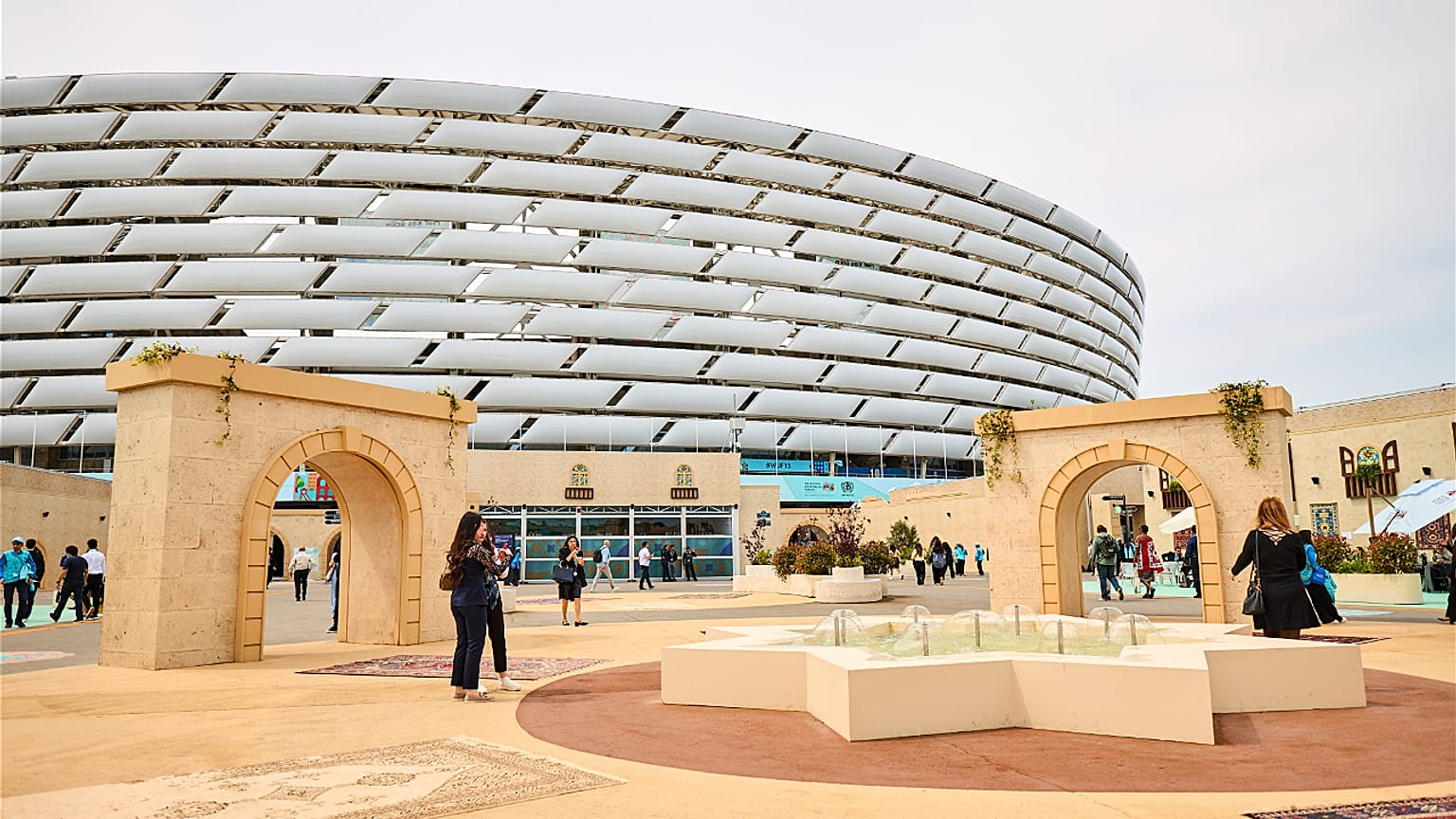













Governments must treat migration as a permanent feature of urban planning, not an emergency, the IOM deputy director general told Euronews at the World Urban Forum in Baku.
Governments that treat migration as a temporary emergency rather than a permanent feature of urban life will fail to build cities that work, International Organisation for Migration official warned on the fifth day of the World Urban Forum in Baku.
 ADVERTISEMENT
ADVERTISEMENT
ADVERTISEMENT
"Migration is now shaping cities," IOM Deputy Director General Ugochi Daniels told Euronews. "Migration, when it is well managed, is part of the solution."
She said displaced people and migrants cannot be seen as a drain on cities. "There are lots of migrants who can contribute to recovery and to the growth and economic prosperity of cities," Daniels said.
Reconstruction from conflict dominated a Euronews-moderated panel that brought together UN-Habitat, UNHCR, the World Bank and officials from Azerbaijan, Syria and Ukraine.
"Housing must come first because housing restores dignity, stability, and trust," said Emin Huseynov, the Azerbaijani president's special representative in the Aghdam, Fuzuli and Khojavand districts.
Aydin Karimov, Azerbaijan's president's special representative in Shusha, said the city's public transport was now fully electric and that its waste management system had been built from scratch.
"We were the first city where we introduced 100% electrical public transport," he said. "Our public buses are 100% electrical, they don't use fuel."
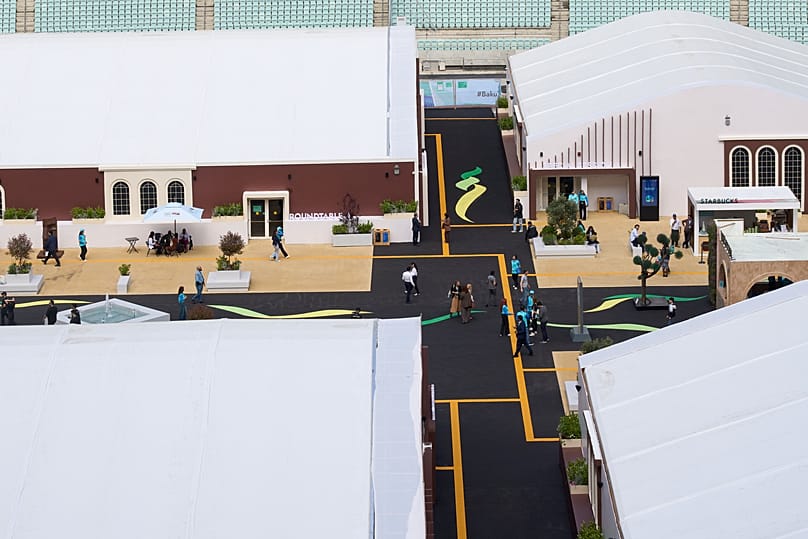
Dr Lucy Earle of the International Institute for Environment and Development warned against leaving displaced people in temporary shelter indefinitely. "We have to get out of this temporary mindset," she said.
The question of how to pay for reconstruction at scale drew sharp contributions.
"No country has been able to address housing in a sustainable, long-term way with international finance. It requires domestic finance," UN-Habitat Executive Director Anacláudia Rossbach told delegates.
"I'm sure that $1 billion can become many billions if we are able to establish this social contract," Rossbach explained.
Uruguay's Housing Minister Tamara Paseyro put the challenge in plain terms. "Building houses also means building a habitat," she said, meaning the roads, services and social infrastructure without which housing does not become a community.
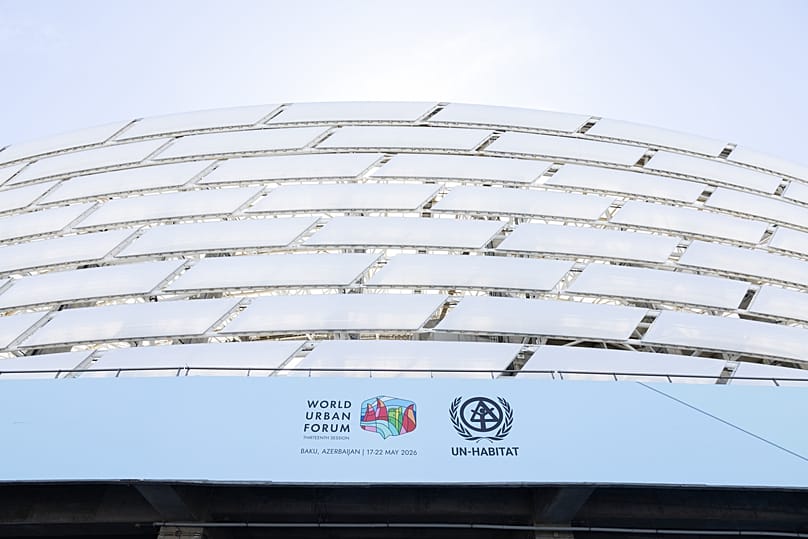
Azerbaijan used the forum to present its Karabakh reconstruction as a model others could follow.
In an exclusive interview with Euronews, Azerbaijan's President Ilham Aliyev said the country had built "a unique experience of how to build cities and villages from scratch," with 85,000 people having returned to post-conflict areas.
He cited 307 megawatts of commissioned electricity, 435 of 500 bridges completed and 70 kilometres of tunnels in service.
Swiss urban planning firm SA Partners, involved in the reconstruction, said the approach combined vision, zoning, detailed planning and architectural delivery in a single integrated process — a model it said other countries rebuilding from conflict could replicate.