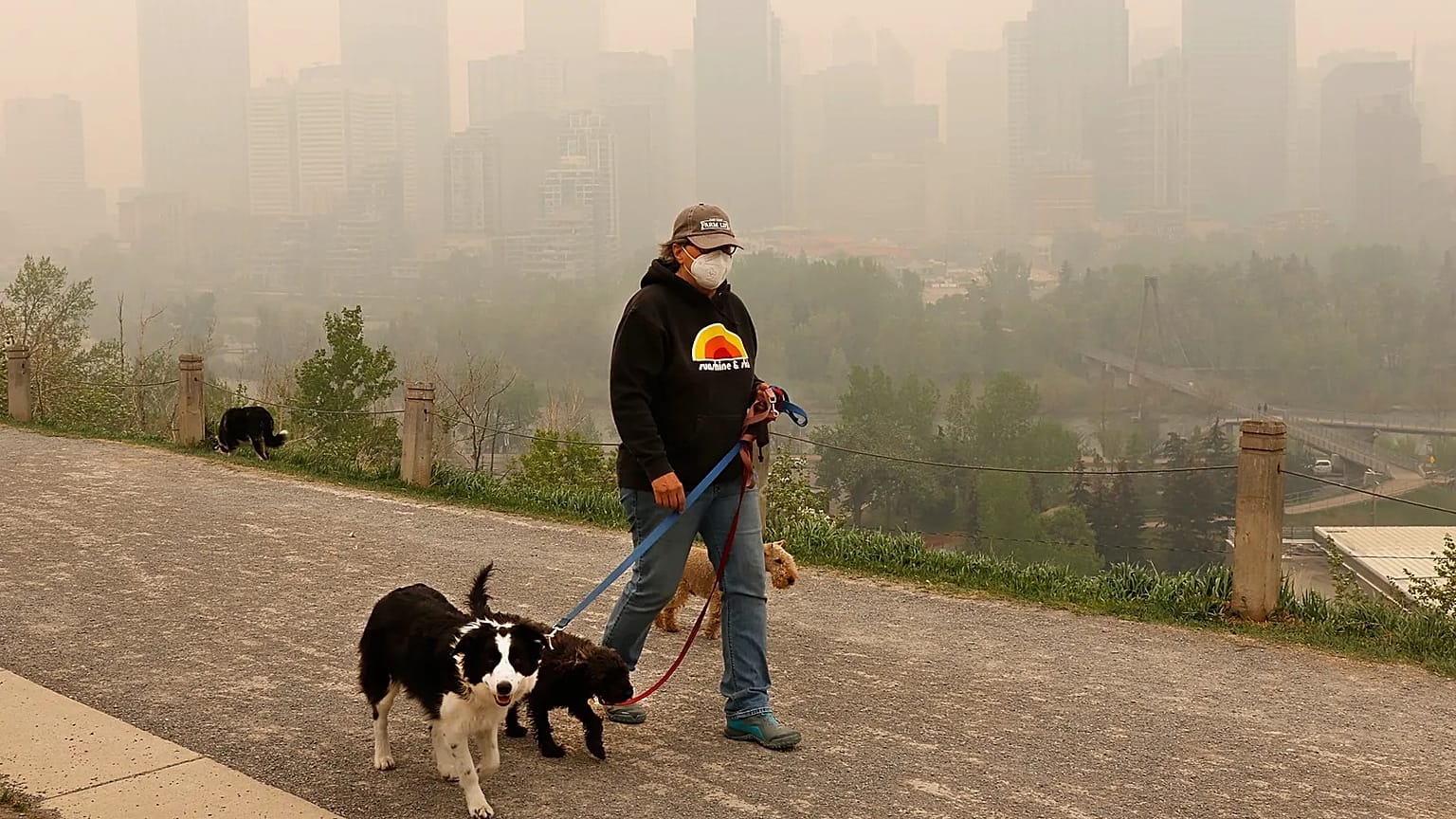













What does an air quality index of 7 mean? How does this affect health, and what measures can be taken?
Every day, people check their weather app, and among temperature, chances of rain, and ultraviolet index, there is another number: air quality.
 ADVERTISEMENT
ADVERTISEMENT
ADVERTISEMENT
From 1 to 10, this number measures how polluted the air is. But, how is this calculated and how does it affect health?
What is the air quality index?
In Europe, most smartphones use data from national and local monitoring stations to provide location-specific information.
Smartphone air quality and weather apps measure concentrations of around six key pollutants. The main ones are:
PM2.5: Fine particles. They are the dominant factor for quality calculations and have the most impact on health.
PM10: Bigger particles, such as dust and pollen.
Nitrogen dioxide (NO₂): The main source of this pollutant is the combustion of fossil fuels, especially cars, trucks, and buses.
Sulphur dioxide (SO₂): The largest source of SO₂ in the atmosphere is the burning of fossil fuels by power plants and other industrial facilities.
What can be the effects on health?
Breathing these pollutants can lead to systemic inflammation, a weaker immune system, and DNA alterations that can cause cancer or genetic diseases, warns the World Health Organization (WHO).
Almost every organ in the body can be impacted by air pollution, which mostly affects the lungs, heart, and brain. Health problems can happen both after short-term and long-term exposure to air pollutants.
The European Environment Agency (EEA) has its own index, which shows air quality data from 3,5000 monitoring stations across Europe and forecasts levels with information from the Copernicus Atmospheric Monitoring Service (CAMS).
Based on pollutant concentration, the EEA differentiates six levels: good, fair, moderate, poor, very poor, and extremely poor.
While most European countries use the EEA scale for their public health recommendations, some, such as Austria, Belgium, and France, still use national indices alongside it.
Smartphone weather apps usually show a 1 to 10 index.
How to stay safe?
It is important to adapt outdoor activities when possible to avoid dangerous exposure to polluted air.
Official air quality sources, such as the United Kingdom’s Department for Environment, Food & Rural Affairs (DEFRA), and the European Environmental Agency, have guidelines of pollutant thresholds.
From 1 to 3, good air quality, it is considered safe to engage in normal outdoor activities.
Between 4 and 6, moderate quality, health risks emerge. It is still safe for the general population, but people with respiratory diseases, such as asthma, should reduce their outdoor activity.
For level 7 and above, when the air is considered poor, it is recommended to limit outdoor activities, especially exercise.
At level 10, extremely poor air quality, experts call for extreme precaution and advise avoiding long exposure outdoors and prioritising staying indoors.
During periods of prolonged bad air quality (over 7), experts recommend using air purifiers indoors. The WHO also recommends using FFP2 respirator masks if outdoor exposure is unavoidable, for example, during wildfires.