
















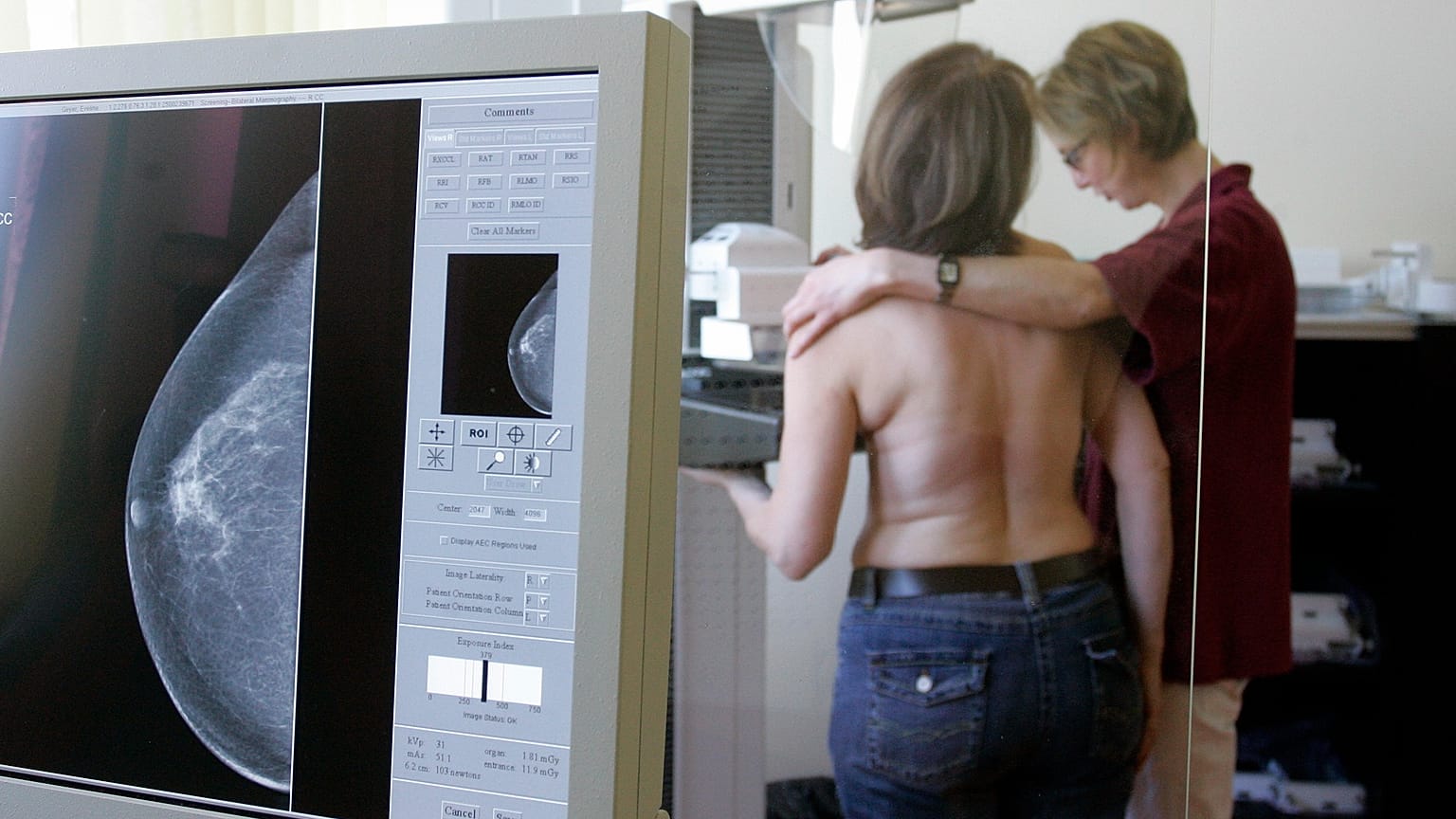














AI helped spot fewer fast-growing, hard-to-treat breast cancers in a study of nearly 100,000 women.
Artificial intelligence could help detect aggressive breast cancers earlier and ease pressure on overstretched doctors, according to the results from a large Swedish breast screening trial.
 ADVERTISEMENT
ADVERTISEMENT
ADVERTISEMENT
The study, published in The Lancet, analysed nearly 100,000 women aged 40 to 80 who took part in Sweden’s national breast screening programme between April 2021 and December 2022.
Mammography is widely considered the most effective way to detect breast cancer early and reduce deaths, with European guidelines recommending that scans are reviewed independently by two radiologists.
But researchers say between 20 and 30 percent of breast cancers are diagnosed between routine screening appointments. These so-called “interval cancers” tend to grow faster, are more advanced at diagnosis and are harder to treat.
How was the trial carried out?
In the trial, women were randomly assigned either to standard screening with two radiologists or to an AI-supported approach in which AI flagged suspicious areas on mammograms and a radiologist made the final decision.
The AI-supported group recorded 11 fewer interval cancers over two years - a 12 percent reduction compared with standard screening - and more cancers were detected during routine screening.
Study researcher Jessie Gommers from Radboud University Medical Centre said that the AI acted as a support tool rather than a replacement, explaining that "the AI highlighted suspicious areas in a mammogram that helped radiologists during interpretation," while "the final recall decision was still made by the radiologists."
Because only one radiologist reviewed AI-supported scans, the approach also reduced workload. Earlier findings from the trial showed a 44 percent reduction in radiologist workload, which researchers say could be particularly valuable in health institutions with staff shortages.
Gommers said the drop in interval cancers was especially important, noting that "you want to have as few of those interval cancers because they are known to be more aggressive and lead to poorer patient outcomes."
One in 20 women will be diagnosed with breast cancer during their lifetime, making it the most common form of cancer for women.
In 2022, an estimated 2.3 million women were diagnosed with breast cancer worldwide, and around 670,000 died from the disease. In Europe alone, the World Health Organization (WHO) recorded nearly 558,000 new cases that year.
Will AI replace human doctors?
While AI-assisted mammography is already being introduced in parts of Sweden and Denmark, researchers stress that it is not ready to replace human oversight and that more evidence is necessary.
Independent experts also urged caution about wider rollout across the globe. Dr Olga Oikonomidou, the principal investigator and breast cancer research lead at the University of Edinburgh’s Cancer Centre, said the trial focused on whether AI could help radiologists work "quicker and more efficiently", rather than replacing them.
She warned that AI systems differ widely and must be tested with the same rigour as medicines, and that they are not a low-cost alternative.