
















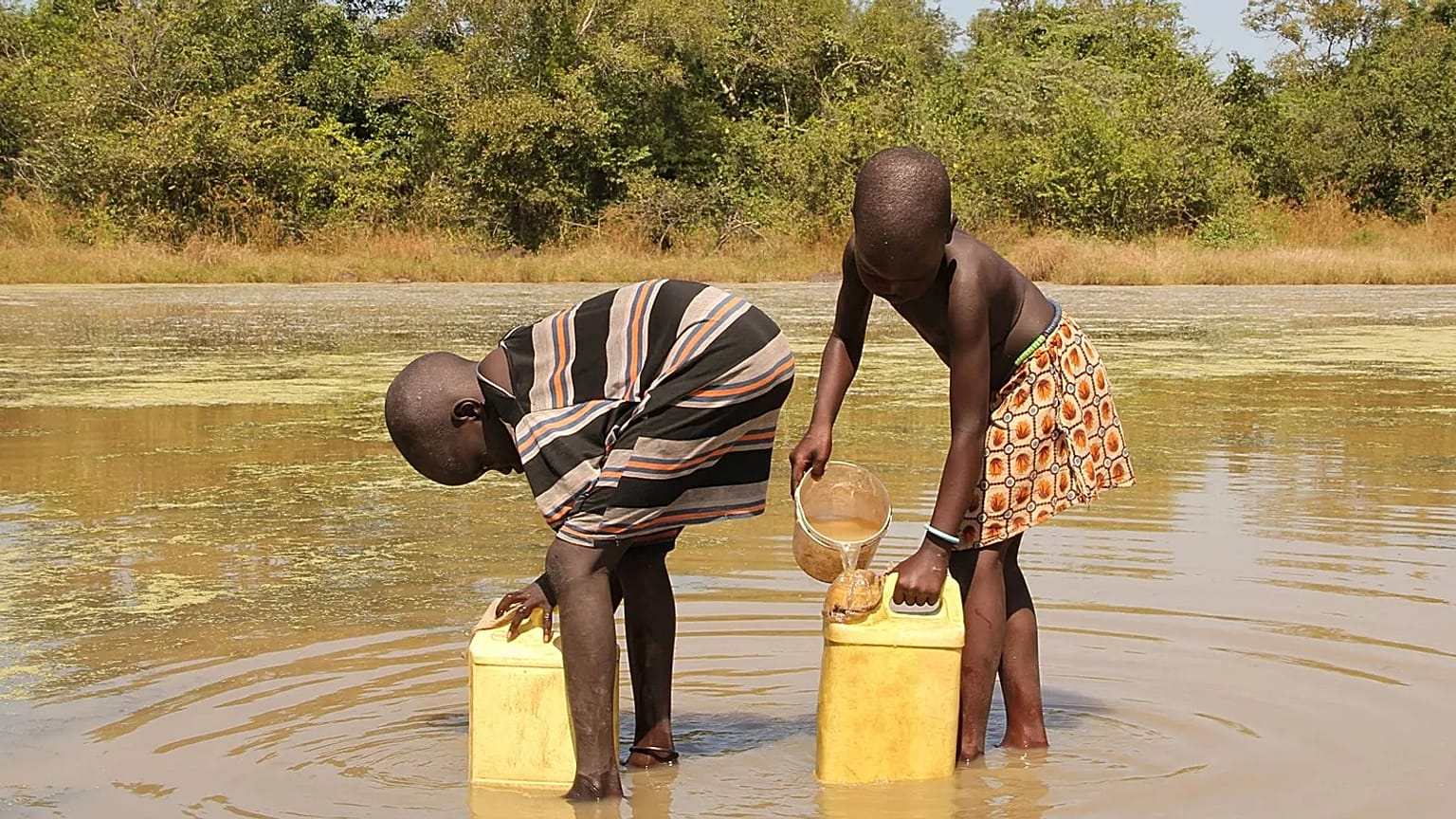













Guinea worm is on course to become the second human disease eradicated after smallpox, with only 10 human cases reported worldwide in 2025.
Just 10 human cases of Guinea worm were reported worldwide in 2025, the lowest number ever recorded, and a major step towards eradication.
 ADVERTISEMENT
ADVERTISEMENT
ADVERTISEMENT
The Carter Center, a United States non-profit leading the global campaign to eradicate Guinea worm disease, announced the provisional figures, bringing the parasite closer to becoming the second eradicated disease in history.
Dracunculiasis, commonly known as Guinea worm, is a parasitic disease transmitted through contaminated drinking water.
It causes a painful blister from which a worm slowly emerges, usually from the lower leg, after 10 to 14 months after transmission.
“Guinea worm causes immense suffering — not just for the individual but for their family and community as well”, Adam Weiss, director of the Carter Center Guinea Worm Eradication Program, said after the announcement.
He added that every person who has suffered from the disease has endured something entirely preventable.
“We’re energised by this year’s progress, but zero is the only acceptable number, and that’s why our commitment to finishing this job is unwavering,” Weiss added.
In 1986, when the Carter Center intensified its efforts to eradicate Guinea worm disease, an estimated 3.5 million human cases occurred annually.
For a disease to be declared eradicated, every country in the world must be certified free of human and animal infections, even in those where transmission has never been known to occur.
A country is officially free of a disease if it maintains zero reported human and animal infections for at least three consecutive years.
To date, the World Health Organization has certified 200 countries free of Guinea worm; only six remain uncertified: Angola, Chad, Ethiopia, Mali, South Sudan, and Sudan.
Of the 10 provincial 2025 human cases, two occurred in South Sudan, and four occurred in both Chad and Ethiopia.
Angola, Cameroon, the Central African Republic, and Mali reported zero human cases for the second consecutive year.
Clean water: the key to eradication
As there is no vaccine or cure for dracunculiasis, prevention and surveillance measures have been key to reaching the current situation.
The World Health Organization prioritises safe water access through protected wells and boreholes, alongside cloth and pipe filters for households lacking clean water.
People infected with the disease often immerse their limbs in water for pain relief, which can stimulate the release of larvae from the worm, contaminating the water and restarting the transmission cycle.
Other diseases follow closely
Only smallpox has been officially eradicated to date, but several neglected tropical diseases follow closely.
Alongside Guinea worm, the World Health Organization has targeted yaws for eradication by 2030.
Yaws, a bacterial infection that primarily affects children under 15, spreads via contact with open sores. There is no vaccine for the disease, but it can be treated with antibiotics.
In 2025, the WHO recognised 136 countries free of transmission – a sharp increase from only one in 2020.