
















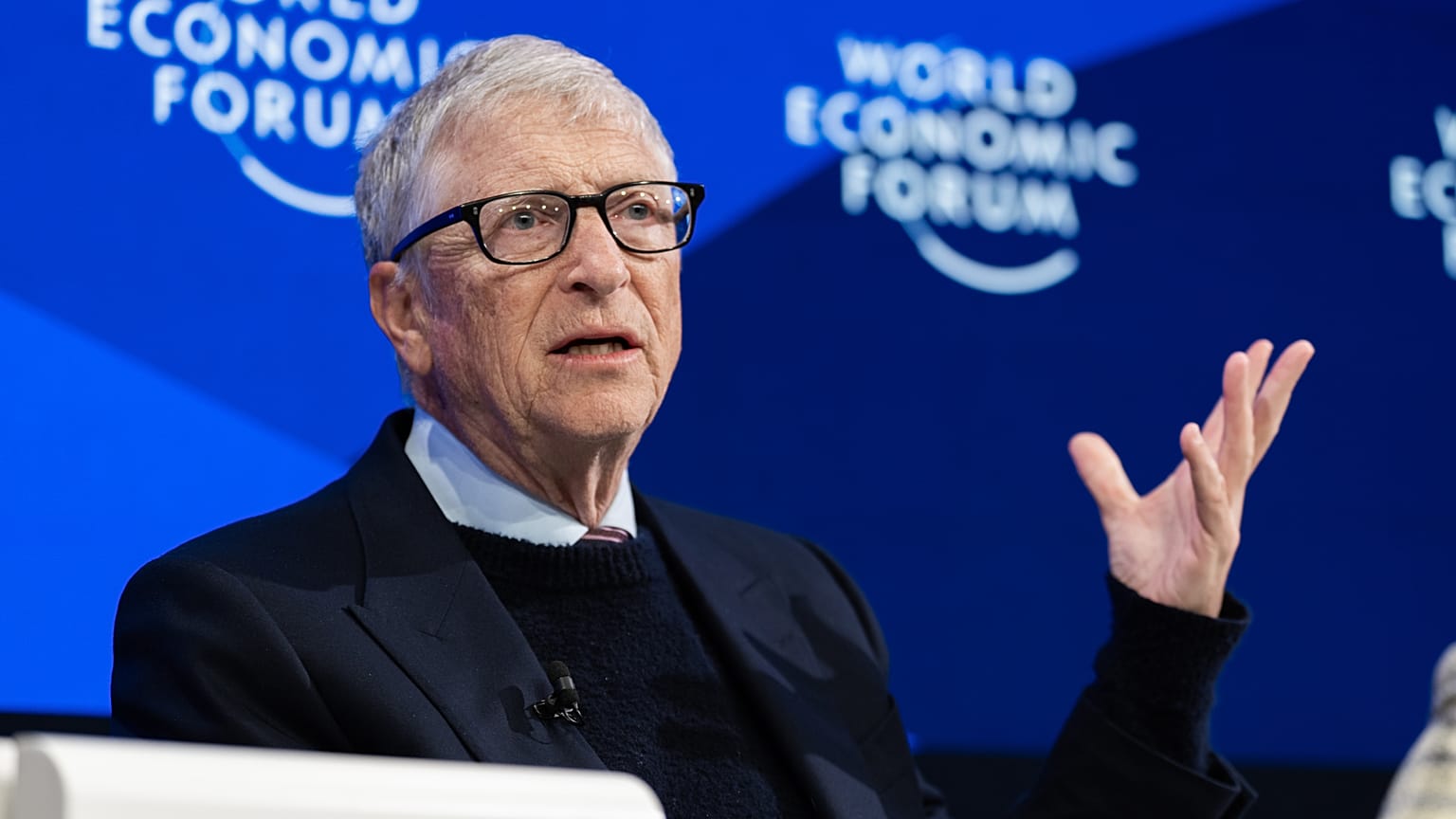













Health experts met in Davos to discuss challenges and opportunities for the future of global health. Here are the key takeaways.
From artificial intelligence to mental health, and healthy lifestyles, global health experts discussed the future challenges at Davos 2026 amid the growing crises worldwide.
 ADVERTISEMENT
ADVERTISEMENT
ADVERTISEMENT
Health remained a central pillar of the World Economic Forum’s agenda with leaders stressing prevention, accessibility, and technology’s role in strained systems.
These are the health topics that dominated the conversation at Davos.
The end of the golden age of global health?
“The first two decades of this century were a golden age for global health,” said the World Health Organization’s director, Tedros Adhanom Ghebreyesus.
Backed by unprecedented political and financial commitment, and fueled by life-saving innovations, the world made incredible progress on many measures of global health, he said.
Over the last two decades, many countries made progress towards universal health coverage, service coverage, and financial protection, which have both improved by about one third globally.
“But in the past five years, the golden age has ended, and an icy chill has set in,” Tedros warned.
He cited funding cuts to foreign aid as a challenge for the most vulnerable communities, as well as “an opportunity to transition away from aid dependency towards self-reliance, based on domestic resources”.
AI in the community
Bill Gates, co-founder of Microsoft and chair of the Gates Foundation, said that besides AI’s potential to advance medical research and modelling, it can also play a key role in medicine delivery.
“That's true in rich countries, but it's more true in developing countries where you're never going to have enough doctors or clinicians to deal with the demand manually,” Gates said.
The Gates Foundation and Open AI announced a $50 million (€42.7 million) in funding, technology, and technical support to support AI health capacities in African countries. Starting in Rwanda, they aim to reach 1,000 primary healthcare clinics by 2028.
Paula Ingabire, Rwanda’s Minister of Information Communication Technology and Innovation, discussed the country’s healthcare workforce shortage and how AI can help.
“They [healthcare professionals] are going to need these tools to support better care delivery, to ensure that some of the administrative tasks that they've been working on, we can use AI to do that so they are more focused on delivering better and targeted care to our people,” Ingabire said.
Healthcare needs to reach the people
Global health experts agreed that innovation and new tools need to reach the community that needs them the most.
“The whole thing has to be framed around problems needing solutions, as opposed to a whole bunch of tools needing a problem to fix and there is a little bit of people running around with a whole lot of hammers looking for nails,” said Peter Sanders, executive director of The Global Fund to Fight AIDS, Tuberculosis, and Malaria
He added that the first thing to do is to locate the big health problems that need to be fixed and therefore, how we can use AI.
Need for long-term thinking on non-communicable diseases
Health experts stressed that prevention must be the top priority in addressing non-communicable diseases (NCDs) to ensure that people live healthier and longer lives.
"Between 2011 and 2030, the world will spend more than $30 trillion (€25.5 trillion) tackling NCDs. Instead of incurring the expenses, we could be preventing them and investing that money more in prevention”, said Mosa Moshabela, vice-chancellor and principal of the University of Cape Town.
According to the Organisation for Economic Co-operation and Development, countries allocate three percent of total health spending to prevention on average.
“The problem is that it's very hard for governments and policymakers to see the long-term benefits when we're living in a short-term cycle of how policies get funded,” said Nancy Brown, from the American Heart Association.
Healthy choices need to be accessible
While personal choices and prevention are key to better health, Johan Westman, from AAK, a global company of plant-based oils and fats, warned that these choices are not equally available to all.
“Healthier food today and the plate that is recommended by health organisations might be more expensive, might not be available to many in the world, might even take a longer time to cook. And in that case, it is not as accessible to everyone”, added Westman.
Mental health and the digital world
Some of the most prevalent non-communicable diseases are linked to mental health. Experts discussed the role of technology in it and the need to end the stigma, talk openly about it and encourage people to seek help.
“In terms of the impacts of digital technologies on the mental health and wellbeing of young people is that humans tend to minimise and normalise things that are happening in the online world because they're happening in the online world”, said Marija Manojlovic, executive director of Safe Online.
She added that, even if problems happen in the digital world, the impacts on mental health and wellbeing are as severe as when they happen outside of it.
Ending the stigma is “the key that opens the door”, said Linda Mills, president of New York University (NYU).
“If people come forward and ask for help, we can take steps to support them, but 50 percent of people who are in that level of distress don't come forward to ask help,” she added.